[Asia Economy Reporter Byeon Seon-jin] Starting from the 30th, the indoor mask-wearing mandate will be adjusted to a recommendation, bringing us one step closer to a complete return to normal life. The 30th, when the government announced the timing of the indoor mask mandate adjustment, also marks exactly three years since the onset of COVID-19.

January 2020: COVID Strikes... Daily Life Paralyzed
In January 2020, COVID-19 first appeared in South Korea, changing daily life. On February 29 of that year, the government responded to the COVID-19 outbreak with a high-intensity quarantine policy called 'social distancing.' However, large-scale outbreaks continued, including the first wave in the metropolitan area from February to May and the second wave in non-metropolitan areas from August to October. Eventually, during the period of January 2020 to February 2021, when group infections occurred in vulnerable facilities such as nursing hospitals and correctional facilities, daily confirmed cases sometimes exceeded 1,000.
In the early stages of the COVID outbreak, with no vaccines or treatments available, the quarantine authorities had no choice but to focus on the so-called '3T (Testing, Tracing, Treatment)' capabilities to suppress confirmed cases against the highly fatal initial Wuhan virus. However, from the fourth wave starting in July 2021, asymptomatic infections increased and large-scale spread repeatedly occurred after vacation seasons, causing the number of confirmed cases not to decrease to previous wave levels. Gradually, the method of tracking confirmed patients' movements, disinfecting visited places, and isolating close contacts lost its effectiveness.
Vaccination Raised Hopes for Normalcy... But Omicron Variant Emerged
COVID-19 vaccinations began in South Korea on February 26, 2021. Starting with AstraZeneca, Moderna and Pfizer vaccines were introduced, and by October of the same year, the nationwide vaccination rate reached 70%. In November, a phased return to normal life was implemented. However, just one month later, in December, the highly transmissible Omicron variant swept the world, causing confirmed cases to surge to unprecedented levels.
Although the fatality rate was lower than Delta, the extremely high transmissibility led to a record daily high of 490,881 confirmed cases on March 23 last year, surpassing a cumulative total of 10 million confirmed cases. Due to increased public fatigue from the prolonged pandemic and the difficulty of controlling large-scale outbreaks with existing quarantine response systems, a shift toward autonomous quarantine and critical patient management-centered systems began. From January 28 last year, asymptomatic and mild patients were transitioned to the ‘general medical system’ where they receive diagnosis, testing, and treatment at local clinics and hospitals, and from February 7, a home treatment system with expanded self-isolation was established.
This Winter’s Outbreak Declines... Timing Right to Shift Indoor Mask Mandate to Recommendation
The seventh wave, which began at the end of October last year, has been declining this year. The weekly average daily confirmed cases for the second week of January (8?14) was 42,938, with 356 deaths. Compared to the previous week, confirmed cases and deaths decreased by 16,293 and 44, respectively. On the 19th, new confirmed cases hit a two-month low of 29,816.
This winter’s outbreak, unlike the previous Omicron wave, did not reach a very high peak. The weekly average daily confirmed cases during the peak in the third week of December last year was 67,313, which is only 16.6% compared to the 404,616 cases in the third week of March.
Although the government fully lifted social distancing on April 18 last year, the trend of new confirmed cases remaining below 100,000 and showing gradual fluctuations is seen as a successful transition to a lifestyle quarantine system. On September 26, the mask mandate was first lifted outdoors where the infection risk is low, changing to a recommendation.
 On the 20th, at the Central Disaster and Safety Countermeasures Headquarters meeting held at the Government Seoul Office, Prime Minister Han Duck-soo removed his mask to give an opening remark. At the meeting, the headquarters decided to change the indoor mask-wearing mandate to a 'recommendation' starting from the 30th. Photo by Heo Young-han younghan@
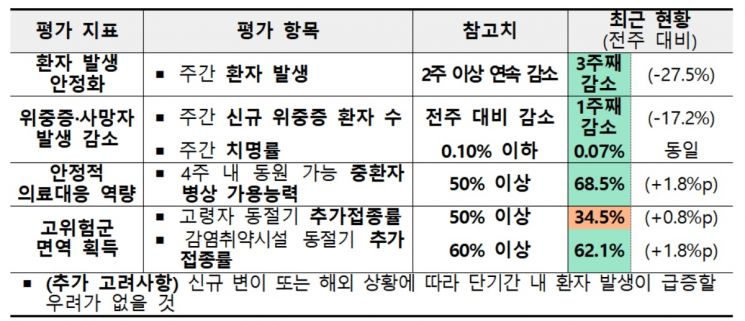
The government believes that although this winter’s outbreak continues, due to vaccination, a high level of domestic antibody positivity, and proactive quarantine measures for arrivals from China, shifting the indoor mask mandate to a recommendation will have limited impact on the spread. The quarantine authorities plan to require COVID-19 testing before and after entry at least until the end of February, as the outbreak in China continues. They also added that, as the infection cycle shortens due to variant emergence, they will actively consider transitioning to a general medical response system.
© The Asia Business Daily(www.asiae.co.kr). All rights reserved.
![User Who Sold Erroneously Deposited Bitcoins to Repay Debt and Fund Entertainment... What Did the Supreme Court Decide in 2021? [Legal Issue Check]](https://cwcontent.asiae.co.kr/asiaresize/183/2026020910431234020_1770601391.png)