Applications start from the 30th... Homes under 900 million KRW eligible
DSR restrictions lifted, no income limits
Carefully consider interest rates... No prepayment penalties
[Asia Economy Reporter Onyu Lim] The Yoon Suk-yeol administration is launching a newly introduced Special BoGeumjari Loan after the Lunar New Year holiday. This policy product is designed for real buyers looking to purchase homes in a high-interest rate era or for those with excessive debt burdens from existing loans. It allows borrowing up to 500 million KRW when purchasing a home priced at 900 million KRW or less, and a major advantage is that there are no income restrictions. However, there is controversy as the loan interest rates do not differ significantly from those of commercial banks. Since preferential interest rates can make it advantageous, careful verification is necessary.
Applications for the Special BoGeumjari Loan will begin on the 30th. The newly introduced Special BoGeumjari Loan integrates three existing policy mortgage products: the BoGeumjari Loan, the Safe Conversion Loan, and the Qualified Loan.
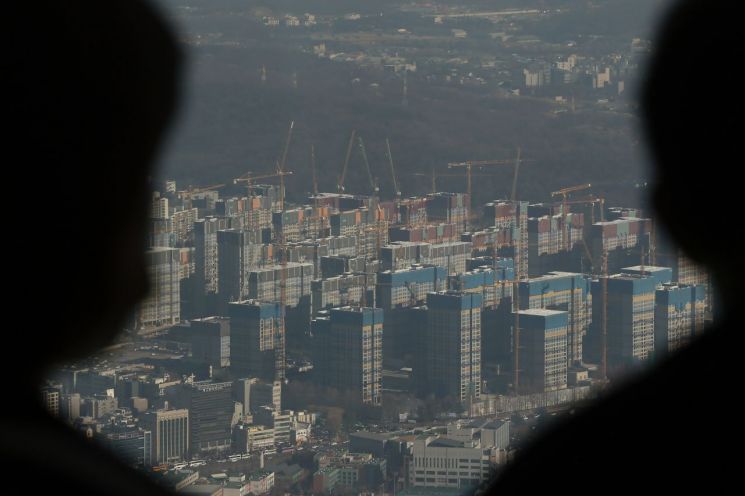
The eligible home price for loans is 900 million KRW or less. The existing BoGeumjari Loan was only available for purchasing homes priced at 600 million KRW or less, which made it less effective in the capital area where housing prices are high compared to provincial areas. With the lowered loan threshold, the range of housing options for real buyers has expanded. The loan limit has also increased by nearly 40%. While the existing BoGeumjari Loan allowed borrowing up to 360 million KRW, the Special BoGeumjari Loan permits up to 500 million KRW. A particular strength is the exclusion of the Debt Service Ratio (DSR) application, which considers the repayment ratio of principal and interest across all financial institutions. Currently, DSR 40% regulations apply to borrowers with loans exceeding 100 million KRW.
However, it is essential to carefully compare the interest rates, which are the most important criterion when taking out a loan, with those of commercial banks. The interest rates of the Special BoGeumjari Loan are not as low as market expectations, and despite recent base rate hikes, the mortgage interest rates of commercial banks have been trending downward. The interest rate for the Special BoGeumjari Loan is 4.65?4.95% for homes priced at 600 million KRW or less or for couples with a combined annual income of 100 million KRW or less; for homes priced above 600 million KRW or incomes exceeding 100 million KRW, the rate is 4.75?5.05%. The variable mortgage rates of the four major commercial banks?KB Kookmin, Shinhan, Hana, and Woori?range from 4.69 to 7.36%, and mixed rates (fixed for 5 years then variable) range from 4.36 to 6.371%, so there is not a significant difference at the lower end of the rate spectrum.
However, the Special BoGeumjari Loan can reduce interest rates by up to 0.9 percentage points if certain conditions are met. A 0.1 percentage point discount applies for electronic contracts, and a 0.80 percentage point preferential rate applies for low-income youth, socially disadvantaged groups, newlywed households, or unsold housing, lowering the rate to as low as 3.75%.
Fortunately, the Special BoGeumjari Loan waives fees not only when refinancing from existing mortgages but also when repaying early and switching to other products. This means that even after executing the Special BoGeumjari Loan, borrowers can obtain better conditions from commercial bank mortgages in the future. The Financial Services Commission stated, "This is to help low-income and real buyers acquire homes, reduce risks from loan interest rate fluctuations, and improve the qualitative structure of household debt," adding, "Support will be provided for funds used by non-homeowners for purchase, refinancing or returning jeonse deposits for one-homeowners, and temporary two-homeowners switching homes."
© The Asia Business Daily(www.asiae.co.kr). All rights reserved.

















