[2023 Seollal Holiday Table Politics]
Na Kyung-won and Yoo Seung-min Candidacy Variables
Kim Ki-hyun's Dominance Theory vs Ahn Cheol-soo's Moderate Theory
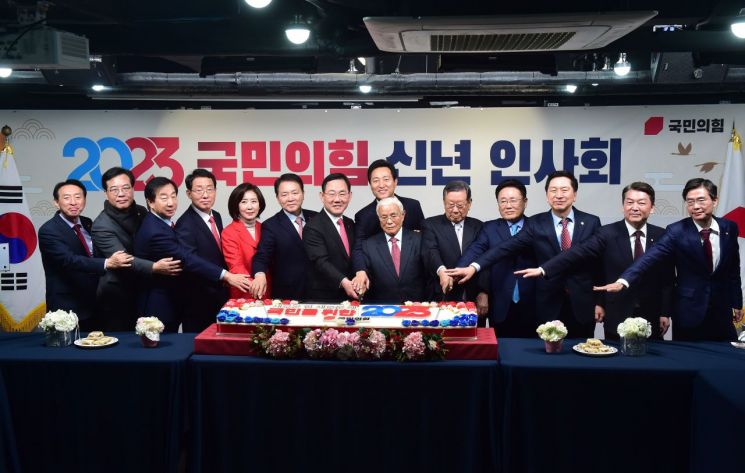
[Asia Economy Reporter Naju-seok] The People Power Party's leadership election scheduled for March 8 is expected to be the biggest event in the political calendar for the first half of the year. Besides deciding the direction of candidate nominations for next year's general election, attention is focused on whether it can provide momentum for the reform efforts of the Yoon Seok-yeol administration, now entering its second year.
The biggest point of interest is the pool of candidates running. So far, lawmakers Kim Ki-hyun, Ahn Cheol-soo, Yoon Sang-hyun, and Cho Kyung-tae (in alphabetical order) have confirmed their candidacies. However, the potential candidacies of former lawmakers Na Kyung-won and Yoo Seung-min remain variables.
1) Will Na Kyung-won and Yoo Seung-min Run?
Even before the official curtain rises, the People Power Party leadership election has been marked by dramatic incidents, much like watching a historical drama. First, there was the issue of the election rules. The party decided to abolish the 7:3 rule (70% party member vote, 30% public opinion poll) that had been in place for 18 years since 2004, opting instead to elect the party leader solely by party members' votes. While the rationale was to have party members directly elect their representative, controversy arose over accusations that this rule change was a 'moving of the goalposts' aimed at excluding former lawmaker Yoo, who had shown strength in general public opinion polls.
In particular, reports emerged that President Yoon Seok-yeol privately suggested, "If the election rules are to be changed, wouldn't it be better to make the party member vote 100%?" This reportedly shifted the party atmosphere sharply and played a decisive role in the internal rule change discussions. Although Yoo had been critical of President Yoon's administration on issues such as the Itaewon tragedy and North Korean drones, he led the general public opinion polls among People Power Party's next leader candidates until last year. Many pointed out that excluding general public polls and introducing a runoff vote were part of a series of rule changes aimed at sidelining Yoo.
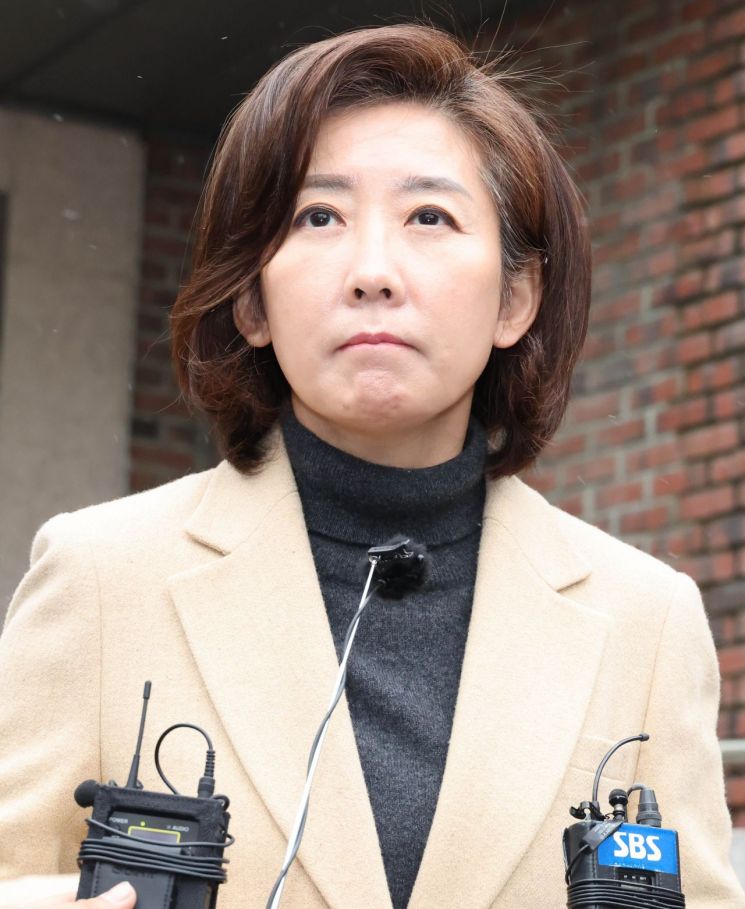
Recently, controversy over the dismissal of former lawmaker Na Kyung-won has also surfaced. Initially, Na was appointed as vice-chair of the Presidential Committee on Low Fertility and Aging Society, a ministerial-level position, and as a climate ambassador, sparking debate over whether she would be included among the next leadership candidates. However, as the leadership election approached, her candidacy seemed likely. The presidential office publicly criticized Na's proposal of a 'Hungarian-style low fertility solution,' which involved providing about 200 million KRW in housing loans upon marriage and forgiving interest and principal upon childbirth, turning her potential candidacy into an internal party conflict.
Na expressed her intention to resign from the high-ranking vice-chair position, and President Yoon responded with dismissal. Na, who was weighing her candidacy, is now deeply considering her options amid growing internal criticism, including a petition signed by 50 first-term People Power Party lawmakers criticizing her. Na is currently laying low without public activities. Professor Shin Yul of Myongji University's Department of Political Science and Diplomacy predicted, "Among ruling party supporters, Na Kyung-won's name will be the most talked about around the Lunar New Year dinner table."
If either Yoo or Na decides to participate in the party leader race, the election dynamics are expected to become more diverse. However, if they ultimately do not run, the race will likely narrow considerably.
2) Kim Ki-hyun's Momentum and Ahn Cheol-soo's Centrist Approach
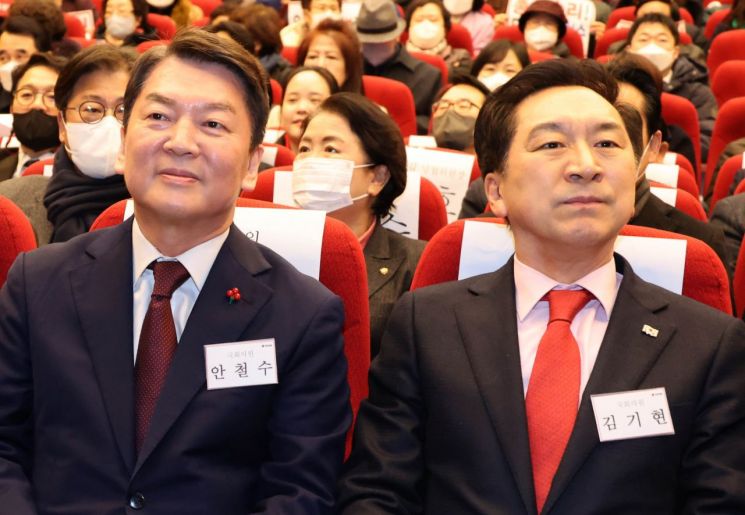
According to combined opinion polls, Kim Ki-hyun currently stands out the most among People Power Party supporters. A Realmeter poll released on the 19th (commissioned by Media Tribune, conducted on the 16th-17th, nationwide among 1,202 men and women aged 18 and over, including 520 People Power Party supporters, via automated response) showed Kim receiving 40.3% support from party supporters, ranking first. Although the poll included potential candidates Na and Yoo, who have not confirmed their candidacies, the trend shows Kim gaining momentum. Supported by pro-Yoon (친윤) faction lawmakers, Kim, considered to have the president's favor (윤심), is rapidly rising. Kim himself expressed hope, saying, "I expect to secure a majority in the first round if things go well."
In contrast, Ahn Cheol-soo, who was expected to challenge for the party leadership since joining the party, is trailing behind Kim. However, amid debates over presidential favor, some see Ahn as a potential rival depending on the election dynamics. Ahn emphasizes his strength in the centrist and metropolitan areas. Moreover, having declared support for President Yoon by uniting candidates in the final stages of the last presidential election, Ahn holds a 'debt' that could translate into votes from People Power Party members this time. Um Kyung-young, director of the Era Spirit Research Institute, predicted, "Kim, with the president's favor, and Ahn, with centrist expansion, will be the main topics around the Lunar New Year dinner table."
3) A Party Leader Who Can Say ‘No’ or a ‘Yeouido Branch Office’?
The party leader to be elected this time will hold the nomination rights for next year's general election. Therefore, the political landscape could change depending on who becomes the party leader. However, another point of interest is what kind of party leader will emerge.
Some voices of concern have already been raised. First, with the leadership election decided solely by party member votes, a red light has been lit for the party's nationalization. Kim Bong-shin, CEO of Metavoice, pointed out, "People Power Party members are concentrated in Daegu and North Gyeongsang (TK), with few in Honam and other regions," adding, "If candidates fail to present messages as a national party, it will inevitably become a regional party." Whether the candidates can present a broader vision beyond their support base and voters is another key point of the leadership election.
The relationship between the president and the party is also an issue. Kim said, "For the ruling party to play its role, it must be able to say 'No' to the president. Only then can it take a central role in cooperation with the opposition through negotiations, but whether that will happen is questionable."
There is also analysis suggesting a possible change in the nature of the People Power Party leadership election when asked about the next vision. Um said, "In the past, People Power Party leadership elections favored candidates with a vision for the future," adding, "Now that the number of party members has increased to 840,000, it will be interesting to see whether this conservative support base's consensus leans toward the president's favor or shifts to other next-generation leaders."
© The Asia Business Daily(www.asiae.co.kr). All rights reserved.
![Clutching a Stolen Dior Bag, Saying "I Hate Being Poor but Real"... The Grotesque Con of a "Human Knockoff" [Slate]](https://cwcontent.asiae.co.kr/asiaresize/183/2026021902243444107_1771435474.jpg)


















