Elderly Vulnerable to Depression
Difficult to Detect and Symptoms Are Vague
Emotional Support from Those Around Is Important
While some elderly people spend the Lunar New Year holiday with their children after a long time, there are also many living alone, quietly staying at home. The holiday, which should be a time for family harmony, ironically becomes a period when feelings of loneliness deepen. This is why special emotional support for the elderly, who are particularly vulnerable to depression, is increasingly emphasized.
More than 1 in 10 Elderly Experience Symptoms of Depression

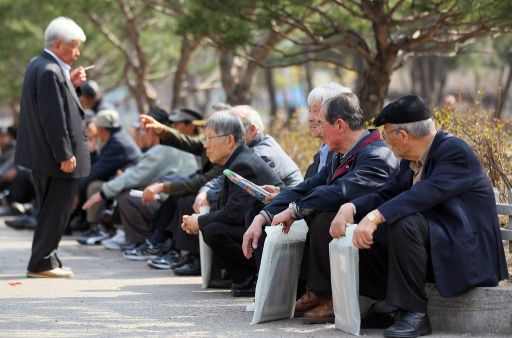
Loneliness seeps more harshly into frail bodies. According to the 2020 National Survey on the Elderly conducted by the Korea Institute for Health and Social Affairs, 13.5% of the population aged 65 and older in South Korea suffer from symptoms of depression. This means that at least 1 in 10 elderly people in the country are suspected of having depressive symptoms.
The risk of falling into depression increases exponentially with age. Among those aged 85 and older, 24% showed symptoms of depression, about 10 percentage points higher than the average for the entire elderly population.
Why are the elderly more likely to feel depressed than other age groups? The institute cited causes of depression and anxiety among the elderly as ▲decline in social relationships and isolation ▲negative perceptions of the elderly ▲poverty due to retirement ▲bereavement of a spouse. All share the commonality of suddenly losing social status or being cut off from their surroundings.
'Happiness Hormone' Difficult to Secrete... More Vulnerable to Depression
Depression in old age is even more fatal because it is difficult to detect in time. Generally, when a person becomes depressed, the body releases serotonin, commonly called the 'happiness hormone.' This neurotransmitter is known to be deeply connected to functions that stabilize daily life, such as mood, sleep, and concentration.
However, the elderly body finds it difficult to activate such neurotransmitters. This means that emotional instability has a greater risk of directly affecting the body. For this reason, depression in the elderly often manifests more as physical discomfort rather than mental sadness.
For example, according to information from the Ministry of Health and Welfare's 'National Mental Health Information Portal,' elderly patients with depression tend to "complain more of physical discomfort than a depressed mood" or exhibit "cognitive symptoms such as sleep disorders, delusions, memory decline, or executive function impairment." This can lead to depression being mistakenly diagnosed as another illness or symptoms of dementia.
Even a Single Phone Call from Family Can Be a Great Support
Unlike other illnesses, depression can be significantly alleviated through early detection and consistent treatment. Therefore, to treat depression in the elderly, continuous social activities and receiving emotional support through them are most important.
Emotional support is especially a key factor in preventing the onset of depression and dementia. In 2020, a research team led by Professor Han Kyuman of the Department of Psychiatry at Korea University Anam Hospital analyzed factors that reduce the prevalence of depressive symptoms among 4,751 elderly people aged 60 and over. The results showed that social activities, rather than economic activities, help reduce depression in the elderly.
Social activities serve as an important mediator because they allow the elderly to meet people with similar interests and social values and receive mental support from them. This implies that continuous attention and support from those around them protect the elderly from depressive symptoms. Even seemingly trivial things like visits, encouragement, or a single phone call from children can be a great source of strength for the elderly.
© The Asia Business Daily(www.asiae.co.kr). All rights reserved.
![Clutching a Stolen Dior Bag, Saying "I Hate Being Poor but Real"... The Grotesque Con of a "Human Knockoff" [Slate]](https://cwcontent.asiae.co.kr/asiaresize/183/2026021902243444107_1771435474.jpg)












