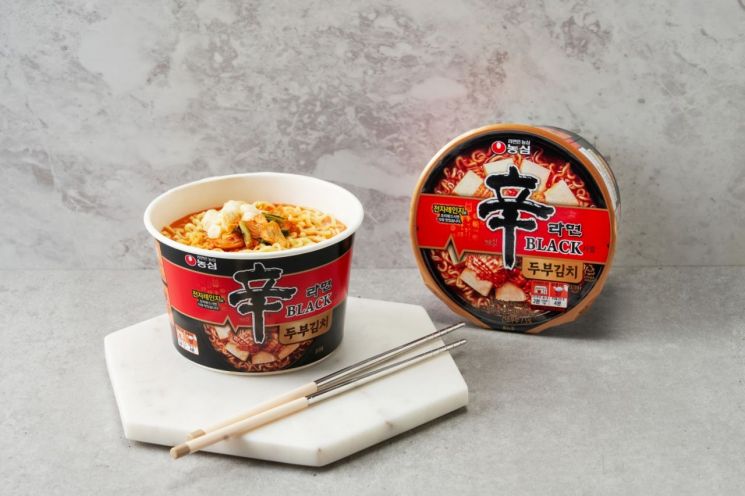
Nongshim clarified that the harmful substance detected in its ramen exported to Taiwan is not the carcinogen ethylene oxide (EO), but rather '2-chloroethanol (2-CE)'.
According to industry sources on the 19th, some Taiwanese media reported the day before that harmful substances were detected in certain Shin Ramyun Black products imported into Taiwan. The Taiwan Food and Drug Administration (TFDA) under the Ministry of Health and Welfare disclosed 10 products that failed customs inspections for imported foods that day. The TFDA stated that residual pesticide testing on 'Shin Ramyun Black Tofu Kimchi Bowl' detected 0.075 mg/kg of the carcinogen EO in the soup base. According to Taiwan's Food Safety and Hygiene Management Act, 1,000 boxes weighing 1,128 kg of the affected products are scheduled to be discarded.
In response, Nongshim explained that the detected substance is 2-chloroethanol (2-CE), not the carcinogen EO. They also noted that the raw materials for the domestic products differ from those for the Taiwan export products, and that 2-CE was not detected in the analysis of domestic products, confirming no issues with the domestic items.
Nongshim believes that the problematic 2-CE originated from the raw materials used in the Shin Ramyun Black Tofu Kimchi Bowl products exported to Taiwan on the affected manufacturing date. They suspect it is due to the cultivation environment of the agricultural raw materials or temporary and unintentional cross-contamination. Nongshim also asserted that the substance is 2-CE, not EO, and therefore is not a carcinogen. It is reported that the initial announcement by the Taiwan FDA identifying the substance as EO occurred because the detected amount of 2-CE was converted to an EO equivalent and reported as EO during the process.
A Nongshim representative said, "We currently manage raw materials from cultivation to finished products through contract farming of agricultural raw materials and comply with a six-step verification process. Taking this incident as an opportunity, we will enhance precision analytical equipment, significantly increase our analysis capabilities, and strengthen monitoring at the raw material stage to prevent recurrence of issues caused by unintentional problems with agricultural raw materials."
© The Asia Business Daily(www.asiae.co.kr). All rights reserved.

















