Fatality rate 1.79 times higher... 'Long COVID' issue too
Health authorities "Vaccines reduce risk of reinfection and severe progression"
[Asia Economy Reporter Yoon Seul-gi] As various quarantine indicators stabilize, the indoor mask-wearing mandate is expected to be eased as early as the end of January. However, the risk posed by COVID-19 infection cannot be overlooked, and it has been found that the fatality rate is higher in cases of COVID-19 reinfection.
Recently, reinfections have been on the rise. It is estimated that one out of every five confirmed cases is a reinfection. The proportion of suspected reinfection cases in the first week of January (1st?7th) was 19.92%, higher than the previous week’s 19.02%.
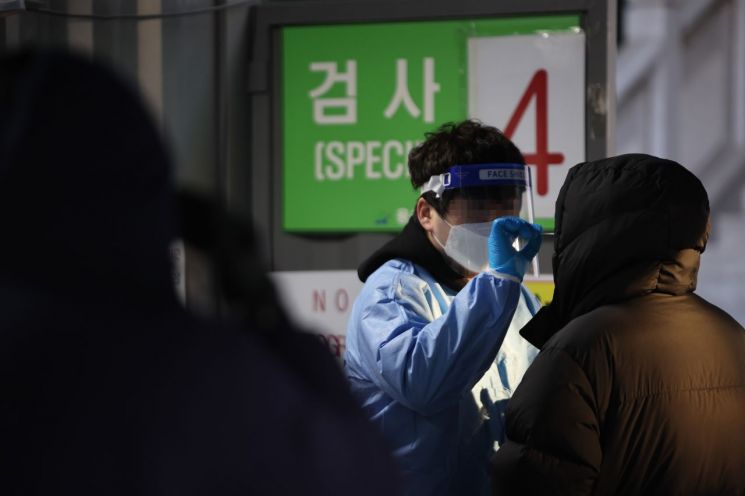 Citizens are getting tested for COVID-19 at the COVID-19 screening clinic of Yongsan-gu Public Health Center in Seoul. Photo by Yonhap News Agency
The problem is that the fatality rate is higher in reinfected individuals. According to the Central Disease Control Headquarters (CDCH) on the 18th, during the BA.5 wave period (July 24 to December 10, 2022), the fatality rate of COVID-19 reinfected patients was higher than that of those infected once. Analyzing the fatality rate by number of infections among 8,472,714 confirmed cases, the age-standardized fatality rate for second infections was 0.11%, which is 1.79 times higher than the 0.06% fatality rate for first infections.
Post-COVID-19 recovery also presents issues. Overseas research has shown that COVID-19 infection affects not only the respiratory system but also the entire body for more than seven months. On the 14th of last month, the international academic journal Nature published a study by a research team from the National Institute of Allergy and Infectious Diseases (NIAID), under the U.S. National Institutes of Health (NIH), reporting that COVID-19 virus was found to have penetrated the entire body upon autopsy of COVID-19 patients.
The research team conducted autopsies on 44 patients who died from severe COVID-19 between April 2020 and March 2021. All deceased were unvaccinated, with an average age of 62.5 years, and 30% were female. The team tested for COVID-19 viral ribonucleic acid (RNA) in 85 different body tissues and fluids.
The autopsy results showed traces of infection not only in the respiratory system such as the lungs but also in 79 other parts of the body including the heart, spleen, reproductive organs, kidneys, liver, and brain. However, outside the respiratory system, no inflammatory responses or damage were detected. The research team explained, "In some autopsies, we confirmed that the COVID-19 virus can cause systemic infection and persist in the body for up to 230 days," adding, "This means the virus can continue to survive inside cells."
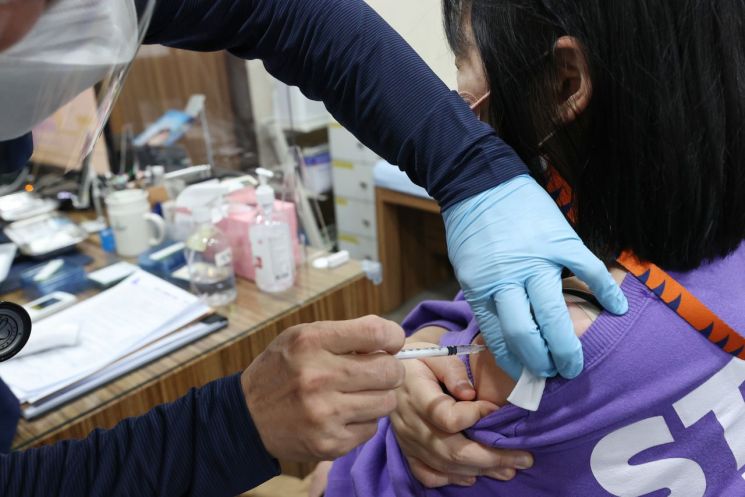 Medical staff are administering the BA.4/5-based vaccine at a hospital in Seoul. Photo by Yonhap News
The risk of long COVID, a post-COVID-19 complication, remains significant. The World Health Organization (WHO) defines long COVID as a condition where "at least one unexplained symptom" occurs within three months after recovery from COVID-19 and lasts for at least two months. Representative symptoms include cough, changes in smell and taste, and fatigue, with studies also indicating hair loss and sexual dysfunction. In South Korea, as complaints of long COVID continue, research is underway to develop related countermeasures.
Given this situation, the importance of vaccination is increasing. According to health authorities, an analysis of vaccine effectiveness over the past four weeks showed that completing the bivalent vaccine reduces the risk of severe progression by 93.9% even if infected after vaccination, compared to unvaccinated individuals. The severe progression rate among the 'unvaccinated confirmed group' was 16.3 times higher than that of the 'bivalent vaccine completed confirmed group' and 7.0 times higher than that of the 'fourth dose completed confirmed group.'
Vaccines are also effective in preventing long COVID. According to a research team from Israel’s Weizmann Institute, eight out of the ten most common long COVID symptoms decreased by 50% to as much as 80%.
As the indoor mask-wearing mandate is expected to be converted to a recommendation as early as the 30th, health authorities urged people to receive the bivalent vaccine. The CDCH stated, "During the Omicron-dominant period, the proportion of reinfections is increasing, and the risk of death is also higher in reinfections. Since vaccination reduces reinfection and severe progression, even those with past infections need to be vaccinated according to the recommended schedule."
© The Asia Business Daily(www.asiae.co.kr). All rights reserved.
![Clutching a Stolen Dior Bag, Saying "I Hate Being Poor but Real"... The Grotesque Con of a "Human Knockoff" [Slate]](https://cwcontent.asiae.co.kr/asiaresize/183/2026021902243444107_1771435474.jpg)

















