[Asia Economy Yang Nak-gyu, Military Specialist Reporter] U.S. Secretary of Defense Lloyd Austin's visit to Korea at the end of this month is expected to outline plans for real-time military information sharing among the three countries: South Korea, the U.S., and Japan.
A Ministry of National Defense official said in a phone interview with Asia Economy on the 18th, "Secretary Austin plans to visit Korea as soon as the Lunar New Year holiday ends, and there will be mentions of trilateral information sharing with Japan during his talks with Minister of National Defense Lee Jong-seop." Patrick Ryder, spokesperson for the U.S. Department of Defense, also confirmed at a regular briefing on the 17th (local time), "Secretary Austin is scheduled to visit South Korea and the Philippines to meet with senior government officials and military leaders."
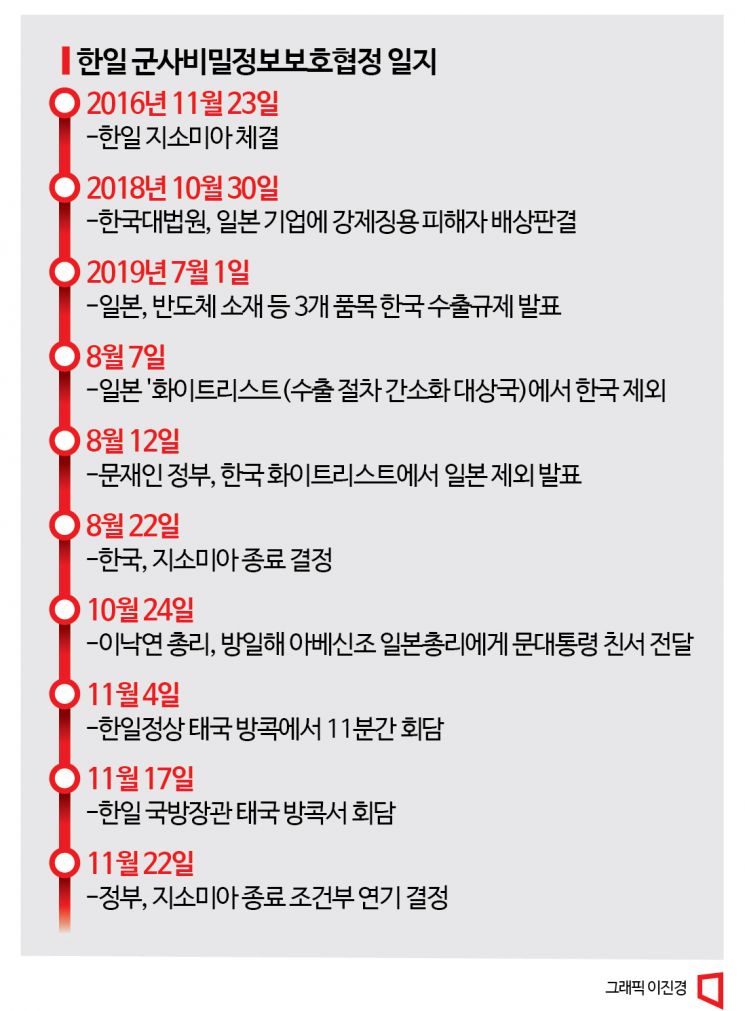
During his visit, Secretary Austin is expected to mediate differences between South Korea and Japan. Until now, the South Korean and Japanese governments have experienced diplomatic conflicts over solutions to the issue of forced labor victims during the Japanese colonial period, which has hindered acceleration of military cooperation.
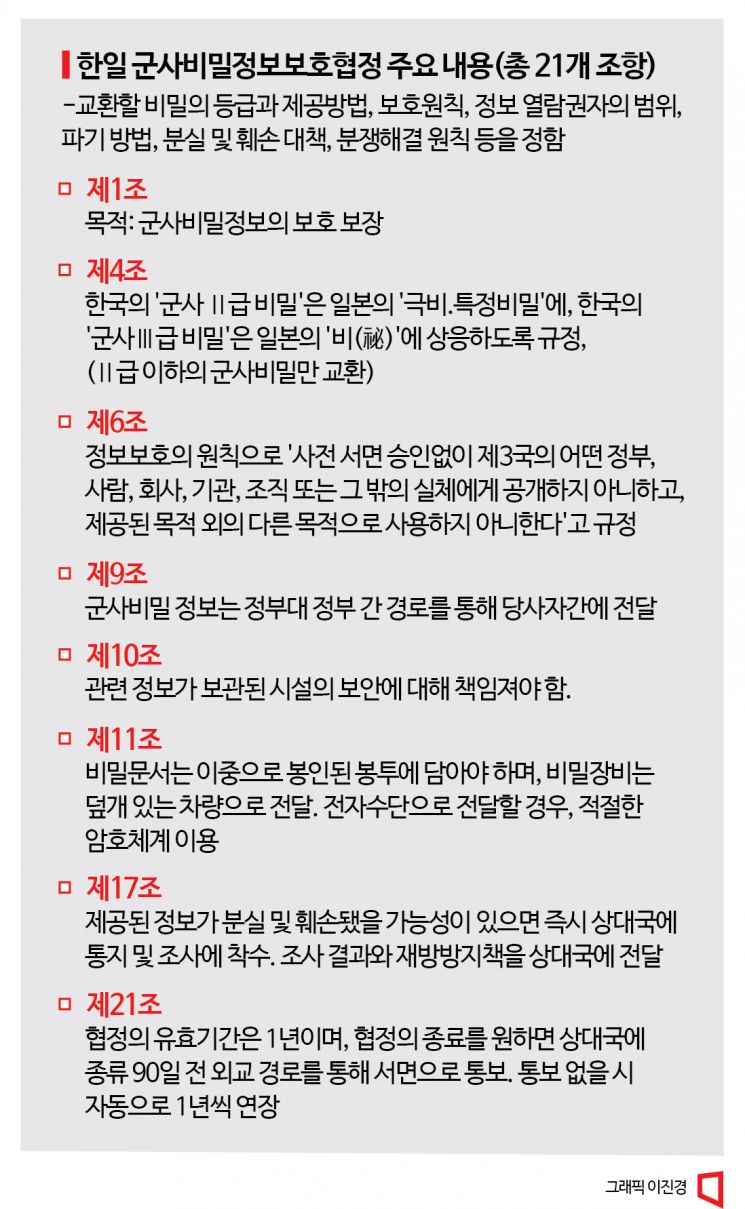
South Korea and Japan share information through the General Security of Military Information Agreement (GSOMIA). However, its effectiveness is limited. Since information is shared only when one side requests specific military intelligence, information exchange occurs long after North Korea launches missiles. In other words, it is not real-time.
Moreover, only necessary military information (excluding top secret level 1) is exchanged between South Korea and Japan, so broad information sharing has not been achieved. As of October last year, despite over 30 provocations by North Korea, the number of information exchanges through GSOMIA between South Korea and Japan was only 11. Consequently, whenever North Korea launched missiles, there were differences in announcements from South Korea and Japan regarding altitude, speed, and quantity.
U.S. Secretary of Defense Austin to Visit Korea After Lunar New Year Holiday... Expected to Coordinate South Korea-Japan Military Cooperation
Continuity is also lacking. GSOMIA, signed in 2016, is structured to automatically renew every November 23, but after a termination crisis in 2019, the stability of the agreement between the two countries remains uncertain.
Inside and outside the military, it is expected that Secretary Austin's visit will strengthen existing platforms such as GSOMIA and the Trilateral Information Sharing Agreement (TISA) among South Korea, the U.S., and Japan. Through this, real-time sharing among the three countries will be promoted, and expiration dates will be removed to enable practical trilateral sharing.
If differences among South Korea, the U.S., and Japan are reconciled, concrete and technical measures can be discussed at the upcoming Deputy Minister-level policy consultation body, the South Korea-U.S.-Japan Security Meeting (DTT), expected to be held next month. Subsequently, a final conclusion may be reached at the three South Korea-U.S. Defense Minister meetings anticipated to be held about three times this year. Previously, Minister Lee Jong-seop stated that three South Korea-U.S. Defense Minister meetings would be held this year, including around June at the Singapore Asia Security Conference (commonly known as the Shangri-La Dialogue) and in November at the Seoul South Korea-U.S. Security Consultative Meeting (SCM).
The issue is how to quell domestic opposition concerned about integration into the U.S.-led missile defense (MD) system. China may also react negatively. This implies that China could intervene as it did when the Terminal High Altitude Area Defense (THAAD) system was deployed in Seongju, Gyeongbuk. Especially with the upcoming membership of the U.S., Australia, Japan, and India security consultative body ‘Quad (Ouad)’ aimed at tightening pressure on China, a military confrontation with China cannot be ruled out.
© The Asia Business Daily(www.asiae.co.kr). All rights reserved.


















