[Asia Economy Reporter Yujin Cho] As the Biden administration in the United States approaches the midpoint of its term, the issue of "raising the national debt ceiling" has emerged as its biggest challenge. To avoid default, the debt ceiling must be raised, but with the Democrats and Republicans continuing their tug-of-war, a fierce battle is expected. If the U.S. Treasury fails to raise the debt ceiling within the emergency measures period, it is anticipated that the financial markets will face repercussions similar to the 2011 U.S. credit rating downgrade crisis.
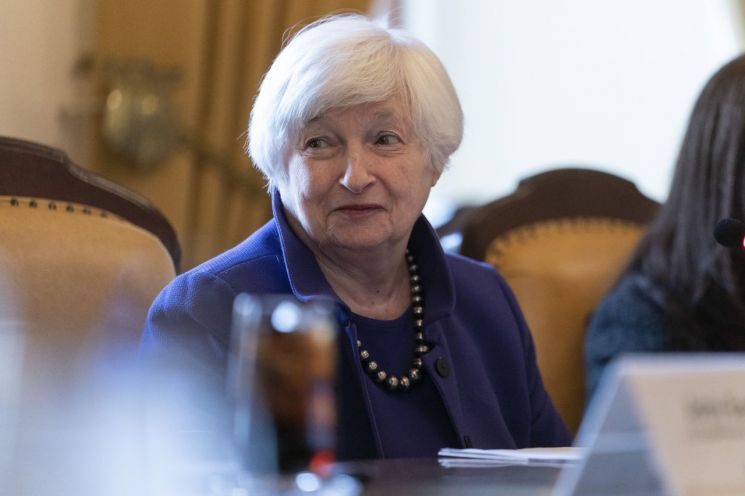
According to major foreign media on the 17th (local time), the total U.S. debt is expected to reach the government debt ceiling of $31.381 trillion on the 19th. After reaching the ceiling, the U.S. Treasury's emergency measures to avoid new borrowing beyond the limit will continue until June. Earlier on the 13th, Treasury Secretary Yellen sent a letter to the leadership of both the House and Senate stating, "From January 19th, the U.S. government debt balance will reach the statutory limit, and the Treasury plans to implement special measures to prevent default until early June." The government debt ceiling refers to the upper limit on the amount of money the federal government can borrow to fulfill fiscal obligations and maintain fiscal soundness. This limit is set by the U.S. Congress. Since the introduction of the debt ceiling system in 1917, the U.S. has avoided default crises by raising the debt ceiling rather than cutting spending. At the end of 2021, although the default issue arose, the debt ceiling was raised from $28.9 trillion to the current level.
This year, such measures are not easy. The hardline Republicans who took control of the House last year strongly oppose raising the debt ceiling, using it as a political tool. On the 15th, House Speaker Kevin McCarthy stated, "I believe the government will agree to spending cuts to avoid default," expressing opposition to raising the debt ceiling. He demanded government spending cuts in exchange for compromising on raising the debt ceiling, signaling that negotiations will continue to be contentious. James Comer, Chairman of the House Committee on Oversight and Reform, also drew a line by saying, "I hope we can avoid a default crisis, but the responsibility to agree to spending cuts lies with the Democrats." On the other hand, Secretary Yellen dismissed the possibility of (spending cuts) and emphasized, "The only solution is Republican cooperation."
Major foreign media warned that if the two parties fail to reach an agreement and negotiations continue beyond the June deadline, the U.S. credit rating could be downgraded, and a repeat of the 2011 crisis, when global stock markets panicked, could occur. Considering the impact of a U.S. default, the debt ceiling is expected to be raised as in the past, but since the Republicans are using it as a political tool, it could cause uncertainty in the financial markets until June. The New York Times (NYT) predicted, "It will be the nastiest fight between the Democrats and Republicans in a decade."
Some have suggested the possibility of applying a measure from the Obama administration era, which involved creating a $1 trillion commemorative coin exempt from the statutory limit and using it as collateral to resolve government bonds when the ceiling is reached. However, since the Biden administration opposes this, the likelihood of its application is considered low.
© The Asia Business Daily(www.asiae.co.kr). All rights reserved.

















