Approval of Asset Securitization Act Bill Subcommittee on the 16th
Securitization Enabled through Intellectual Property Rights
Acceleration of PF ABCP Management in 'Legoland Incident'
[Asia Economy Reporter Kwon Hyun-ji] The requirements for asset securitization, which allows low-liquidity assets such as real estate to be converted into cash, have been relaxed, providing some relief to the funding channels of companies and financial institutions. Regarding real estate project financing asset-backed commercial papers (PF ABCP), which were in a regulatory blind spot, management and supervision will be accelerated in connection with the 'Legoland incident.'
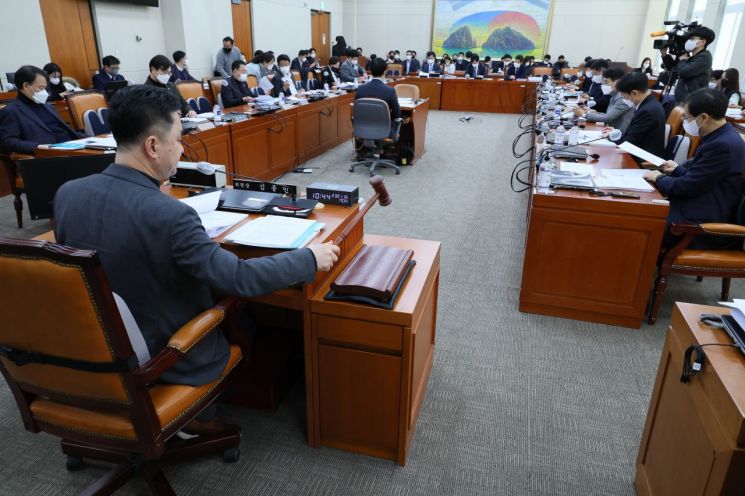
On the 16th, the National Assembly's Political Affairs Committee held the first subcommittee on bill review and passed the "Partial Amendment to the Act on Asset Securitization" containing these provisions. The Financial Services Commission submitted a bill to amend the Asset Securitization Act to the National Assembly in May 2021 to reflect market changes since the introduction of the asset securitization system. The amendment is expected to be implemented by the second half of the year (after six months from promulgation) following the Political Affairs Committee's plenary session and the plenary session of the National Assembly.
According to the amendment, companies with low credit ratings will also be able to issue securitized securities backed by high-quality assets. The previous restriction allowing only companies with a credit rating of BB or higher to issue registered securitized securities (which must be registered and disclosed to authorities upon issuance) has been lifted. Since securitized securities are issued based on the creditworthiness of the 'assets' held by the company, the company's credit rating will no longer be considered.
The scope of assets eligible for securitization will also be expanded. Currently, asset securitization involves issuing bonds backed by bonds or real estate to raise cash, but the amendment plans to extend the securitization target to future claims and intellectual property rights. If the amendment passes the plenary session, more companies are expected to be able to raise funds through asset securitization.
At the same time, management and supervision of non-registered securitization, such as PF ABCP, will be strengthened. Unlike registered securitization, which must be registered and disclosed to authorities under the current Asset Securitization Act, non-registered securitization has no disclosure obligations, leading to missing important information or reduced disclosure accuracy. Therefore, issuance information will be disclosed, and risk-sharing obligations will be imposed to enable market risk assessment. Going forward, issuance details such as the amount and maturity of securitized securities, information on transaction participants including asset holders, actual fundraisers, asset managers, and credit information will be disclosed, and fines and penalties will be imposed for violations.
In particular, with a consensus forming on the need to manage PF ABCP following the recent Legoland default incident, the amendment is expected to gain momentum. Most PF ABCP issued by securities firms are non-registered securitized securities, and the issuance scale of non-registered securitized securities is 480 trillion won, much larger than registered securitized securities at 62 trillion won.
A National Assembly Political Affairs Committee official explained, "During the Legoland incident, most PF ABCP fell under non-registered securitization and were not subject to the current Asset Securitization Act," adding, "If the amendment passes, there will be more information available about these."
© The Asia Business Daily(www.asiae.co.kr). All rights reserved.
![Clutching a Stolen Dior Bag, Saying "I Hate Being Poor but Real"... The Grotesque Con of a "Human Knockoff" [Slate]](https://cwcontent.asiae.co.kr/asiaresize/183/2026021902243444107_1771435474.jpg)
















