Japan has 3.5 Million Vacant Houses... Revision of the 'Special Measures Act'
Population Decline and Regional Disappearance Also Affect 'Korea'
The issue of vacant houses is becoming serious in both Korea and Japan due to population decline and regional extinction. Currently, Japan has as many as 3.5 million vacant houses, and to reduce the number of neglected houses, it has revised the 'Special Measures Act on Vacant House Countermeasures' to eliminate tax benefits for vacant houses. In Korea, voices are also rising to introduce a 'vacant house tax.' However, since vacant houses appear alongside the massive social problem of population decline, there are also criticisms that tax measures alone are insufficient to prevent the spread of vacant houses.
Japan Expands Scope Beyond 'Specific Vacant Houses'
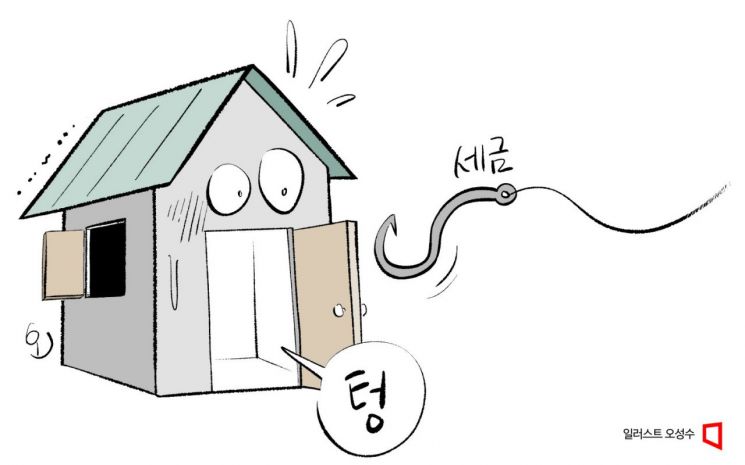
According to Japanese media such as the Asahi Shimbun on the 24th, Japan's Ministry of Land, Infrastructure, Transport and Tourism plans to submit a revision bill of the 'Special Measures Act on Vacant House Countermeasures' to the regular Diet session. The core of the bill is to impose penalties such as removing tax benefits if neglected vacant houses that are practically unmanaged do not comply with administrative orders.
Since the enforcement of the 'Special Measures Act on Vacant House Countermeasures' in 2015, local governments have been allowed to forcibly demolish or sell 'specific vacant houses' at risk of collapse, and special fixed asset tax measures were excluded for these specific vacant houses. However, the current revision bill stipulates that even if a building is not at risk of collapse, if it is deemed insufficiently managed, the special tax benefit measures will not be applied.
Currently, Japan imposes a fixed asset tax of about 1.4% of the asset valuation on land, but if there is a house, the fixed asset tax is reduced to one-sixth. However, this measure has been pointed out as a factor increasing vacant houses, prompting authorities to take countermeasures. The Japanese government designates vacant houses with broken windows or overgrown weeds as 'poorly managed vacant houses' and allows local governments to request improvements. If administrative guidance is not followed, tax benefits will be revoked.
According to Japan's Ministry of Internal Affairs and Communications, as of 2018, the total number of vacant houses across Japan approaches 8.5 million, accounting for 13.6% of all houses. Excluding rental and vacation homes, about 3.5 million houses have been left vacant for a long time, a 90% increase over the past 20 years. If the current trend continues, the vacancy rate in Japan is expected to rise to 31.5% of all houses by 2038.
Will Korea Also Introduce a 'Vacant House Tax'?
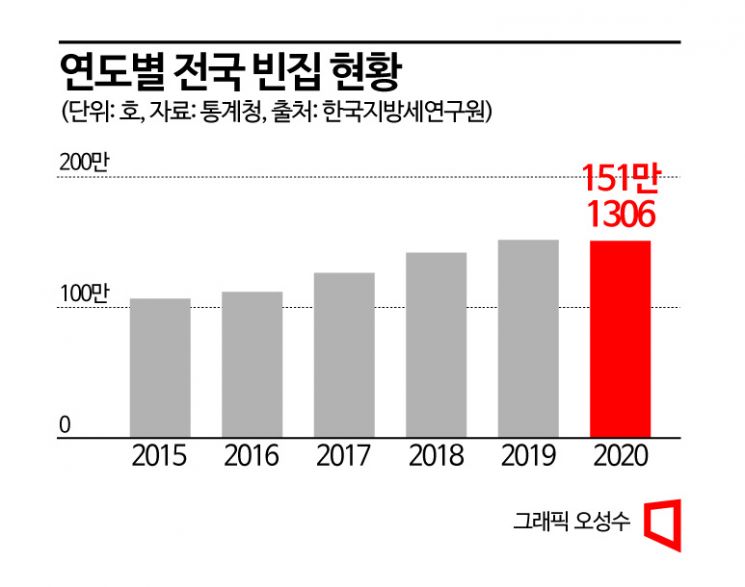
The vacant house problem is not unique to Japan. Korea is also experiencing rapid population decline and regional extinction, making empty houses easy to find nationwide. According to the 'Property Tax System Improvement Plan for Vacant House Maintenance' released last year by the Korea Local Tax Research Institute, the number of vacant houses nationwide surged from 1,068,919 in 2015 to 1,511,306 in 2020.
The problem is that vacant houses appear not only in small regional cities but also in metropolitan cities and Seoul. The report suggests a 'vacant house tax' as a solution. Most vacant houses have owners, but they do not demolish them to reduce tax burdens. Since buildings depreciate and their value is not high, it is more profitable to leave them vacant.
Currently, Korean local governments can issue administrative orders to vacant house owners for demolition, reconstruction, or repair. However, if the owner does not respond, the orders have no effect. The Local Tax Research Institute explained, "If vacant house owners voluntarily demolish their houses, incentives should be provided to seek property tax reductions on the land attached to the demolished house."
However, there are opinions that taxing vacant houses cannot solve the problem immediately. Experts say the vacant house issue originates from population decline due to low birthrates and aging, and in urban areas, it is closely related to redevelopment and maintenance projects, so tax measures alone are not the answer.
Meanwhile, some countries overseas have introduced vacant house taxes. The UK introduced a law in 2013 that imposes local taxes at 50-300% rates on houses vacant for more than two years, and Canada introduced a vacant house tax focused on local tax surcharges in 2017.
© The Asia Business Daily(www.asiae.co.kr). All rights reserved.
![Clutching a Stolen Dior Bag, Saying "I Hate Being Poor but Real"... The Grotesque Con of a "Human Knockoff" [Slate]](https://cwcontent.asiae.co.kr/asiaresize/183/2026021902243444107_1771435474.jpg)

















