Resolving Welfare Blind Spots and Preventing Solitary Deaths
[Asia Economy Reporter Kiho Sung] The Seoul Metropolitan Government announced on the 17th that it plans to establish a more thorough and strengthened welfare safety net through the activities of the Uri Dongnae Dolbomdan this year.
The Uri Dongnae Dolbomdan is a system implemented since 2017, composed of residents who are well acquainted with their local area. It carries out activities supporting the role of welfare officers by regularly checking on vulnerable groups and residents in welfare blind spots and linking them to welfare services. Since its implementation in 10 autonomous districts in 2017, the program expanded to all 25 autonomous districts from 2021. Initially, it focused on managing vulnerable groups such as elderly living alone as designated by each district, but from 2022, it has specified households at risk of solitary death as the main care target.
The city plans to expand the operation period of the Uri Dongnae Dolbomdan to year-round starting this year to build a seamless welfare safety net. Until last year, activities began after March each year, but this year, by starting activities from January, the city aims to minimize care blind spots and conduct thorough and regular welfare checks targeting households at risk of solitary death.
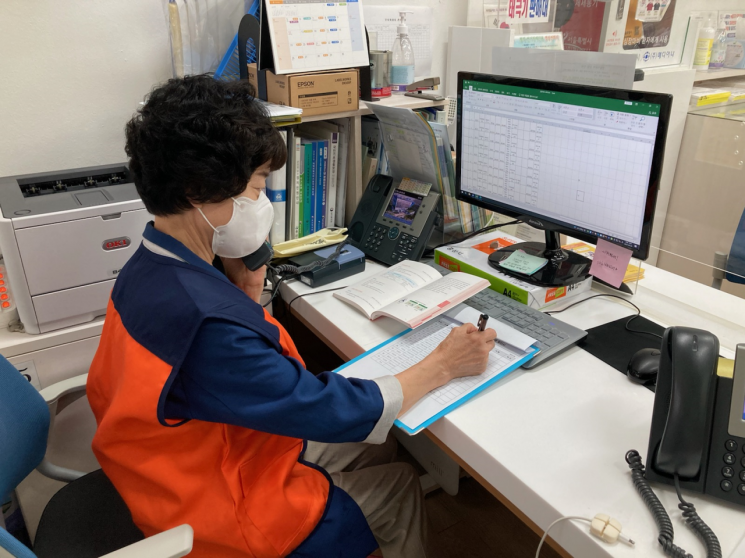
This year, the total number of Uri Dongnae Dolbomdan members is 1,200, and recruitment will be conducted publicly according to each district’s schedule. Among the Dolbomdan members, 1,180 will be assigned to community service centers, and 20 will be placed in five jjokbang counseling centers, where they will focus on weekly regular welfare checks (via phone calls, visits, etc.) for households at risk of solitary death together with welfare officers.
Additionally, through welfare checks, they will closely identify individual household crisis situations and promote welfare service support such as public benefits (application for basic livelihood security under the Basic Livelihood Security Act), emergency welfare (national and Seoul-type), and linkage to private services (donations and goods).
Furthermore, utilizing the fact that Uri Dongnae Dolbomdan members are local residents like the households at risk of solitary death, they will actively participate in social network formation projects to alleviate the loneliness and isolation of these vulnerable households. The social network formation projects include various activities planned by the autonomous districts and community service centers, such as walking companionship, cooking, education, and experiential learning to support the social activities of vulnerable households, and will be promoted according to each district’s circumstances.
Kim Sanghan, Director of Welfare Policy, stated, “It is important for the public and private sectors to cooperate and maintain continuous interest so that vulnerable groups such as households at risk of solitary death do not become socially isolated.” He added, “Through year-round operation of the Uri Dongnae Dolbomdan, we will always check on the welfare of at-risk households and cooperate with autonomous districts to prevent them from facing crisis situations while isolated.”
© The Asia Business Daily(www.asiae.co.kr). All rights reserved.
![Clutching a Stolen Dior Bag, Saying "I Hate Being Poor but Real"... The Grotesque Con of a "Human Knockoff" [Slate]](https://cwcontent.asiae.co.kr/asiaresize/183/2026021902243444107_1771435474.jpg)
















