[Asia Economy Reporter Yujin Cho] An analysis has emerged suggesting that a series of global divisions stemming from the pandemic, the Ukraine war, and Brexit (the United Kingdom's withdrawal from the European Union) could reduce global gross domestic product (GDP) by up to 7%.
The International Monetary Fund (IMF) warned on the 15th (local time) that the decline in international economic cooperation and trade volume could lead to a massive setback in the global economy, especially affecting low-income countries.
It also noted that rising barriers to cross-border labor and export restrictions delaying technology diffusion could cause losses of 8-12% in some countries, including emerging economies.
In a report published on the same day, the IMF pointed out that the divisions among Western countries caused by the COVID-19 pandemic, the subsequent Ukraine crisis, and Brexit, along with the ongoing US-China trade war, are further shrinking the global economy, which has yet to fully recover from the 2008 financial crisis.
During the height of the pandemic in 2020-2021, supply chain disruptions and export restrictions by various countries affected about 90% of global trade volume. Since then, the war between Ukraine and Russia, which began in February last year, and the Western sanctions against Russia have led to significant turmoil in global energy and agricultural markets, the IMF pointed out.
The IMF warned that the decades-long increase in economic integration is at risk of being reversed by this series of crises, raising concerns about geopolitical fragmentation.
The IMF stated that even limited fragmentation could reduce global GDP by about 2%, and emphasized the need for more detailed analysis of its impact on the international monetary system and the global financial safety net (GFSN).
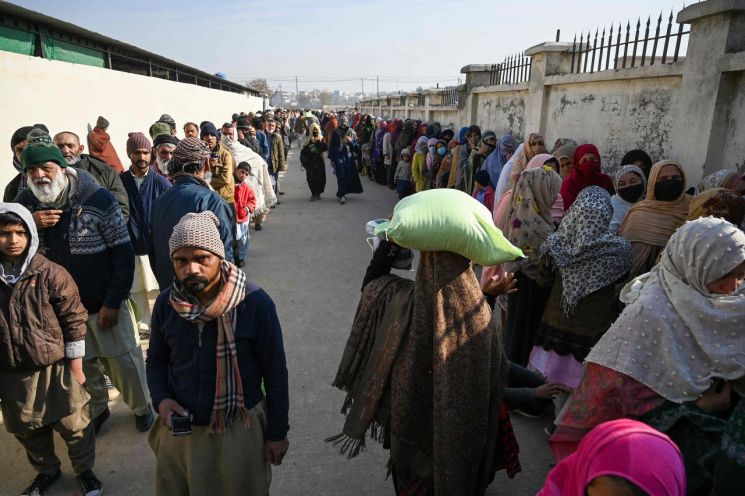
So far, the IMF assesses that economic globalization has significantly contributed to reducing poverty worldwide and has also benefited low-income consumers in advanced economies. However, it predicted that economic fragmentation would most negatively affect the poor in both developing and developed countries.
The IMF analyzed that as the fragmentation of the international payment system and regional decentralization of finance progress, the negative impacts on emerging and low-income countries could increase.
It also warned that economic fragmentation amid reduced international risk-sharing could amplify macroeconomic volatility and trigger more severe crises.
Furthermore, the IMF expressed concerns that this would weaken the international community’s capacity to support countries in crisis and complicate future resolutions of sovereign debt crises.
© The Asia Business Daily(www.asiae.co.kr). All rights reserved.
![Clutching a Stolen Dior Bag, Saying "I Hate Being Poor but Real"... The Grotesque Con of a "Human Knockoff" [Slate]](https://cwcontent.asiae.co.kr/asiaresize/183/2026021902243444107_1771435474.jpg)
















