Real Income Per Capita Decreases to 1.88 Million Won
[Asia Economy Reporter Oh Gyumin] The economy of Germany, the largest economic power in Europe, grew by 1.9% last year. It is evaluated as having performed well despite the Ukraine war and soaring prices.
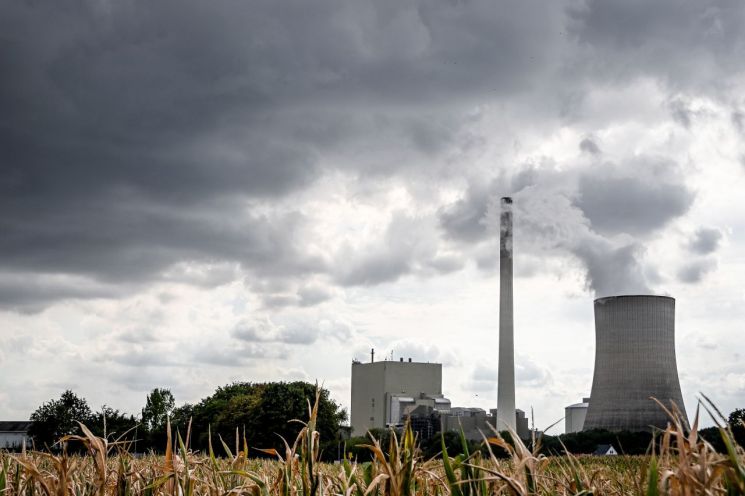
On the 13th (local time), the German Federal Statistical Office announced that the country's gross domestic product (GDP) grew by 1.9% last year. This is the fifth highest growth rate in the past 10 years.
Veronika Grimm, a professor of economics at Erlangen University and a member of the German government's Economic Expert Advisory Committee, told S?ddeutsche Zeitung (SZ), "No bad news flew in," adding, "Germans consumed more than expected despite soaring prices, supply chains worked better than the previous year, and the industry saved gas after Russia shut off the gas pipeline, substituting energy-intensive products with imports."
However, considering that Germany's GDP shrank by 4.6% in 2020 when COVID-19 emerged, there is also an assessment that last year's growth, which should have marked a full recovery, was insufficient. Timo Wollmersh?user, head of the macroeconomic division at the German IFO Institute for Economic Research, said, "Looking again, it is a bad result," and argued, "Last year should have recorded growth that rapidly compensated for the economic downturn caused by COVID-19."
Economic experts expect Germany's economic growth to stagnate this year due to soaring prices. It is forecasted that the economy will grow by 1 to 2% only next year.
Last year, German consumption increased by 4.6%, returning to pre-COVID-19 levels. Wollmersh?user said, "Contrary to expectations that German households would reduce consumption due to high prices, the dining and shopping sectors were surprisingly strong," adding, "In December, car sales soared, breaking through the ceiling."
© The Asia Business Daily(www.asiae.co.kr). All rights reserved.

















