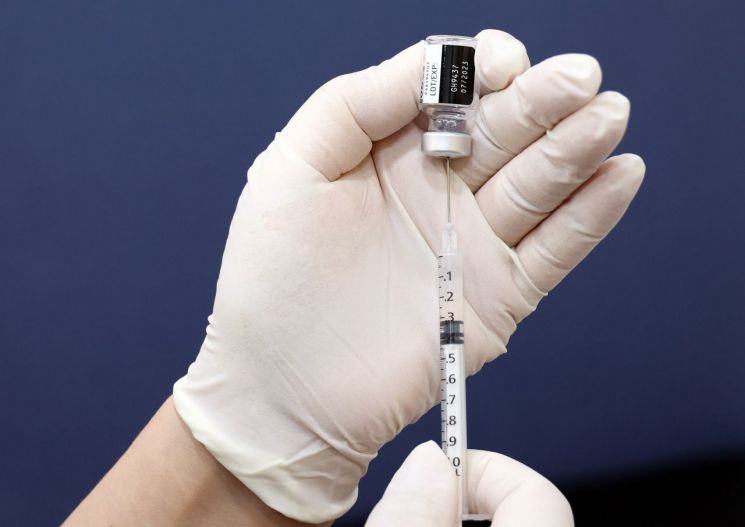
[Asia Economy Reporter Byun Seon-jin] As it has been four years since the outbreak of COVID-19, it has been found that 98.6% of our citizens possess antibodies against COVID-19. However, the health authorities noted that since antibody titers decrease over time, the possibility of reinfection with COVID-19 is high, making additional vaccinations necessary.
The Korea Disease Control and Prevention Agency (KDCA) and the National Institute of Health announced the results of the "Second Survey on Community-Based Representative Sample COVID-19 Antibody Positivity Rate," conducted in collaboration with the Korean Society of Epidemiology and local community organizations, on the 13th. This survey was conducted from the 7th to the 22nd of last month, targeting 7,528 participants who wished to participate in the second survey out of 9,945 participants from the first survey, involving questionnaires, blood sampling, and COVID-19 antibody testing.
The Majority of Citizens Have COVID-19 Antibodies
The survey results showed that the overall antibody positivity rate, including natural infection and vaccination, was 98.6%. This figure is similar to the first survey result (97.6%), indicating that most citizens have some level of immunity against COVID-19.
The natural infection antibody positivity rate was 70.0%, while the cumulative confirmed case rate during this period was 51.5%. This means that there were 18.5 percentage points more "hidden infections" who were not diagnosed with COVID-19 during the seventh winter wave. Kwon Jun-wook, director of the National Institute of Health, stated, "However, this scale of undiagnosed infections is very low compared to overseas cases such as Canada and the UK," adding, "(This suggests) that Korea has relatively well-managed quarantine measures, including high accessibility to testing and rapid isolation." The natural infection antibody positivity rate in the second survey increased by 12.8 percentage points from 57.2% in the first survey.
The natural infection antibody positivity rate varies by age group. It was higher among children (90.0%) and adolescents (83.5%), who have lower vaccination rates, and lower among older age groups such as those in their 70s (56.9%) and 80s (47.6%). Regional differences were also observed. Areas with higher natural infection antibody positivity rates than the national average (70.0%) included Sejong, Gangwon, Busan, Gyeongbuk, Seoul, Jeju, and Daejeon. Regarding these differences, the health authorities stated, "We are conducting detailed analyses considering each region's vaccination rates, severe case ratios, and sociodemographic characteristics."
Does a High Antibody Positivity Rate Mean No COVID-19 Infection?
A high overall antibody positivity rate does not mean that an individual's defense against the virus is strong. This is because antibody titers generated after vaccination or infection begin to decrease from the three-month mark. Additionally, the infection risk analysis from the second survey showed that the lower the antibody titer level, the higher the risk of infection. This is why the health authorities shortened the vaccination interval from four months to three months last month for adults aged 18 and older. The authorities emphasized that additional vaccinations are still necessary for high-risk groups aged 60 and above to prevent severe illness.
The health authorities will also conduct a third antibody positivity rate survey reflecting the COVID-19 epidemic situation. Professor Jung Jae-hoon of Gachon University’s Department of Preventive Medicine said, "Antibody surveys provide fundamental data for designing future quarantine policies," adding, "It is meaningful data for analyzing how public immunity changes over the long term and to what extent vaccinations are needed through continuous follow-up observation."
© The Asia Business Daily(www.asiae.co.kr). All rights reserved.
![Clutching a Stolen Dior Bag, Saying "I Hate Being Poor but Real"... The Grotesque Con of a "Human Knockoff" [Slate]](https://cwcontent.asiae.co.kr/asiaresize/183/2026021902243444107_1771435474.jpg)











