[Asia Economy Reporter Lee Gwan-ju] Pregnant women find it difficult to take medications carelessly even when they are sick. Since there is a risk of adverse effects on the fetus, only drugs verified through various studies should be used. In particular, drugs commonly used in general can cause fatal results for pregnant women. Representative drugs include ‘Alprazolam,’ used for depression and anxiety disorders, and ‘Isotretinoin,’ used as an acne treatment. Research results indicate that improper use of these drugs can cause miscarriage, birth defects, and other problems.

Alprazolam Increases Risk of Miscarriage and Low Birth Weight
Alprazolam, a psychotropic drug, is widely used to treat depression, anxiety, panic disorder, as well as stomach and duodenal issues, irritable bowel syndrome, and autonomic nervous system disorders. It is also one of the commonly prescribed sleep sedatives in Korea. However, recent studies have confirmed that taking alprazolam during pregnancy increases the risk of miscarriage, low birth weight, and preterm birth.
A research team led by Professor Han Jeong-yeol of Inje University Ilsan Paik Hospital, a renowned obstetrician, recently conducted a study comparing a group of pregnant women who took alprazolam (96 individuals) and a non-taking group (629 individuals) registered in the ‘Korea MotherSafe (Pregnancy Drug Information Center)’ from 2000 to 2019. The results showed that the alprazolam group had a 2.38 times higher risk of miscarriage, a 3.65 times higher risk of low birth weight, and a 2.27 times higher risk of preterm birth compared to the non-taking group.
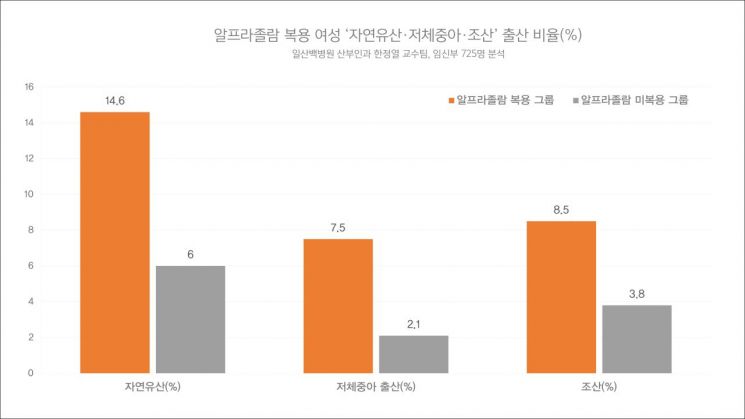
It also negatively affected newborn health. Analysis of the 1-minute Apgar score after birth in the alprazolam group showed that the risk of scoring 7 or below was 2.19 times higher than in the non-taking group. The Apgar score is a method to evaluate the newborn’s condition immediately after birth, with a typical 1-minute score ranging from 8 to 10. A score of 6 or below requires intensive care. This study also analyzed the reasons why pregnant women took alprazolam. Irritable bowel syndrome was the most common at 20.8%, followed by depression (16.7%), respiratory diseases (12.5%), panic disorder (11.5%), and other neuropathies including migraines (11.5%). Professor Han emphasized, "Alprazolam is used not only for mental illnesses but also for insomnia, respiratory diseases, and obesity treatment. Pregnant women must inform medical staff of their pregnancy when receiving prescriptions."
Acne Treatment Drug ‘Isotretinoin’ Causes Fetal Malformations
Acne treatments are also representative drugs contraindicated for pregnant women and women preparing for pregnancy. This is because isotretinoin, the main ingredient in acne treatments, causes fetal malformations. Last year, Professor Han’s research team conducted a meta-analysis of 10 internationally published papers from the US, Canada, and other countries on the risk of malformations in pregnant women who took isotretinoin. The study included 2,783 pregnant women exposed to isotretinoin, whose risk of giving birth to malformed infants was up to 3.76 times higher than that of the unexposed group. Major malformations included skull and facial defects, central nervous system damage, heart defects, polydactyly, facial and neck malformations, and syndactyly.
 Professor Han Jeong-yeol, Department of Obstetrics and Gynecology, Ilsan Paik Hospital. [Photo by Ilsan Paik Hospital]
The abortion rate was also high. Among pregnant women who took isotretinoin, 80% ended in abortion. Of these, 65% were elective abortions. Canadian studies showed an 84% pregnancy termination rate, and US studies showed 72%. According to data from the MotherSafe Counseling Center, over 1,500 consultations were conducted in Korea from 2010 to 2021 for pregnant women who took isotretinoin, with more than 50% choosing pregnancy termination. The US Food and Drug Administration (FDA) recommends waiting at least four weeks after stopping isotretinoin before becoming pregnant. Professor Han advised, "Women who become pregnant while taking isotretinoin have a high risk of malformations and often terminate their pregnancies due to fear and anxiety. Such women need to seek help through accurate diagnosis and testing by specialists."
Meanwhile, the Ministry of Food and Drug Safety classifies 1,078 contraindicated drugs during pregnancy, with 131 drugs classified as category 1, meaning they must never be taken during pregnancy. The rest fall under category 2, which are generally prohibited but may be taken based on the prescriber's judgment. Isotretinoin is classified as category 1, while benzodiazepines such as alprazolam are classified as category 2.
© The Asia Business Daily(www.asiae.co.kr). All rights reserved.



















