[Asia Economy Reporter Byeon Seon-jin] As new COVID-19 variants rapidly emerge, there is growing interest in whether vaccines developed earlier are effective in preventing infection. The monovalent vaccines administered since 2021 were discontinued from the 17th of last month due to their ineffectiveness against Omicron infections. Currently, bivalent vaccines containing antigens from the original Wuhan strain and Omicron subvariants (BA.1, BA.4, BA.5) in equal parts are being administered. Experts say that unless the next Omicron variant becomes dominant, the current variants are mostly Omicron subvariants, so the vaccines remain effective in prevention.
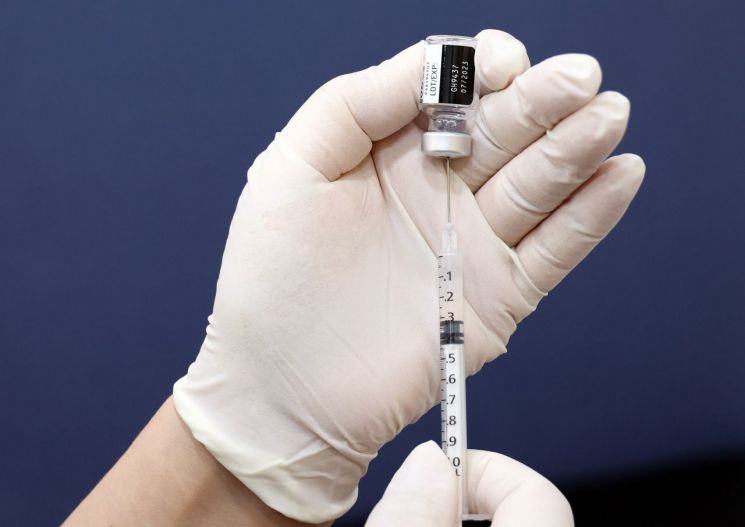
Do dozens of Omicron variants reduce vaccine effectiveness?
The domestic COVID-19 situation shows dozens of Omicron variants competing for dominance. According to the Korea Disease Control and Prevention Agency’s detection rates for Omicron sublineages in the first week of January (1st?7th), the dominant BA.5 (34.4%) is losing ground, replaced by variants such as BN.1 (32.4%), BQ.1 and BQ.1.1 (12.1%), BA.2.75 (10.0%), and BF.7 (6.0%). The World Health Organization (WHO) has designated XBB.1.5 (0.2%) as the most transmissible variant, with 17 cases detected since the 8th of last month. XBB.1.5 is a recombinant variant derived from XBB, which itself is a recombination of several subvariants, and it has recently become dominant in the United States.
There is analysis suggesting that the bivalent vaccines targeting BA.1 and BA.4/5 currently used for vaccination are losing effectiveness. This follows the experience when the original monovalent vaccines developed against the Wuhan strain lost effectiveness against Omicron in March last year, leading to a surge in breakthrough infections and daily confirmed cases reaching up to 620,000.
Health authorities consider that the major variants detected domestically are subvariants of Omicron, the globally dominant strain, so although the degree of infection prevention varies, all vaccines are considered effective.
A study published last month in the global scientific journal Cell confirmed that neutralizing antibodies increased more than 2.7 times (628→1688) against BA.4 and BA.5 variants in groups receiving a third dose followed by a bivalent vaccine booster. Neutralizing antibodies increased 2.7 times (208→568) and 2.4 times (139→337) against BQ.1 and BQ.1.1, respectively, and 1.9 times (111→209) and 1.5 times (108→162) against XBB and XBB.1. Neutralizing antibodies are those that neutralize and defend the body when the virus invades.
According to a paper published on the medical preprint site bioRxiv.org, additional vaccination with the bivalent vaccine increased neutralizing antibodies by 4.4 times (54→239) against BN.1, 7.2 times (174→1247) against BA.5, and 3.0 times (287→849) against BA.2.75. However, the increase in neutralizing antibodies tends to be somewhat lower against new Omicron subvariants.
"Bivalent vaccines are effective against Omicron variants... Vaccine issues for next variants are a global challenge"
Professor Kim Woo-joo, an infectious disease specialist at Korea University Guro Hospital, said, "COVID-19 has evolved through variants such as Alpha, Beta, Gamma, and Delta to become dominated by Omicron. Since current variants are Omicron subvariants, bivalent vaccines are expected to be effective." However, he added, "If the next variant after Omicron, such as Pi, expands its presence, it may be necessary to develop and administer new vaccines rather than bivalent ones." Professor Kim also noted, "The speed at which variants emerge is much faster than the pace at which scientists develop new vaccines, making it a global urgent issue to develop vaccines that can universally respond to COVID-19."
Health authorities state, "Currently, it is more important to reduce severe cases in high-risk groups through vaccination than to compare how effective bivalent vaccines are against individual Omicron variants." An analysis of COVID-19 confirmed cases infected between November 6 and December 3 last year showed that the risk of severe progression in the bivalent vaccine group decreased by 95.1% compared to the unvaccinated group.
© The Asia Business Daily(www.asiae.co.kr). All rights reserved.


















