North Korea Nuclear Issue and Semiconductors Also Key Agenda Items
[Asia Economy Reporter Yujin Cho] U.S. President Joe Biden and Japanese Prime Minister Fumio Kishida will focus on discussing North Korea's nuclear issue and semiconductor export controls to China during their White House summit scheduled for the 13th (local time). Japan's revised defense strategy, which assumes China, North Korea, and Russia as adversaries and grants the Self-Defense Forces 'counterattack capabilities,' is also expected to be on the agenda.
On the 11th, major foreign media outlets cited senior officials reporting that the two leaders are expected to discuss increasing military security threats in the Indo-Pacific region and economic security issues in key sectors such as semiconductors as major agenda items during the summit.
Regarding economic security issues in key sectors including semiconductors, the official stated, "There will be discussions on technological issues, and it will be made clear that appropriate controls and safeguards must be in place to maintain our (U.S.) superiority."
Prime Minister Kishida has previously expressed support for President Biden's stance on semiconductor export controls to China. However, he did not agree with the U.S. administration's comprehensive restrictions on chip technology exports imposed in October last year. According to these control measures, the sale of advanced U.S. semiconductor equipment to Chinese semiconductor manufacturers is effectively banned.
The official emphasized, "Although the systems and legal frameworks of the two countries cannot be considered identical, it is not believed that Japan harbors doubts about the basic premise of bilateral cooperation."
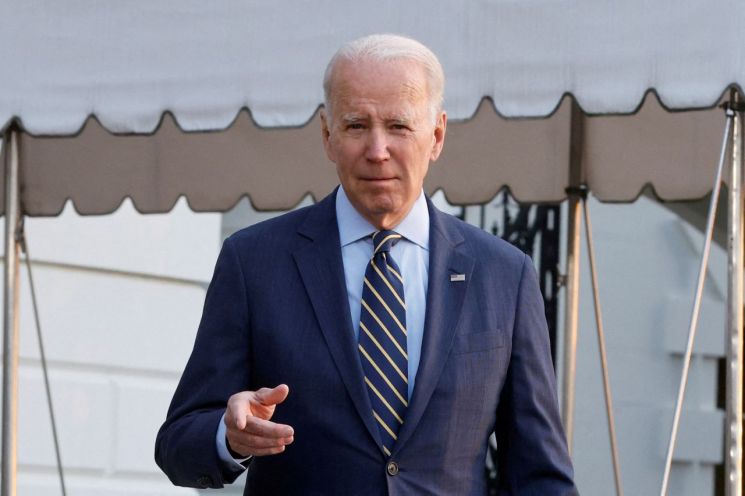
Prime Minister Kishida is also expected to explain the revisions to Japan's national security strategy made amid increasing geopolitical risks due to North Korea's threats in the Indo-Pacific region, China's military buildup, and the prolonged Russian invasion of Ukraine during this summit.
Earlier, the Kishida Cabinet approved revisions to security documents last month, which include granting the Self-Defense Forces 'counterattack capabilities (attacks on enemy bases)' and doubling defense spending within five years. Following this, the U.S. White House and the foreign affairs committees of both the House and Senate issued welcoming statements in quick succession. The official said, "Such a situation was unimaginable just ten years ago," adding, "The U.S. defense treaty with Japan will extend even into space."
He mentioned that the strategic reality is changing due to North Korea's nuclear threat and pointed out that the security environment is becoming increasingly unstable due to the possibility of North Korea conducting nuclear tests.
Prior to the summit scheduled for the 13th, the U.S. and Japan will hold a '2+2 Foreign and Defense Ministers Meeting' on the same day to coordinate diplomatic and security issues in advance. The meeting will be attended by U.S. Secretary of State Antony Blinken and Secretary of Defense Lloyd Austin, and by Japanese Foreign Minister Yoshimasa Hayashi and Defense Minister Yasukazu Hamada, respectively.
© The Asia Business Daily(www.asiae.co.kr). All rights reserved.

















