Narrow Roads and Traffic Congestion Highlight Two-Wheelers
Expected to Account for 40-45% by 2030
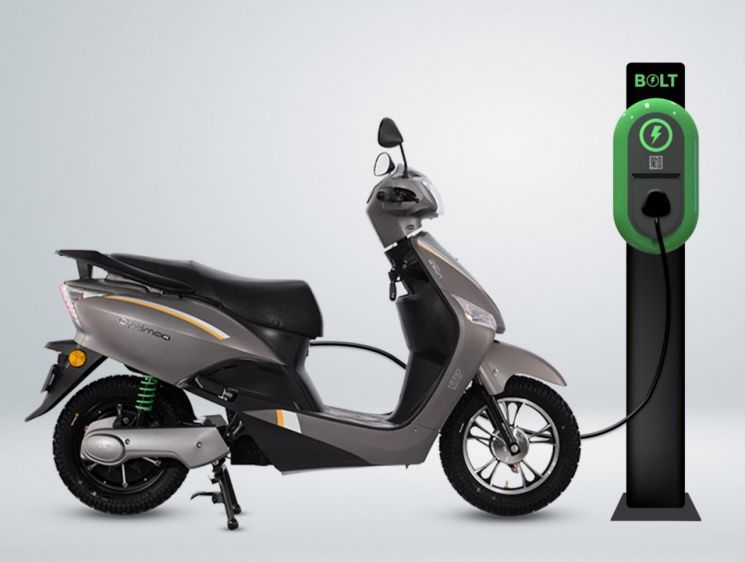
[Asia Economy Reporter Hyunwoo Lee] As the automobile market is transforming from traditional internal combustion engine vehicles to electric vehicles centered around the United States and China, 'electric two-wheelers' are gaining attention, especially in India and Southeast Asia, which have emerged as the world's 5th largest economies. In particular, in India, the number of electric two-wheelers has surged more than 20 times within just three years since 2019, significantly expanding the market.
India and Southeast Asian regions have narrow roads and densely populated metropolitan areas, resulting in most households owning more two-wheelers than cars. The electric two-wheeler market is expected to gain great popularity throughout South Asia in the future.
◆India's Electric Two-Wheelers Surpass 600,000 Despite Pandemic Impact
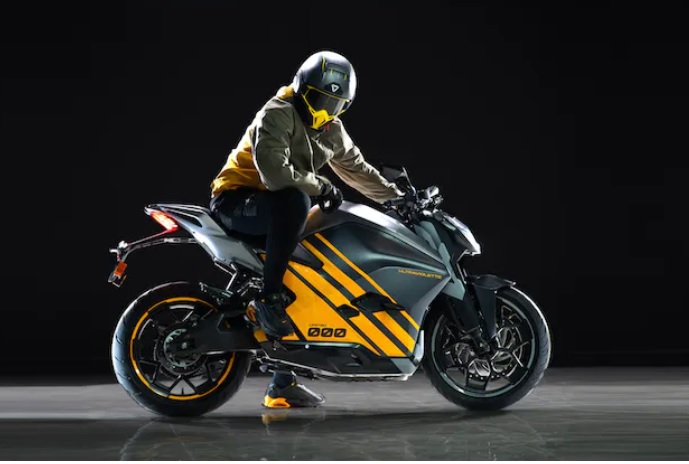
According to local Indian media such as Autocar India on the 10th (local time), the number of electric two-wheeler registrations in India last year reached 615,365, a 305% increase compared to the previous year. This is more than 20 times the 28,280 units registered in 2019, just before the COVID-19 pandemic. Despite lockdown measures due to the pandemic, the market experienced rapid growth.
In contrast, the number of electric vehicle registrations excluding two-wheelers was only about 380,000, showing sluggish sales compared to electric two-wheelers. This accounted for less than 2% of total vehicle registrations. Considering that China recorded 7.84 million electric vehicles in 2021, this is a very small figure.
This is interpreted as due to the higher demand for two-wheelers in India because of narrow roads and frequent traffic congestion. The per capita two-wheeler ownership rate in India is 48%, indicating that almost every household owns at least one motorcycle or similar two-wheeler.
According to CNBC, Bain & Company, a US consulting firm, forecasts that annual sales of electric two-wheelers in India will reach about 13 million units by 2030, capturing 40-45% of the total market. In comparison, Bain & Company expects general electric vehicle sales to remain at around 1 million units annually.
However, it is pointed out that a significant increase in electric vehicle charging stations is necessary for future market expansion. Currently, there are about 2,500 charging stations across India, and many electric two-wheeler owners still suffer from 'range anxiety' due to the long distances between charging stations, CNBC reported. In India, Tata Power, the largest power company, plans to install approximately 25,000 charging stations nationwide by 2028.
◆Rapid Expansion Expected in Thailand, Vietnam, Indonesia, and Others
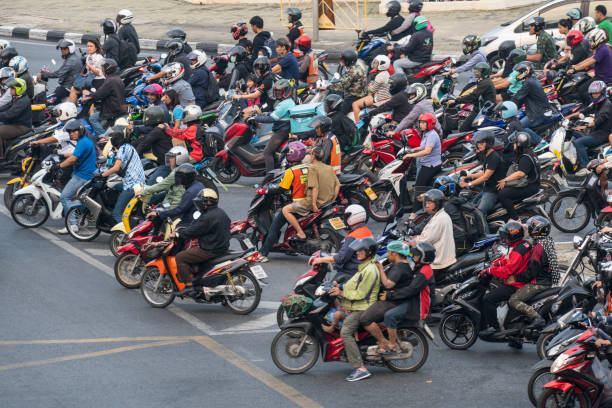 A procession of motorcycles filling the streets of Bangkok, the capital city of Thailand. Bangkok=AP·Yonhap News
Accordingly, the electric two-wheeler market is expected to expand significantly not only in India but also in Southeast Asian countries where the proportion of two-wheeler ownership is higher than that of general vehicles.
According to the British BBC, Thailand has the highest per capita two-wheeler ownership rate at 87%. Vietnam (86%), Indonesia (85%), and Malaysia (83%) also exceed 80%, with almost everyone owning at least one two-wheeler.
Arushi Koteka, an automotive industry analyst at the global research group Economist Intelligence Unit, said in an interview with BBC, "In markets like India and Southeast Asia outside China, disposable household income (PDI) is still low, making it difficult to afford cars. During times of high inflation in food and fuel, the burden of maintaining gasoline vehicles increases, so the transition to electric motorcycles is expected to happen much faster." She added, "If global demand for electric two-wheelers continues to expand, demand in the Asian region could increase by about 3 to 4 times by 2030."
© The Asia Business Daily(www.asiae.co.kr). All rights reserved.



















