[Asia Economy Yeongnam Reporting Headquarters Reporter Hwang Dooyul] Professor Sung-Ho Park's team from the Department of Life Sciences at UNIST announced research results on osteoclasts that damage the joint bones of patients with rheumatoid arthritis.
Professor Park's research team studied the possibility of a treatment method targeting the mechanism related to the differentiation process of osteoclasts, which dissolve bones through enzymatic reactions.
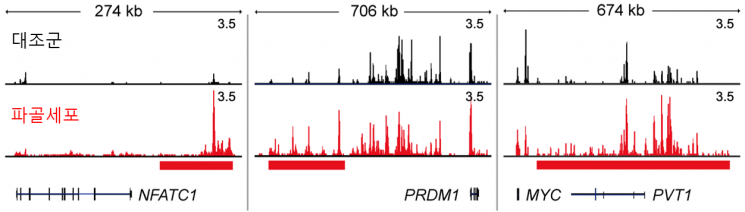
First, they confirmed that a super-enhancer is formed near the NFATC1 gene, known as an important factor in osteoclast formation, and that this super-enhancer is formed only in osteoclasts.
They also confirmed that enhancer RNA, a type of non-coding RNA, is formed in the NFATC1 super-enhancer during osteoclast formation.
Non-coding RNA does not encode proteins but plays an important role in regulating gene expression.
In particular, due to the specificity of molecular sequences, it can be easily targeted for treatment. In fact, interfering with NFATC1 super-enhancer RNA was observed to simultaneously inhibit osteoclast formation.
This study confirmed that NFATC1 super-enhancer RNA formed during the osteoclast differentiation process can be utilized as a therapeutic target.
Professor Sung-Ho Park of the Department of Life Sciences said, “This research result will be a significant advancement in the development of treatments for rheumatoid arthritis.”
This study is scheduled to be published in January 2023 in the journal Cellular and Molecular Immunology.
 The researchers Masunguk, Professor Park Seongho, and Kim Gibyung (from left) who conducted this study are taking a group commemorative photo.
© The Asia Business Daily(www.asiae.co.kr). All rights reserved.
![Clutching a Stolen Dior Bag, Saying "I Hate Being Poor but Real"... The Grotesque Con of a "Human Knockoff" [Slate]](https://cwcontent.asiae.co.kr/asiaresize/183/2026021902243444107_1771435474.jpg)

















