[Asia Economy Reporter Cha Wanyong] The Ministry of Land, Infrastructure and Transport announced on the 10th that all 25 new car models from 16 automobile manufacturers subject to indoor air quality investigation last year met the recommended standards for new car indoor air quality.
In particular, Hyundai's Ioniq 6 and GV70, BMW's X3, Volvo's XC40, and Tesla's Model Y had emissions of harmful substances lower than the recommended standards.
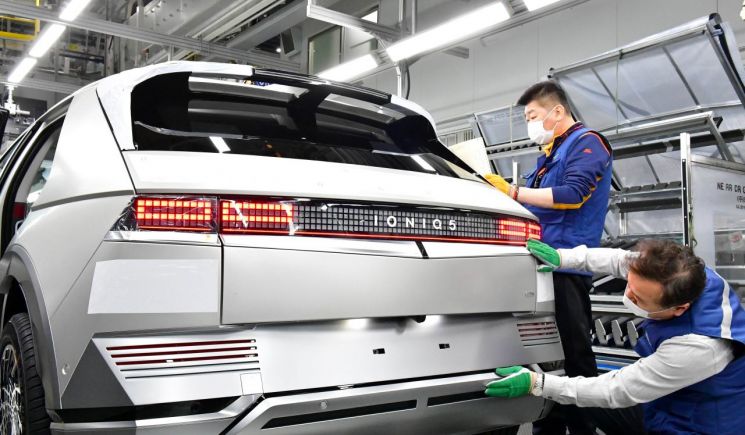
Since 2011, the Ministry has annually investigated and announced whether eight harmful substances (formaldehyde, toluene, ethylbenzene, styrene, benzene, xylene, acrolein, acetaldehyde) emitted from interior materials of newly manufactured and sold cars in Korea meet the recommended standards.
Meanwhile, the Ministry also investigated three car models (△Mercedes-Benz GLA250 4MATIC △Tesla Model 3 Long Range △Audi Volkswagen Q3 35 TDI) this year, which were subject to indoor air quality investigation in 2021 but could not be tested due to difficulties in semiconductor and parts supply caused by COVID-19.
In the case of the GLA250 4MATIC, it was confirmed that the benzene level exceeded the recommended standard. The benzene recommended standard is 30㎍/㎥, but it was found to be 78㎍/㎥.
Benzene is a volatile organic compound emitted from synthetic fibers and plastic parts in car interiors, which can cause fatigue, headaches, and discomfort.
Accordingly, the Ministry requested Mercedes-Benz to investigate the local production line in Germany where the vehicle is produced, the raw materials and parts, and conduct additional indoor air quality tests to identify the cause. Mercedes-Benz's own measurement results confirmed compliance with the recommended standards.
Mercedes-Benz stated that they improved the production process to replace protective vinyl covers and paper mats with new ones after driving tests and refueling operations during production, and conducted on-site worker training on contamination prevention measures inside the vehicle cabin to minimize volatile harmful substances.
Kim Eun-jung, head of the Automobile Policy Division at the Ministry, said, "Through system improvements, the Ministry can conduct follow-up investigations even after the manufacturer analyzes the cause and establishes corrective action plans for vehicles exceeding indoor air quality recommended standards." She added, "We will actively encourage manufacturers' voluntary indoor air quality management and improvement through strict investigations."
© The Asia Business Daily(www.asiae.co.kr). All rights reserved.

















