[Asia Economy Reporter Byeon Seon-jin] The government announced that it will lift the indoor mask mandate this year while achieving a return to normal life through stable management via vaccination and diagnosis and treatment systems.
The government also plans to expand research and development (R&D) support for establishing a messenger RNA (mRNA) vaccine platform and developing antiviral therapeutics to enable effective vaccine, treatment, and diagnostic device development within 100 days in the event of a new pandemic like COVID-19.
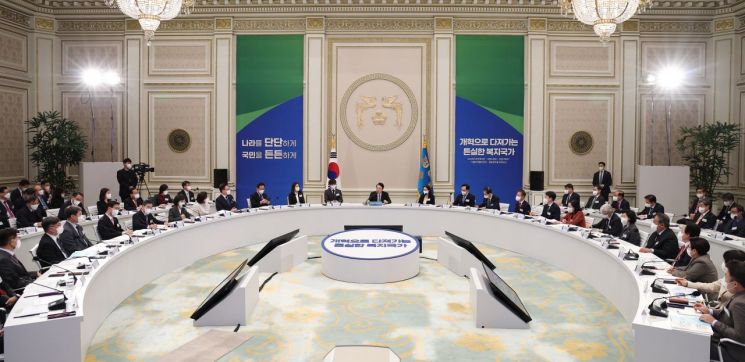
The Korea Disease Control and Prevention Agency (KDCA) reported these plans on the 9th to President Yoon Seok-yeol under the theme "From Crisis to Daily Life, Safely and Healthily" as its major work plan for 2023. To achieve this, KDCA presented four core tasks: ▲advancing the national infectious disease response system to prepare for future pandemics ▲strengthening continuous infectious disease prevention management to minimize infection risks in daily life ▲establishing a national health protection system to prepare for aging and future health threats ▲leading R&D to become a global leader in health and medical care.
KDCA expects sporadic outbreaks of COVID-19 to continue this year, the fourth year of the pandemic. With the Chinese government easing quarantine measures for arrivals after three years on the 8th, international travel has become more active, making outbreaks originating from China a potential variable in the spread.
However, KDCA anticipates that the scale of outbreaks will be manageable through vaccination and rapid diagnosis and treatment systems, allowing a return to normal life, including lifting indoor mask mandates, between this month and March. KDCA Commissioner Ji Young-mi stated, “Whole genome analysis of 17 patients confirmed on the 2nd (from China) detected BA.5, BF.1, and BF.7 variants. Although there were many concerns about new types of variants, none have emerged.”
Better Prepared for Future Pandemics Like COVID-19
KDCA is advancing the national infectious disease response system to prepare for future pandemics like COVID-19.
First, it will strengthen web-based overseas infectious disease information analysis that monitors disease-related information on social networking services (SNS) and other platforms. Wastewater-based surveillance for public guidance and proactive quarantine measures against expected infectious diseases will be expanded from 10 metropolitan cities and provinces to nationwide. The Quarantine Information Pre-Input System (Q-CODE), previously installed only at airport quarantine stations in preparation for the resumption of international maritime routes, will be expanded to port quarantine stations, and the Overseas Infectious Disease Reporting Center will be expanded.
To respond quickly to 'Disease X,' an unknown new infectious disease, KDCA will strengthen diagnostic testing capabilities by introducing a diagnostic test certification system. It will also establish a treatment system by early construction and preparation of standard manuals for five regional infectious disease specialized hospitals, which are key to the primary treatment and management system for regional infections.
For evidence-based chronic disease prevention and management, KDCA will select necessary diseases for national monitoring and build analysis data for surveillance and analysis. To strengthen the health survey system reflecting social environment and regional conditions, it will actively identify new health survey demands and develop region-specific indicators.
To enable rapid response during infectious disease crises, KDCA will establish a cooperation system among domestic and international research institutions centered on the National Institute of Infectious Diseases, strengthening national-level international cooperation and its role as a hub. This year, 450 million KRW has been allocated to establish an international infectious disease research cooperation base, and 1.3 billion KRW to advance the cross-ministerial infectious disease quarantine system.
Support of 11.3 billion KRW and 6 billion KRW will be provided respectively for new technology-based vaccine platform development and clinical support for mRNA vaccines responding to new infectious diseases, securing core vaccine development technologies through industry-academia-research-government collaboration and international joint research. To lead the future medical and bio-health industry globally, KDCA will promote the construction of an integrated bio big data system covering 1 million people and activate advanced regenerative medicine research such as cell therapy and artificial blood development.
National immunization against rotavirus infection, which causes gastroenteritis in infants and young children, will be newly introduced to protect children's health and reduce the economic burden on families with young children. Surveillance of mosquito- and tick-borne infectious diseases, which may increase due to climate change, will be strengthened through 16 vector surveillance centers nationwide, and early testing of symptomatic individuals will be expanded at quarantine stages.
With the rapid increase in pet-owning households raising the risk of zoonotic infectious diseases (infectious diseases transmissible between humans and animals), KDCA will strengthen a One Health-based cross-ministerial cooperation system.
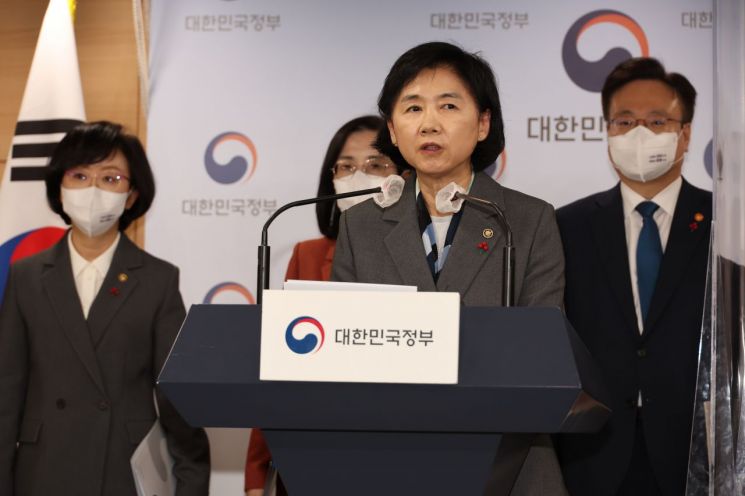
Commissioner Ji Young-mi conveyed President Yoon Seok-yeol’s request to “prioritize the safety and health of the people in infectious disease response,” emphasizing, “To thoroughly prepare for future new infectious disease threats, we will secure sufficient diagnostic and quarantine capabilities, proactively organize the vaccination system, and strive to make this year the inaugural year leading global health and medical cooperation.”
© The Asia Business Daily(www.asiae.co.kr). All rights reserved.

![User Who Sold Erroneously Deposited Bitcoins to Repay Debt and Fund Entertainment... What Did the Supreme Court Decide in 2021? [Legal Issue Check]](https://cwcontent.asiae.co.kr/asiaresize/183/2026020910431234020_1770601391.png)