If a Satellite Is Intercepted, US Will Retaliate
Successful Agreement Expected to Affect Other Allies
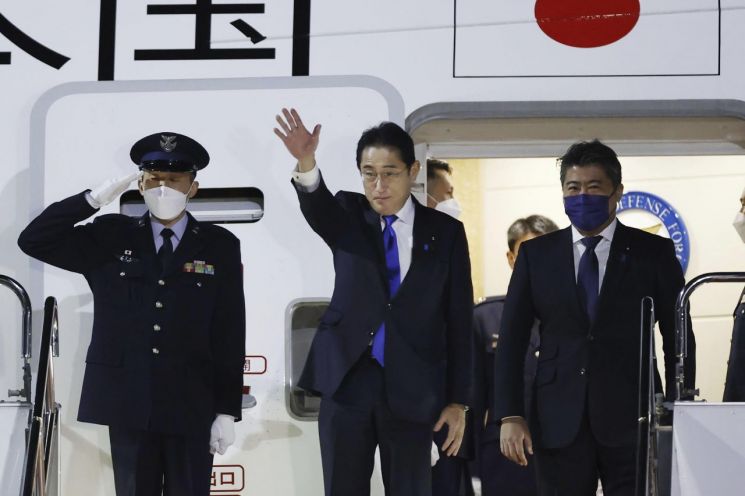
[Asia Economy Reporter Jeon Jinyoung] The US and Japanese governments are pushing to include Japan's outer space within the scope of the US's defense obligations to Japan. If this proposal passes, the US will be able to retaliate if Japanese satellites in space are intercepted in the future. Amid rising risks from neighboring countries such as China and Russia, this move appears to be an effort by Japanese Prime Minister Fumio Kishida, who advocates for "strengthening defense capabilities," to enhance the deterrence and response capabilities of the US-Japan alliance.
On the 9th, Nihon Keizai Shimbun (Nikkei) reported that the two governments have entered final negotiations on this plan. The goal is to include the proposal in the upcoming US-Japan foreign and defense ministers (2+2) meeting scheduled for the 11th, and to reflect it in security-related documents at the summit following on the 13th. Specific response methods will be finalized through further consultations between the two countries.
Currently, under Article 5 of the US-Japan Security Treaty, the US can jointly respond if an armed attack occurs on Japanese territory. In addition to defending existing territory, territorial waters, and airspace, the US expanded its defense scope to cyberspace in 2019. Now, the US intends to extend its defense to include satellites operated by Japan.
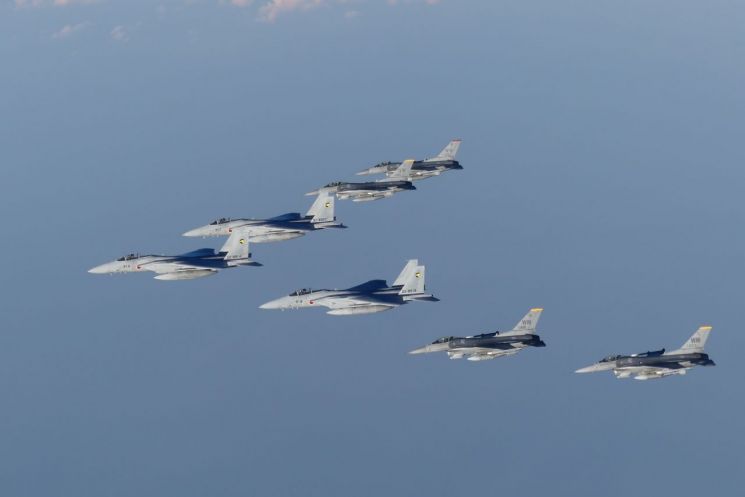
Japan's decision to extend the US security umbrella to space appears to be due to the increasing threat levels from neighboring countries such as China and Russia. China and Russia are developing missiles or lasers that can interfere with satellite and ground communications or intercept satellites.
According to Nikkei, the two countries are also pursuing plans for "killer satellites" that can approach and attack other countries' satellites. Other Japanese media reported that Russia is focusing on systems to destroy low-earth orbit military reconnaissance satellites, while China is primarily testing missiles designed to intercept satellites. This poses a critical risk in conducting military operations, as most weapons, including missile launch systems, operate based on satellite location information (GPS) communications.
Nikkei emphasized, "Satellites are increasingly important as the eyes monitoring the military activities of adversaries," and added, "Considering the development trends of China and Russia, the US-Japan alliance is hastening to enhance its deterrence."
Above all, this can also be read as part of Prime Minister Kishida's "defense capability enhancement" agenda. Kishida has warned that he will pursue defense strengthening even at the cost of tax increases, and is working to strengthen the US-Japan alliance by allocating a record-high amount of Japan's Defense Ministry budget this year to contracts for US weapons. Policies considering North Korea and Taiwan are also being promoted following China and Russia. The Defense Ministry plans to establish a system for sharing information among South Korea, the US, and Japan regarding North Korean missile launches, and to fully deploy warehouses storing missiles and ammunition in the Nansei Islands, which are adjacent to China and Taiwan.
The Japan Air Self-Defense Force will also be reorganized considering activities in the space domain. Nikkei added, "According to the revised three security documents, there are plans to establish an Air and Space Self-Defense Force by reorganizing the Air Self-Defense Force."
Meanwhile, the tendency of countries to cooperate due to concerns about space warfare also seems to be reflected in this policy formulation. In 2021, the North Atlantic Treaty Organization (NATO) agreed that member countries would jointly respond to space warfare that Russia and China might wage. If NATO members' satellites are intercepted, NATO forces will jointly respond.
© The Asia Business Daily(www.asiae.co.kr). All rights reserved.


















