No Reports of Damage Received, Final Tracking Results to Be Released Soon
[Asia Economy Reporter Kim Bong-su] As of 3 PM on the 9th, the Ministry of Science and ICT announced that debris from a U.S. Earth observation satellite is estimated to have passed over the Korean Peninsula, and no special damage has been reported so far.
The exact crash location and time will be officially announced by the U.S. Air Force. The U.S. side considers two scenarios as indicative of a crash: either the satellite's fall was observed, or it was not observed for 90 minutes to 2 hours.
Earlier, the Ministry of Science and ICT stated that the U.S. Earth observation satellite (ERBS) was predicted to re-enter the atmosphere and crash sometime today. At 7 AM today, a warning alert was issued indicating the possibility of it crashing near the Korean Peninsula. At 9:15 AM, a Space Risk Countermeasures Headquarters meeting was held, chaired by First Vice Minister Oh Tae-seok, to discuss response measures with related ministries. From 12:20 PM to 1:20 PM, the expected crash time, an emergency situation meeting was held under the chairmanship of Minister Lee Jong-ho of the Ministry of Science and ICT to assess the damage situation.
The Ministry of Science and ICT explained, "We will disclose additional information such as the final crash location and time after confirming it with the Korea Astronomy and Space Science Institute."
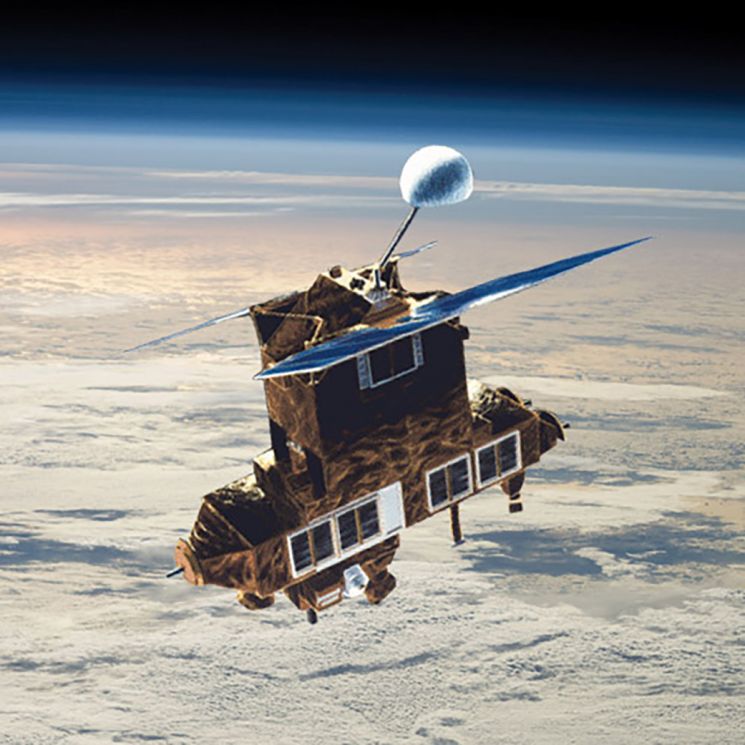
Meanwhile, the ERBS satellite was launched by the U.S. in 1984 to observe the status of ozone layer depletion caused by greenhouse gas emissions, playing a significant role in global countermeasures. After operating for about 21 years, it malfunctioned and drifted in Earth's orbit from 2005, eventually re-entering the atmosphere on this day due to gravity and atmospheric friction, where it was destroyed by frictional heat. NASA stated that the probability of debris from this satellite crashing on the surface and causing damage is as low as 1 in 9,400.
© The Asia Business Daily(www.asiae.co.kr). All rights reserved.

















