Ministry of Science and ICT, "Possibility Near the Korean Peninsula... Most Expected to Burn Up"
NASA's 1984 Earth Observation Satellite ERBS
Expected to Re-enter Atmosphere and Fall on the 9th
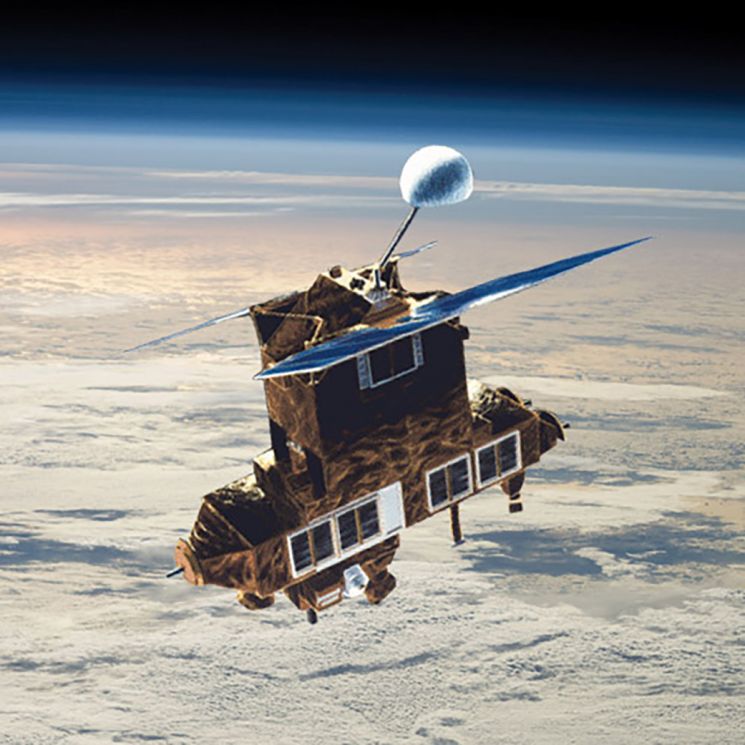 Earth Radiation Budget Satellite (ERBS), a US satellite observing Earth's heat distribution. Photo by NASA website
[Asia Economy Reporter Kim Bong-su] A large 2.5-ton American satellite is likely to crash near the Korean Peninsula on the 9th, prompting the government to prepare countermeasures.
The Ministry of Science and ICT announced late in the afternoon on the 8th that the American Earth Radiation Budget Satellite (ERBS), which has reached the end of its lifespan, is re-entering the atmosphere and crashing, and that analysis results include areas near the Korean Peninsula within the predicted crash range.
This satellite was launched on October 5, 1984, and carried out missions to observe and analyze the Earth's thermal radiation distribution. In particular, it contributed to humanity's efforts to address the destruction of the Earth's ozone layer. After performing its mission for 21 years, it was retired in 2005. Since then, it has been orbiting the Earth by inertia but has re-entered the atmosphere due to atmospheric drag and gravity.
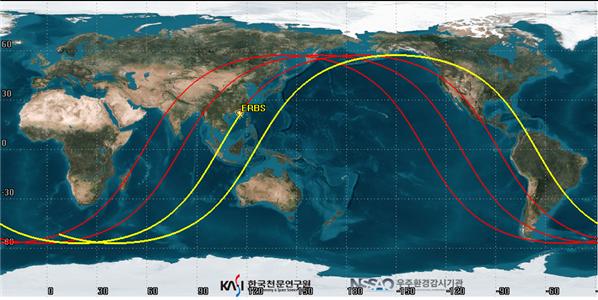
According to the orbital analysis by the Korea Astronomy and Space Science Institute as of 5 p.m. on the 8th, ERBS is highly likely to crash between 9 a.m. and 5 p.m. on January 9, and the predicted crash range includes the Korean Peninsula. However, most of the satellite body is expected to burn up due to frictional heat after atmospheric re-entry, making the possibility of damage low.
The Ministry of Science and ICT stated that it will announce additional information such as the final crash location and time after confirming it with the Astronomy Institute.
© The Asia Business Daily(www.asiae.co.kr). All rights reserved.


















