Recently Released Dutch Official Documents Include 75-Year-Old Treasure Map
Marking Locations of Gold, Silver, and Jewels Looted from Banks
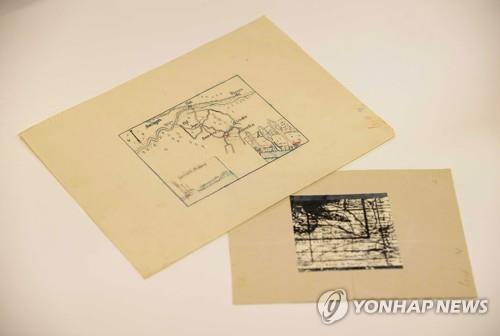 Map showing the location of the 'Nazi treasure chest' released on the 3rd (local time) by the National Archives of the Netherlands. Photo by EPA, Yonhap News
[Asia Economy Reporter Kim Hyunjung] A map recording the location where Nazi soldiers who retreated in 1945 buried looted treasures has been revealed after 75 years, attracting treasure hunters with metal detectors to a rural village in the Netherlands.
On the 7th (local time), according to the British Guardian and foreign media, the Dutch National Archives disclosed over 1,300 official documents created immediately after World War II, including records of abuses in camps and minutes of cabinet minister meetings, following the end of a 75-year confidentiality period on the 3rd. Among these, the most attention-grabbing was undoubtedly the 'treasure map.'
This map is said to mark the location where Nazi soldiers, who occupied the small eastern Dutch town of Arnhem in August 1944, stored diamonds, rubies, and other jewels, as well as gold and silver coins looted from a bank destroyed by bombing, in four ammunition boxes, and buried them while retreating in April 1945. If this treasure chest actually exists, its value is estimated to exceed 15 million pounds (approximately 22.8 billion KRW).
In the upper left corner of the treasure map, a compass shape indicates directions, and the location of the treasure is quite specifically shown with three trees and a red X mark. The source of this map is a man named 'Helmut S,' one of the four soldiers who buried the treasure chest. He is reportedly still alive, while two of the soldiers who buried the treasure died in battle, and the whereabouts of the fourth remain unknown.
The map, which left Helmut S's hands, later passed to the Beheers Research Institute, a Dutch organization managing the assets of missing and deceased persons from World War II. Honorary spokesperson Annamariker Samson of the Dutch National Archives said, "We cannot be completely certain of the treasure's existence, but the Beheers Research Institute, which secured the treasure map, has attempted several excavations, all of which failed."
Researchers believe that the German soldiers buried the treasure chest about 70 to 80 cm deep under a poplar tree on the outskirts of the village of Ommeren, approximately 40 km from Arnhem, as they retreated in April 1945, just before the Allied forces recaptured eastern Netherlands. The Beheers Research Institute searched for the treasure chest three times between 1946 and 1947, even bringing Helmut S, who was living in Germany at the time, for the third search, but ultimately failed to find the treasure.
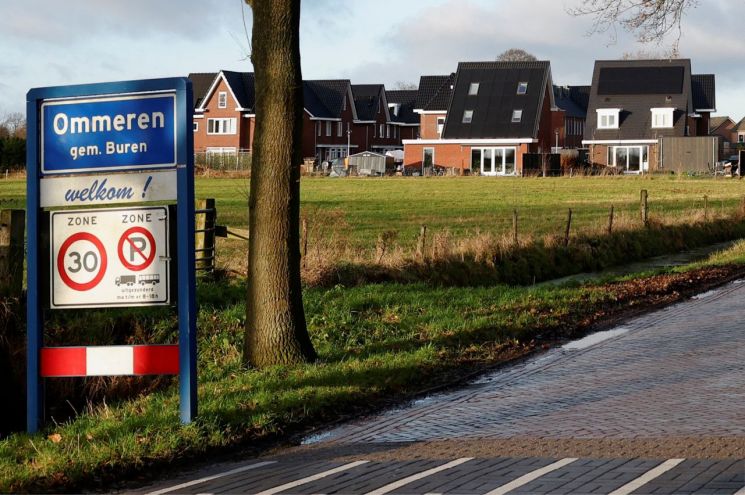 The rural village of Ommel in the Netherlands, known for being the site where treasures looted by German soldiers during World War II were buried. Photo by Yonhap News
As a result, despite skeptical debates such as "there was no treasure in the first place" or "someone who saw the treasure being buried already took it," the quiet village of Ommeren has become crowded with amateur treasure hunters wielding metal detectors and shovels since the map's disclosure. Initially interested in the treasure story, the villagers' dissatisfaction is growing as more outsiders flock in and even private properties are being dug up.
Additionally, the Buren authorities, who oversee Ommeren village, stated, "Ommeren village is close to the front lines during World War II," and "there may be unexploded bombs, mines, or grenades there, so it is dangerous, and we do not recommend searching for Nazi treasures."
© The Asia Business Daily(www.asiae.co.kr). All rights reserved.


















