Evolution from XBB to XBB.1.5 with 'Unprecedented Transmission Power'
As Infection Fear Grows, 'Antidiarrheal Drug Stockpiling' Emerges
"Antiviral Drugs and Vaccines Effective Against XBB.1.5"
[Asia Economy Reporter Yoon Seul-gi] Recently, as the subvariant XBB.1.5 of the COVID-19 Omicron variant spreads rapidly in the United States, concerns over quarantine measures are also rising. This is because the XBB.1.5 variant is known to have unprecedented transmissibility. However, quarantine experts predict that existing variants and treatments will still be effective against this variant, and it will not have a significant impact on the epidemic landscape.
According to the U.S. Centers for Disease Control and Prevention (CDC), as of the end of last year, 40.5% of all new COVID-19 cases in the United States were infected with XBB.1.5. In the Northeast region, the detection rate approaches 75%.
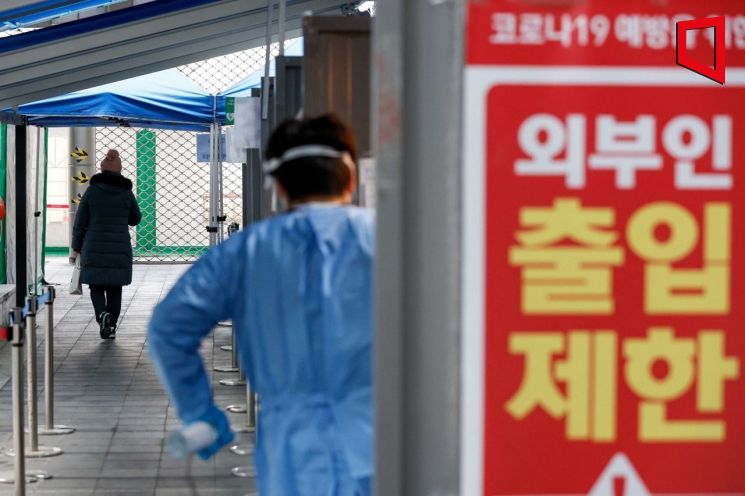 On the 5th, 64,106 new COVID-19 cases were reported. Citizens who visited the screening clinic set up at Yongsan-gu Public Health Center in Seoul underwent testing and are seen leaving. The photo is not related to any specific expression in the article. Photo by Jang Jin-hyung aymsdream@
XBB.1.5 is a subvariant of XBB, evolved from XBB. XBB is a recombinant variant formed by two variants, the 'Centaurus variant' BA.2.75 and BJ.1. It retains the characteristics of Omicron, and is notable for having the strongest transmissibility among all Omicron subvariants to date.
The emergence of the new variant has increased fear of infection. The fact that this variant has unprecedented transmissibility and that XBB subvariants may show resistance to the COVID-19 preventive antibody treatment 'Evusheld' has led to rumors circulating in China.
On December 31, a post on the Chinese social networking service Weibo claimed that XBB.1.5 causes abdominal pain and diarrhea and advised buying the antidiarrheal medicine 'Mengtuosan.' As this post spread, a shortage of antidiarrheal medicine occurred. The price of Mengtuosan jumped about fourfold in one day, from 7 yuan (approximately 1,290 KRW) per box to 36.5 yuan (approximately 6,700 KRW).
However, contrary to some concerns, quarantine experts believe this variant will not significantly affect the epidemic landscape. Existing vaccines can largely prevent severe progression. According to the New England Journal of Medicine (NEJM), the parent lineages XBB and XBB.1 still show equivalent efficacy against antiviral drugs, and although the neutralizing ability against bivalent vaccines including BA.5 is somewhat reduced compared to previous Omicron variants, it remains effective. Therefore, the sublineage XBB.1.5 is expected to respond similarly to antiviral drugs and vaccines.
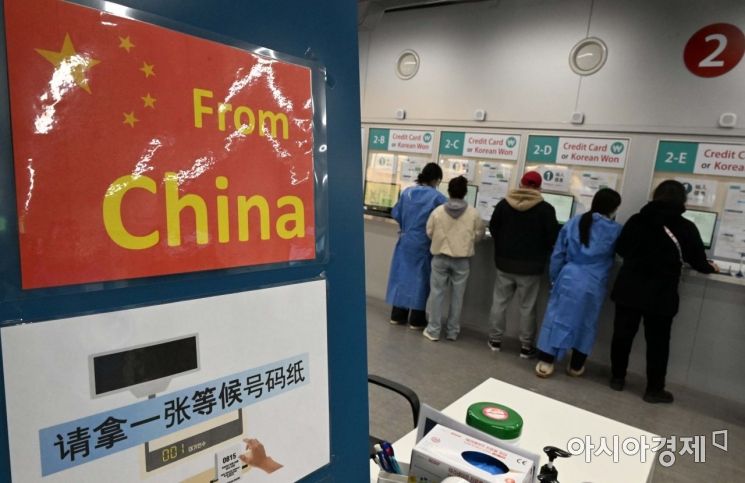 On the 2nd, when the mandatory PCR testing for arrivals from China began, arrivals from China are registering for COVID-19 testing at the COVID-19 Testing Center in Terminal 1 of Incheon Airport. / Yeongjongdo - Photo by Jinhyung Kang aymsdream@
Maria Van Kerkhove, WHO’s senior epidemiologist, also stated at a recent press conference, "We expect additional waves worldwide in the future," but added, "This should not be interpreted as a risk of a sharp increase in deaths. We will continue to respond with vaccines and treatments." David Heymann, professor at the London School of Hygiene & Tropical Medicine, also said, "In countries with high vaccination rates, XBB.1.5 is not expected to cause significant problems."
Meanwhile, Omicron has repeatedly mutated and changed the course of the COVID-19 epidemic. According to WHO, more than 500 Omicron subvariants have been identified so far. Omicron has high transmissibility but relatively lower severity, and since late 2021, it has dominated the global spread by outcompeting other variants.
Currently, the majority of variants detected domestically are sublineages of the Omicron variant BA.5. Specifically, the detection rates are 38.2% for BA.5, 7.0% for BF.7 and BQ.1, and 5.5% for BQ.1.1. BN.1, a sublineage of BA.2.75, accounts for 33.3%. XBB.1.5 was first confirmed to have entered the country from the U.S. on December 8 last year, and as of the 6th, a total of 13 cases (6 domestic, 7 imported) have been detected. As of the fourth week of December, the domestic infection detection rate is 0.2%.
© The Asia Business Daily(www.asiae.co.kr). All rights reserved.


















