Symptoms such as fever, muscle pain, and skin rash... Caution when traveling abroad to Southeast Asia and other regions
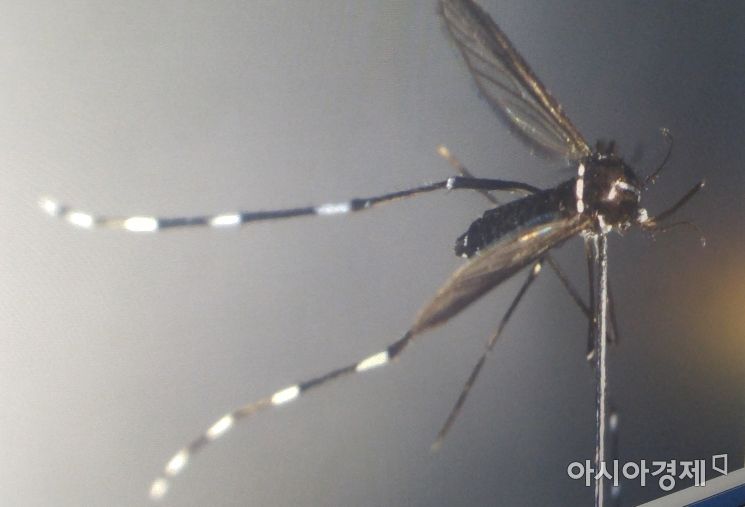
[Asia Economy Reporter La Young-chul] The Gangwon Provincial Institute of Health and Environment announced on the 5th that "the first case of 'Chikungunya fever' has occurred in the Gangwon region as of the 3rd."
According to the provincial health authorities, the patient was bitten multiple times by mosquitoes while visiting Thailand at the end of December last year, and after returning home, symptoms such as fever, muscle pain, and skin rash appeared.
'Chikungunya fever' is an infectious (Class 3) febrile illness that occurs 1 to 12 days (usually 2 to 3 days) after being bitten by a forest mosquito infected with the Chikungunya virus. It is characterized by a high fever close to 40℃, severe muscle pain, headache, and joint pain.
The 'Chikungunya' virus was first identified in Tanzania, Africa, in 1953. The term 'chikungunya' originates from the Swahili or Makonde dialects in Africa, meaning the bent posture of patients walking due to joint pain.
Most patients recover without sequelae, but in some cases, joint pain can persist for several years and severe complications such as myocarditis, meningitis, and Guillain-Barr? syndrome may occur.
The transmission route is through bites from vector mosquitoes infected with the 'Chikungunya' virus (tropical forest mosquito, Aedes aegypti, Aedes albopictus). Although Aedes albopictus exists domestically, no cases of virus detection have been confirmed. Wild animals such as monkeys, rodents, and birds serve as hosts.
The disease mainly occurs in Africa, India, and Asia (Indonesia, Thailand, the Philippines, Malaysia, etc.).
The case in Gangwon is the first imported case since 'Chikungunya fever' was designated as a legally notifiable infectious disease in December 2010. Nationwide, cases have been continuously reported since the first foreign-acquired infection in 2013.
The provincial institute is conducting rapid diagnosis and monitoring of vector mosquito populations in the surrounding environment upon patient occurrence to prevent domestic transmission and establishment of mosquito-borne viral infectious diseases imported from abroad (yellow fever, dengue fever, chikungunya fever, West Nile fever, Zika virus infection).
Lee Soon-won, Director of the Institute of Health and Environment, urged, "'Chikungunya fever' has no preventive vaccine or treatment, so travelers should follow preventive measures to avoid mosquito bites during overseas travel, and if suspicious symptoms (fever, rash, headache, etc.) appear after returning, they should inform medical institutions of their travel history and seek medical care."
© The Asia Business Daily(www.asiae.co.kr). All rights reserved.
![Clutching a Stolen Dior Bag, Saying "I Hate Being Poor but Real"... The Grotesque Con of a "Human Knockoff" [Slate]](https://cwcontent.asiae.co.kr/asiaresize/183/2026021902243444107_1771435474.jpg)
















