Medical Association Bans All Procedures for Infected Patients for One Year
Local Procedures Allowed 4 Weeks After Full Recovery
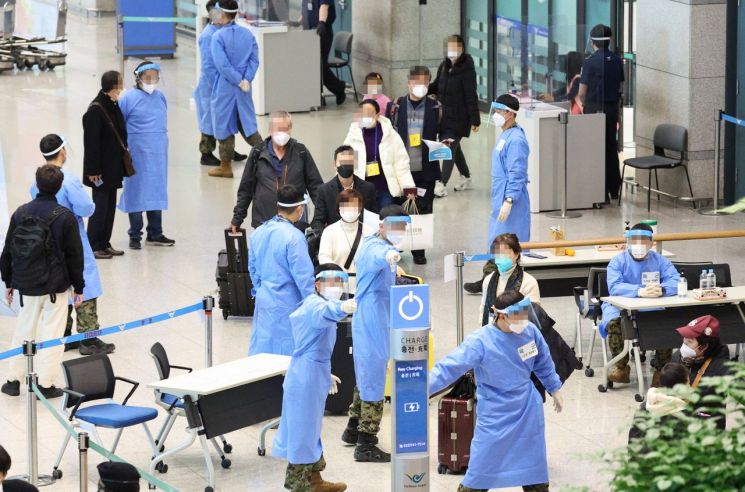 On the first day of the implementation of stringent quarantine measures for arrivals from China, about 20% of short-term entrants from China tested positive for COVID-19. According to the Korea Disease Control and Prevention Agency's Central Disease Control Headquarters on the 3rd, 61 foreigners who arrived from China and underwent full-scale polymerase chain reaction (PCR) testing for short-term stays were confirmed positive the previous day, accounting for 19.7% of the tested individuals (309 people). The photo shows the arrival hall of Terminal 1 at Incheon International Airport on the afternoon of the 3rd. Photo by Yonhap News
[Asia Economy Reporter Kim Jung-wan] The Chinese Medical Association has issued a ban on cosmetic medical procedures for COVID-19 infected patients due to severe side effects.
According to local media such as Xinhua News on the 4th, the Medical Aesthetics Branch of the Chinese Medical Association recently sent out the "Guidance on Risk Management and Control of Cosmetic Medical Procedures during the COVID-19 Period" to the nationwide cosmetic medical industry, stating, "No cosmetic-related medical procedures should be performed on COVID-19 infected individuals or those recovering from infection."
The branch stipulated that patients who have tested negative within 4 weeks after COVID-19 infection cannot undergo general anesthesia cosmetic surgery, and that local injections or surgeries should be performed cautiously only after blood coagulation, electrocardiogram, and cardiac function tests.
In particular, botulinum toxin (Botox) and hyaluronic acid injections used in cosmetic procedures should be administered only after 4 weeks from the confirmation of COVID-19 recovery. This is due to the possibility of side effects such as pain and allergies caused by hypersensitive reactions of the immune system after COVID-19 infection.
Additionally, laser treatments for anti-aging should be performed only after 2 weeks from COVID-19 recovery and following a doctor's diagnosis.
Song Jensing, deputy director of the branch, explained, "There have been cases where COVID-19 infected or recovering patients experienced severe side effects and were admitted to intensive care units (ICU) after undergoing cosmetic surgeries or procedures." He added, "It is not yet specifically confirmed why side effects occur during cosmetic medical procedures for COVID-19 infected patients. For medical safety, the cosmetic medical industry must exercise caution."
Currently, China has seen a rapid increase in infections since the relaxation of COVID-19 prevention measures last month. In Beijing, the capital of China, the infection rate has already exceeded 80%, and various cases of mild to severe experiences are being shared through social networking services (SNS).
Among these, cases of facial discoloration turning black, peeling skin, and severe swelling that does not subside are also being reported.
© The Asia Business Daily(www.asiae.co.kr). All rights reserved.
![Clutching a Stolen Dior Bag, Saying "I Hate Being Poor but Real"... The Grotesque Con of a "Human Knockoff" [Slate]](https://cwcontent.asiae.co.kr/asiaresize/183/2026021902243444107_1771435474.jpg)
















