Support Funds Triple... Regional Population Gap Widens
Same in Korea... 113 Areas at Risk of Disappearance
The Japanese government is significantly increasing the support payments given to households relocating from the metropolitan area to regional areas. This is one of the measures to address the issue of 'regional extinction' and to encourage migration to local areas. However, some voices argue that temporary cash policies alone are unlikely to have a significant effect.
According to the British Financial Times (FT) and local Japanese media on the 2nd (local time), the Japanese government will provide a relocation support payment of 1 million yen (approximately 9.8 million KRW) per child under 18 to households moving from the metropolitan area starting April this year. This amount is more than three times the current 300,000 yen (approximately 2.94 million KRW).
Significant Expansion of Relocation Support Payments... "Let's Reduce Population Disparities"
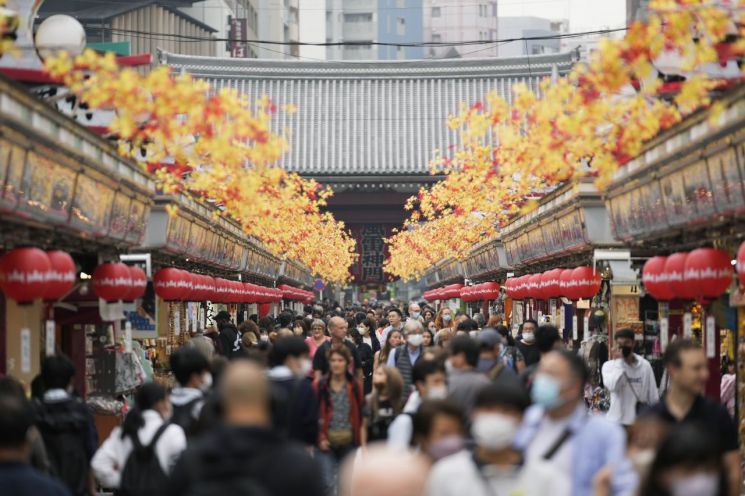
The recipients are currently residents of the 23 wards of Tokyo or those commuting to central Tokyo from metropolitan areas such as Saitama Prefecture and Chiba Prefecture. About 1,300 cities, accounting for approximately 80% of Japanese local governments, have joined this program. However, those who receive the relocation support payment must live there for at least five years, and if they do not fulfill this period, they must return the support money.
The reason the Japanese government is expanding the relocation support payments is that the population gap between regions is widening. The relocation support payment system started three years ago and has been increasing with ▲71 cases in 2019 ▲290 cases in 2020 ▲1,184 cases in 2021.
However, there are also criticisms that temporary support payment policies alone are insufficient to achieve effects such as population dispersion and addressing aging populations. FT pointed out that the number of people benefiting from the relocation support payment in the 2021 fiscal year (April 2021 to March 2022) was less than 2,400, which is only 0.006% of Tokyo's population of 38 million.
Seoul Population 26 Million... 113 Areas Expected to Face 'Regional Extinction'
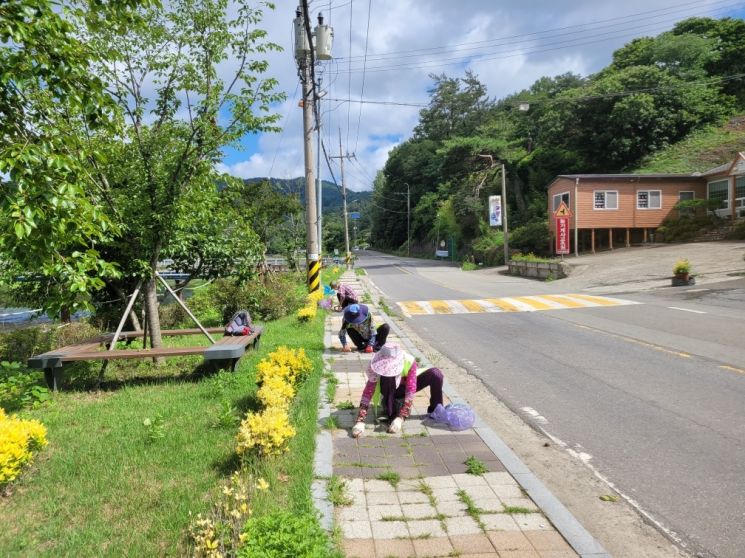
Meanwhile, the situation in South Korea is not much different from Japan. According to the National Statistical Portal (KOSIS) of Statistics Korea, as of December 2022, the population of Seoul and Gyeonggi Province was about 23.01 million, accounting for 44% of the total population of approximately 51.55 million. Nearly half of the population lives in the metropolitan area, which accounts for only 11.8% of the total land area.
In fact, as of March 2021, there were 113 areas at risk of extinction domestically, accounting for half of the 228 cities, counties, and districts nationwide. This number has increased significantly from just 33 areas in 2005 over the past 20 years. The worsening polarization of jobs and the concentration of infrastructure in the metropolitan area accelerate the outflow of young people from non-metropolitan areas.
This is because they try to avoid living in rural and fishing villages and industrial decline areas where education, jobs, medical care, and culture are underdeveloped. Since most of the areas at risk of extinction are outside the metropolitan area, balanced regional development such as talent dispersion and improvement of job environments is urgently needed.
© The Asia Business Daily(www.asiae.co.kr). All rights reserved.
![Clutching a Stolen Dior Bag, Saying "I Hate Being Poor but Real"... The Grotesque Con of a "Human Knockoff" [Slate]](https://cwcontent.asiae.co.kr/asiaresize/183/2026021902243444107_1771435474.jpg)

















