"Jungdaeseongeogu System, Alternative to Winner-Takes-All and Political Polarization"
vs "Cannot Be a Cure-All"
[Asia Economy Reporters Oh Ju-yeon and Kim Young-won] Whether to maintain the current 'single-member district system' or reform it into a 'multi-member district system.' Ahead of the April 2024 general election, discussions on revising the election law have ignited as President Yoon Seok-yeol and National Assembly Speaker Kim Jin-pyo both mentioned the need for electoral district reform. Although neither the ruling nor opposition parties have yet established official party positions, conflicts are expected due to differing opinions among lawmakers regarding the detailed direction of the reform.
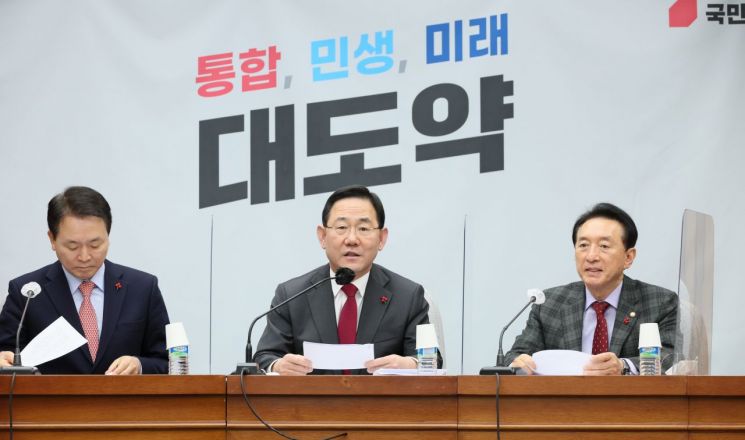
According to political circles on the 3rd, the People Power Party plans to establish a party-level stance on the introduction of a 'multi-member district system,' which elects two or more winners per electoral district, through discussions such as policy general meetings.
On that day, Joo Ho-young, floor leader of the People Power Party, said at the morning floor leaders' meeting, "Discussions about the electoral district system are becoming active," adding, "Our party will continue the first round of discussions centered on the Political Reform Special Committee members and, if necessary, hold a policy general meeting to gather lawmakers' opinions or establish the party's position on the electoral district system."
Floor leader Joo showed a cautious attitude toward expressing the party's official stance. He said, "Since 1987, we have adopted the single-member district system, but every electoral system has its pros and cons," and added, "It is not desirable for the leadership to express a preference for any system in advance."
Although internal consensus has not yet been reached, ruling party lawmakers actively expressed support for the multi-member district system during the meeting.
Kim Tae-ho, chairman of the Foreign Affairs and Unification Committee, said, "The 1987 system has effectively expired. It's like still wearing clothes that fit when we were young adults," and added, "(The proposal for a multi-member district system) is the first step toward cooperation and coexistence, which I warmly welcome."
Lawmaker Lee Tae-gyu also said, "The electoral district reform mentioned by the President and the National Assembly Speaker and the multi-member district system can be alternatives to alleviate the winner-takes-all system and political polarization," adding, "Political reform is a reform task strongly demanded by the people." However, it is reported that interests regarding the multi-member district system are sharply divided within the party. A ruling party Political Reform Special Committee official said, "Most within the party hold the view that further discussion is necessary, and opinions are sharply divided."
The Democratic Party is also currently collecting opinions within the party regarding the issue of electoral district reform. Active debates for and against the introduction of the multi-member district system proposed by President Yoon are ongoing. In particular, opponents acknowledge the drawbacks of the current winner-takes-all single-member district system but argue that the multi-member district system is not a solution.
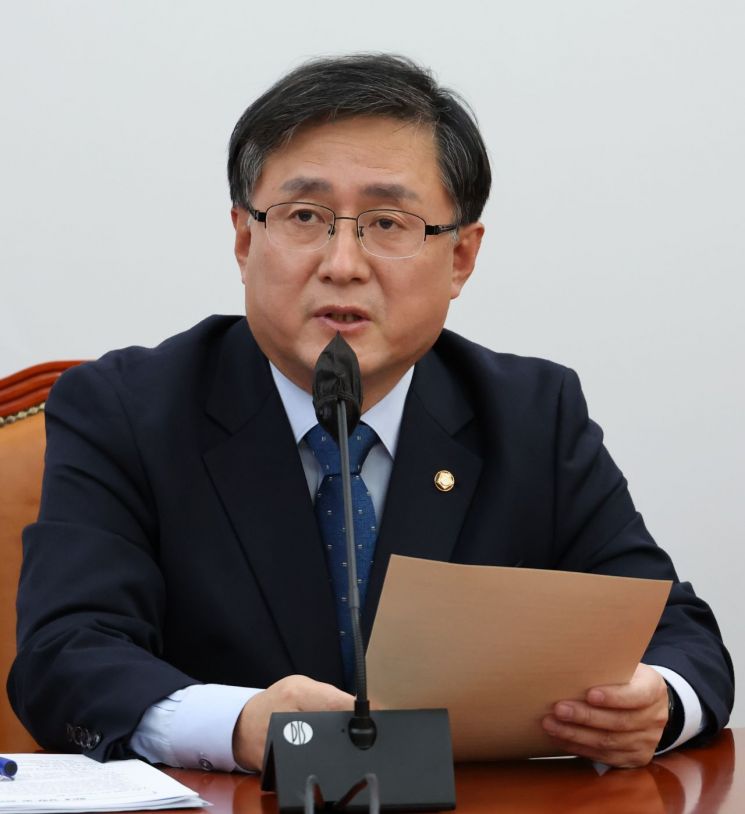
On that day, Kim Sung-hwan, chairman of the Democratic Party's Policy Committee, said at a press briefing held at the National Assembly, "Personally, the multi-member district system is practically a system that makes it much easier for large parties to divide the spoils." He explained, "If we consider which system has more problems, it has been proven worldwide that the multi-member district system has greater drawbacks so far," adding, "In the single-member district election process, the problem seems to be that one person becomes the representative, but looking at the Japanese example, the multi-member district system has the aspect of a system where the so-called two major parties comfortably divide the seats."
Lawmaker Yoon Gun-young also appeared on MBC Radio that day, saying, "Political reform will hardly be completed by just one multi-member district system," and warned, "It should never be thought of as a panacea." He emphasized, "In last year's local elections, the multi-member district system was piloted in 30 regions, but only four places elected candidates from parties other than the two major parties," adding, "National consensus and sufficient public discussion must be prerequisites."
On the other hand, fellow party member Cho Eung-chun raised his voice, saying, "With the current two-party system and the rigid two-party confrontation structure, productive political activities cannot be expected. Therefore, the multi-member district system, which institutionally guarantees a multi-party system, must be introduced." Cho said on BBS Radio that day, "How long will we continue the politics of 'vetocracy,' which only has the power to veto what the opposing party wants to do based on a hostile symbiotic relationship?"
However, it is uncertain whether lawmakers who have cultivated their constituencies under the current single-member district system will actively support changing to a multi-member district system just one year before the 2024 general election. Cho said, "If the rules change, it is clear that it will not be advantageous for incumbent lawmakers, so there is a possibility that discussions in the National Assembly will stagnate."
© The Asia Business Daily(www.asiae.co.kr). All rights reserved.
![Clutching a Stolen Dior Bag, Saying "I Hate Being Poor but Real"... The Grotesque Con of a "Human Knockoff" [Slate]](https://cwcontent.asiae.co.kr/asiaresize/183/2026021902243444107_1771435474.jpg)

















