[Asia Economy New York=Special Correspondent Joselgina] The American electric vehicle company Tesla's electric vehicle delivery performance last year fell short of Wall Street's expectations. Warnings are mounting that Tesla is facing serious demand issues.
According to economic media CNBC on the 2nd (local time), Tesla delivered approximately 1.31 million electric vehicles in 2022. This represents a 40% increase compared to the previous year, but it falls short of Wall Street's expectations.
Earlier, Tesla indicated in October last year that achieving its target would be difficult, and Wall Street investment banks have successively downgraded Tesla's annual delivery forecasts. Nevertheless, it still fell short of the FactSet forecast of 1.34 million units. The Wall Street Journal (WSJ) reported, "To achieve the initial annual goal of increasing delivered vehicles by more than 50%, Tesla would have had to deliver over 1.4 million electric vehicles."
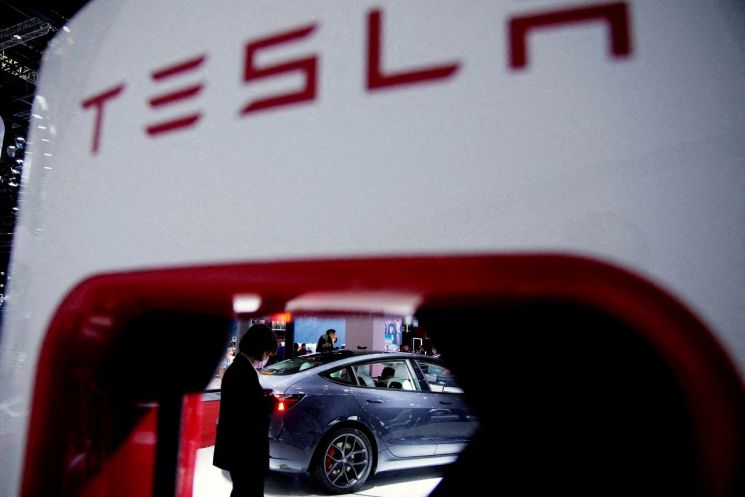
Tesla's disclosed electric vehicle delivery performance for the fourth quarter of last year was only 405,278 units. This also fell short of the Wall Street estimate of 431,117 units compiled by financial information firm Refinitiv.
This sluggishness is analyzed as a result of Tesla's electric vehicle demand being hit by rising interest rates and the resulting recession concerns. Last year's suspension of operations at the Shanghai factory due to COVID-19 quarantine regulations also contributed to the poor performance. Additionally, owner risk related to Tesla CEO Elon Musk has sharply increased following the Twitter acquisition. Ultimately, Tesla attempted price cuts and promotional discount events in the U.S., China, and other regions in the fourth quarter to stimulate demand, but these efforts also appear to have had little effect.
Wall Street has also collectively expressed concerns about worsening demand for Tesla electric vehicles, which are relatively expensive compared to competitors.
On this day, Tony Sacconaghi Jr., a junior analyst at Bernstein Research, pointed out that "Tesla is facing serious demand problems." He suggested that Tesla might need to reduce electric vehicle prices by $1,800 to $4,500 compared to the third quarter of 2022 and warned, "Demand issues will persist until a large-scale introduction of low-priced vehicles, which is difficult to predict in the short term."
Meanwhile, Tesla's stock price plunged about 65% over the past year.
© The Asia Business Daily(www.asiae.co.kr). All rights reserved.

















