Last Year FDA Approval
Hanmi's 'Rolontis' Only One
Yuhan's 'Reclaza' Most Anticipated
Green Cross and Hugel Challenge 'Retry'
Celt Attempts New Drug with Formulation Change
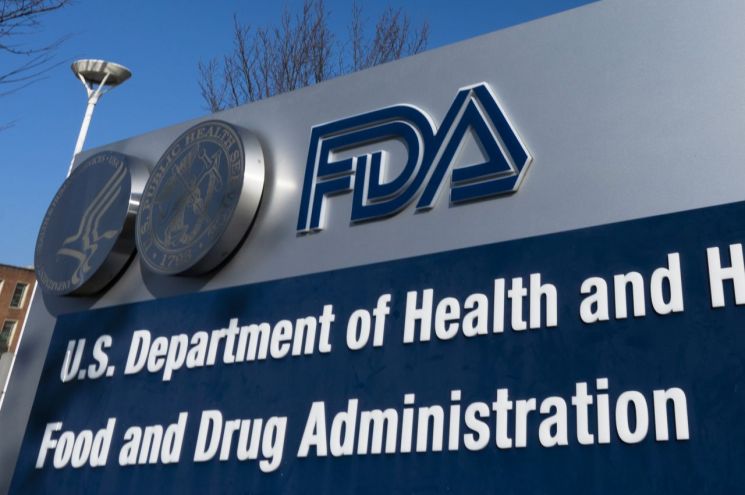 The headquarters of the U.S. Food and Drug Administration (FDA) located in Maryland, USA
 [Photo by AP Yonhap News]
[Asia Economy Reporter Lee Chun-hee] As the Year of the Rabbit dawns, attention is focused on which domestic new drugs will be able to cross the threshold of the U.S. Food and Drug Administration (FDA) this year. While the U.S., the world's largest market, serves as a foothold for entry, only one approval was granted last year, raising interest in whether more newly challenged drugs can achieve approvals this year.
According to the industry on the 3rd, new drugs aiming for FDA approval this year include Yuhan Corporation's non-small cell lung cancer treatment "Reclaza" (generic name: Lazertinib), GC Green Cross's blood fractionation product "Aliglo (IVIG-SN 10%)", Hugel's botulinum toxin (BTX) "Botulex" (export name: Retivo), and Celltrion's "Remsima SC" (generic name: Infliximab).
Last year, the only domestic new drug approved by the FDA was Hanmi Pharmaceutical's neutropenia treatment "Rolontis" (export name: Rolvedon). Although the FDA approved 37 items last year, a 26% decrease from 50 in 2021, it was a significant drop compared to early expectations of 5 to 6 product approvals. Therefore, there is keen interest in which new drugs will be able to pass through this narrow needle's eye this year.
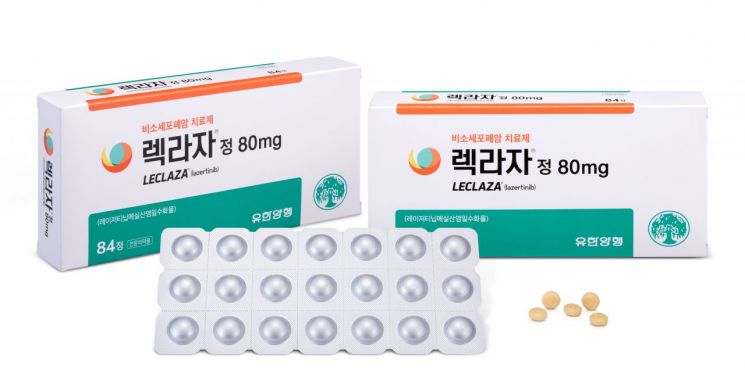
The most anticipated new drug is Yuhan Corporation's Reclaza. It is a non-small cell lung cancer treatment targeting patients with locally advanced or metastatic non-small cell lung cancer harboring epidermal growth factor receptor (EGFR) mutation genes. It has already been approved domestically as the 31st domestic new drug, surpassing cumulative sales of 10 billion KRW.
In the large-scale global Phase 3 clinical trial (LASER301) announced last month, Reclaza showed a progression-free survival (PFS) of 20.6 months, extending about 11 months compared to 9.7 months in the control group treated with Iressa (generic name: Gefitinib), meeting the primary efficacy endpoint and raising expectations. The secondary endpoint, objective response rate (ORR), was similar to the control group, and the duration of response (DOR) was about 10 months longer.
The FDA application for Reclaza is expected to be conducted by Janssen (a Johnson & Johnson subsidiary), which licensed the technology from Yuhan Corporation. Joaqu?n Duato, CEO of Janssen, has identified Reclaza and the combination therapy with the bispecific antibody "Amivantamab" as one of the five major pipelines expected to generate sales exceeding 5 billion USD (approximately 6.365 trillion KRW), indicating high expectations from Janssen. Yuhan Corporation CEO Cho Wook-je said at the Reclaza Phase 3 clinical trial results briefing last month, "To become a global drug, approval from the U.S. and Europe is necessary," adding, "We are closely discussing approvals with Janssen, the FDA, and the European Medicines Agency (EMA)."
"Failure is the mother of success"... Retaking the challenge
GC Green Cross's Aliglo is making a second attempt. Although approval was anticipated early last year, the FDA issued a Complete Response Letter (CRL). Due to the COVID-19 pandemic, on-site inspections could not be conducted, leading to a remote evaluation of the Ochang production facility as a last resort, but it ultimately failed to clear the hurdle. A company official explained, "Since receiving the CRL, we are coordinating the inspection schedule," adding, "Our goal is to undergo the inspection in the first half of this year and resubmit the Biologics License Application (BLA) in the second half."
Similarly, Hugel's BTX Botulex, which has also re-challenged, has a strong possibility of becoming the first FDA approval case this year. After receiving a CRL related to manufacturing and quality control (CMC) from the FDA in March last year, the company supplemented the relevant issues and resubmitted the application to the FDA in October. The review deadline under the Prescription Drug User Fee Act (PDUFA) is set for April 6.
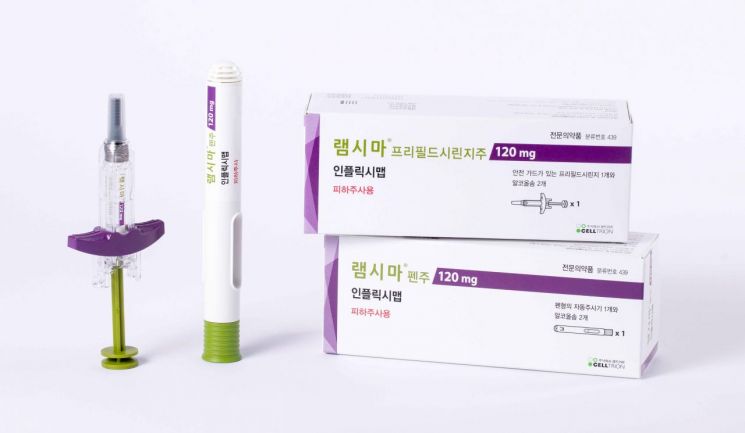
Celltrion applied for FDA approval of "Remsima SC" last month. While Remsima itself is a biosimilar of Remicade, a tumor necrosis factor (TNF)-alpha inhibitor used for autoimmune diseases, the application was submitted as a new drug after consultation with the FDA.
A Celltrion official stated, "Since it is not a typical biosimilar but has undergone formulation changes, we were advised by the FDA to proceed with new drug approval and thus applied for approval." Unlike the original and other biosimilars, which are administered intravenously (IV), the subcutaneous (SC) formulation offers greater convenience and safety, and its value has been recognized, aiming for new drug approval as a kind of "biobetter."
© The Asia Business Daily(www.asiae.co.kr). All rights reserved.



















