Significant Reduction in Areas Subject to Sale Price Ceiling System
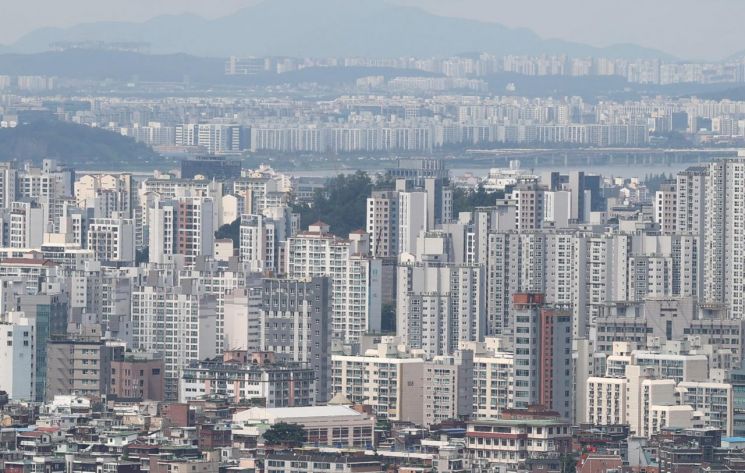
[Asia Economy Reporter Hwang Yoon-joo] The government is set to lift regulations on a large number of areas to prevent a sharp downturn in the housing market. Except for the three Gangnam districts in Seoul and Yongsan-gu, all other areas are expected to be deregulated.
According to the Presidential Office and government ministries on the 2nd, the Ministry of Land, Infrastructure and Transport (MOLIT) will hold a Housing Policy Deliberation Committee meeting this month to lift additional regulatory designations. MOLIT had previously lifted many regulatory designations in the metropolitan area, including Gyeonggi and Incheon, starting with local regions last year.
Once areas are removed from the adjusted target zones, tax benefits such as exemption from comprehensive real estate tax and capital gains tax surcharges will apply, loan-to-value ratios (LTV) on mortgage loans will be expanded, and restrictions on re-winning housing subscription and other subscription regulations will be eased.
Currently, all of Seoul, along with Gwacheon, Seongnam (Bundang and Sujeong districts), Hanam, and Gwangmyeong in Gyeonggi Province, remain designated as adjusted target areas and speculative overheating districts. Additionally, 15 areas in Seoul including Yongsan, Seongdong, Nowon, Mapo, Yangcheon, Gangseo, Yeongdeungpo, Seocho, Gangnam, Songpa, Gangdong, Jongno, Jung-gu, Dongdaemun, and Dongjak districts are classified as speculative zones.
The government plans to lift regulations not only in the metropolitan area but also in many parts of Seoul. This is due to the recent significant decline in housing prices. According to statistics from the Korea Real Estate Board, over the past three months (September to November), housing prices in Seoul fell by an average of 2.59%, and in Gyeonggi Province by 3.68%, with Gwangmyeong (-6.85%), Hanam (-4.36%), and Gwacheon (-3.75%) experiencing declines at or above the average. Although December statistics have not been released, weekly apartment prices continue to show increasing declines.
In Seoul, except for the three Gangnam districts where there are concerns about housing price increases upon deregulation and Yongsan-gu, which has development prospects such as the Presidential Office relocation and the Yongsan International Business District, all other areas are expected to be deregulated.
Although housing prices in Songpa-gu (-3.69%) in the Gangnam 3 districts have significantly declined, it is reported that these areas will be excluded from deregulation. There is a view that lifting regulations in the Gangnam area could become a trigger for stimulating housing prices in the future, making it difficult to deregulate at this time.
Along with lifting regulatory designations, MOLIT plans to announce a reduction in areas subject to the price ceiling system for pre-sale prices. The price ceiling system is applied in speculative overheating districts where there are concerns about housing price overheating or where redevelopment and reconstruction projects raise concerns about high pre-sale prices.
If an area is removed from the price ceiling system, regulations such as mandatory residence periods of 3 to 5 years for public land and 2 to 3 years for private land will also be lifted. The government plans to consider further deregulation if concerns about a sharp downturn in the real estate market persist despite this round of deregulation.
© The Asia Business Daily(www.asiae.co.kr). All rights reserved.