Applications for First Semester Student Loans Accepted from the 4th
Credit Bank System Learners Eligible for General Repayment Loans
Post-Employment Repayment Loan Income Criteria Relaxed
Apply at Least 8 Weeks Before Registration Deadline for Stability
[Asia Economy Reporter Yoo Byung-don] The interest rate for student loans for the first semester of the 2023 academic year has been frozen at 1.7%, despite the average loan rates of commercial banks and the impact of the base interest rate hike. Additionally, from this year, learners in the Academic Credit Bank System can also receive student loans.
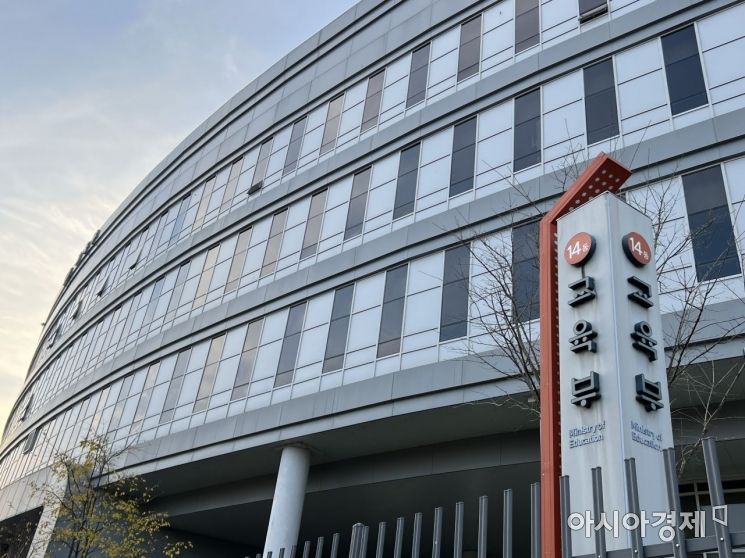
On the 2nd, the Ministry of Education announced, together with the Korea Student Aid Foundation, that applications for student loans for the first semester of the 2023 academic year will be accepted starting from the 4th. Applications can be made using the student's own electronic signature method through the Korea Student Aid Foundation website or mobile app. Tuition loans can be applied for until April 26, and living expense loans until May 18.
The Ministry of Education froze the student loan interest rate at 1.7%, the same as last year, to prevent the burden of living expenses on low-income households from increasing due to high inflation. By maintaining this low-interest policy, the Ministry expects that students and parents will experience reduced repayment burdens compared to the base interest rate or the average rates of commercial banks.
First, the scope of student loan recipients, previously limited to university (graduate) students, has been expanded to include learners in the Academic Credit Bank System, providing them with low-interest support equivalent to university students. Eligible recipients are learners who newly enroll in or are currently taking ‘evaluation-recognized learning courses’ at Academic Credit Bank System education and training institutions designated as ‘student loan support institutions’ by the Minister of Education. If they meet qualifications such as age and credit requirements, they can receive full support for tuition fees, including laboratory, practical, and skill fees, as a ‘general repayment student loan’ for the relevant semester. However, living expense loans are not supported.
For income-contingent repayment student loans, the repayment threshold income has been relaxed. Considering the 2023 median income and minimum wage increase, the ‘repayment threshold income’ used to determine mandatory repayment commencement and repayment amount has been raised from 23.94 million KRW (15.10 million KRW after deductions) to 25.25 million KRW (16.21 million KRW).
Furthermore, the range of graduate students eligible for income-contingent repayment student loans in the 4th income bracket (90% of median income) has been expanded to include all types of graduate school master’s and doctoral degree programs, including special and professional graduate schools. Previously, this was limited to general graduate schools and professional technical master’s degree programs.
Young adults who have aged out of child welfare facilities or foster care after turning 18, as well as undergraduate students who were protected children, can receive interest-free living expense loans regardless of income level when using income-contingent repayment student loans. This support was previously limited to undergraduate students in the 4th income bracket or below.
Additionally, applications for the ‘3rd Low-Interest Conversion Loan,’ which converts past high-interest student loans to low-interest loans (2.9%), will be accepted starting from the 4th. Those who received general repayment student loans (interest rates 3.9?5.8%) between July 1, 2009, and December 31, 2012, can apply for the conversion loan on the Korea Student Aid Foundation website using their electronic signature by June 22.
An official from the Ministry of Education explained, “With the freezing of student loan interest rates and system improvements, about 810,000 people are expected to reduce their student loan repayment burden by 92.7 billion KRW.”
Meanwhile, students who need student loans should apply at least eight weeks before the university registration deadline, considering the period for calculating and notifying the student loan support bracket, to ensure stable loan approval.
Lee Ju-ho, Deputy Prime Minister for Social Affairs and Minister of Education, emphasized, “The government is focusing all its capabilities to reduce the burden on households facing high inflation and high interest rates. As part of these measures, we have decided to freeze the student loan interest rate at 1.7% for the first semester of the 2023 academic year.” He added, “Although the domestic and international economic situation is expected to remain difficult this year, we will continue to support all young people and students with ability and will, regardless of economic conditions, to have equal opportunities for higher education.”
© The Asia Business Daily(www.asiae.co.kr). All rights reserved.
![User Who Sold Erroneously Deposited Bitcoins to Repay Debt and Fund Entertainment... What Did the Supreme Court Decide in 2021? [Legal Issue Check]](https://cwcontent.asiae.co.kr/asiaresize/183/2026020910431234020_1770601391.png)















