Ministry of Science and ICT Launches Innovation Research Center Designation Project from This Year
Provides Long-term Support with 5 Billion KRW Annually for 10 Years
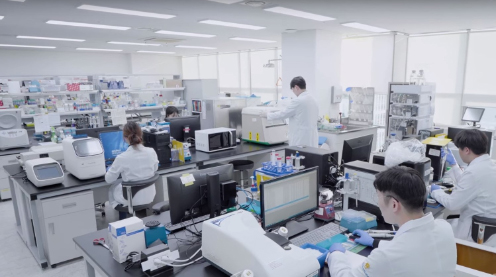
[Asia Economy Reporter Kim Bong-su] The University of Oxford in the UK developed a vaccine in collaboration with the private pharmaceutical company AstraZeneca during the COVID-19 pandemic. This was thanks to the foundational research capabilities built through long-term support and talent cultivation. However, Korean universities have not fulfilled their roles. It has been pointed out that they struggled to accumulate research capabilities at the level of research institutes because they were preoccupied with one-off research projects such as securing graduate student labor costs.
In response, the government is taking steps to foster 'research institute universities' with strong foundational research capabilities. The Ministry of Science and ICT announced on the 3rd that it will select and support University Innovation Research Centers (IRC) starting this year to aggregate specialized research capabilities and human resources of universities into a sustainable research institution system and develop them into global research hubs.
As global competition for technological supremacy intensifies and national and social issues such as the climate crisis arise, the importance of mission-driven collective research and development is growing. IRC is a new type of leading research center project aimed at producing strategic technology innovation outcomes centered on universities, the main actors in basic research.
In particular, the recent case of the COVID-19 vaccine jointly developed by the University of Oxford and AstraZeneca has served as a 'lesson learned.' Due to the high costs, time, and risks associated with convergent and complex technologies, the need for large-scale collaborative research and its outcomes are increasing worldwide. On the other hand, domestic universities have been criticized for focusing on individual principal investigator projects, making it difficult to accumulate research capabilities in a permanent research institute system. Among the 2,816 university-affiliated research institutes in science and engineering fields last year, 78.3% held no events at all, and 77.9% (2,194 institutes) had zero full-time researchers.
The Ministry of Science and ICT plans to select three centers with excellent specialized research capabilities related to national strategic technologies this year and support them with up to 5 billion KRW annually for up to 10 years (3+4+3 years). The goal is to nurture more than 10 world-class University Innovation Research Centers (IRC) within 10 years.
The Innovation Research Centers differentiate themselves from existing projects in terms of ▲strategic focus, ▲sustainability, ▲stability, and ▲openness. They aim to strengthen specialized research capabilities in national strategic technology fields and cultivate outstanding early-career researchers. Universities select specialized fields related to strategic technologies (Top-down), form research groups of about 15 researchers and projects (Bottom-up), and strive to produce visible research outcomes across basic, applied, and development technology stages. They are also expected to secure more than five postdoctoral researchers and establish plans to train master's and doctoral-level researchers to nurture core talents in strategic technology fields.
Furthermore, universities must prepare development plans such as industry-academia-research cooperation and corporate membership participation to ensure the Innovation Research Centers can continue operating after government support ends. From the second phase, starting in the fourth year of support, efforts to secure diverse funding sources such as corporate participation and collaborative research attraction, and university cash matching (recommended 10%) must be presented during stage evaluations. Efforts will also be encouraged to secure excellent research equipment specialists, industry-academia cooperation experts, and stable status for researchers such as postdocs to establish a sustainable research system.
In particular, to allow researchers to fully concentrate on their research, a ‘dedicated research support team’ composed of administrative support staff, research equipment and statistical data experts must be established. Universities will build and link research equipment platforms that small- and medium-sized research groups within the campus find difficult to operate continuously, fostering them as hubs for internal and external research collaboration. Compared to existing leading research centers, more freedom will be allowed for researchers to enter and exit research groups, and various activities will be encouraged to promote virtuous cycles and networking of research resources such as personnel and equipment.
The selection criteria include research and development plans established considering national strategic technology fields and university specialized research areas, as well as university-level center support plans to create a stable and sustainable research environment.
Lee Chang-yoon, Director of the Research and Development Policy Office at the Ministry of Science and ICT, said, “Worldwide, basic research achievements are realized based on universities’ continuous accumulation of research capabilities and open research innovation. By establishing a representative university research institute system in the urgently needed national strategic technology fields, we hope the Innovation Research Centers will leap forward as core domestic basic research hubs and further produce world-class research outcomes.”
Detailed information can be found on the Ministry of Science and ICT website and the Korea Research Foundation website.
© The Asia Business Daily(www.asiae.co.kr). All rights reserved.
![Clutching a Stolen Dior Bag, Saying "I Hate Being Poor but Real"... The Grotesque Con of a "Human Knockoff" [Slate]](https://cwcontent.asiae.co.kr/asiaresize/183/2026021902243444107_1771435474.jpg)
















