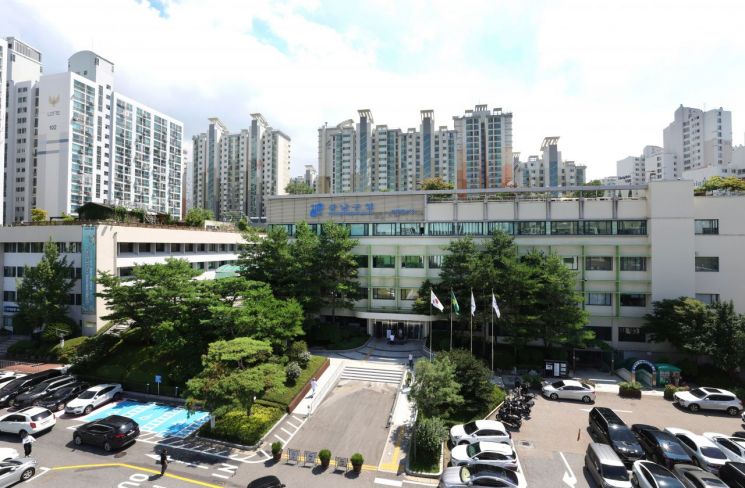
Establishment of the ‘Department of Welfare for the Disabled’ to Accompany the Vulnerable... New Design Bureau Reorganized into ‘Future Culture Bureau’ with Focus on Future Industries such as Robotics and Artificial Intelligence
[Asia Economy Reporter Park Jong-il] Gangnam-gu (District Mayor Jo Seong-myeong) carried out an organizational restructuring as of January 1, 2023, to successfully promote the key priority projects of the 8th elected administration.
This organizational restructuring changed the structure to 6 bureaus (2 offices, 1 inspector general, 37 divisions, 175 teams), and 1 sub-office (5 divisions, 1 branch office, 18 teams) through the establishment of new departments and reassignment of duties. Compared to the previous organization, one division and two teams were added, including the newly established Department of Welfare for the Disabled, while the total staff remained unchanged at 1,770.
Through this restructuring, the district will accelerate key projects of the 8th elected administration such as ▲reconstruction promotion ▲new government building construction ▲green space expansion ▲disaster-free safe city. Additionally, it focused on enhancing execution capabilities to successfully implement 60 pledge projects across five areas: ▲innovative growth ▲cultural ecology ▲safe happiness ▲empathic companionship ▲super close contact.
Accompanying the Vulnerable... Establishment of the Department of Welfare for the Disabled
Until now, welfare services for the disabled were handled by the Disabled Support Team and Disabled Facilities Team within the Social Welfare Division. However, with this organizational restructuring, the newly established Department of Welfare for the Disabled will respond more proactively to the welfare needs of the disabled.
Accordingly, the Welfare and Living Bureau expanded from six to seven departments: ▲Welfare Policy Division ▲Social Security Division ▲Senior Welfare Division ▲Department of Welfare for the Disabled ▲Childcare Support Division ▲Family Policy Division ▲Resource Circulation Division. By reallocating personnel and some duties from existing departments, it is expected that the functions of welfare services will be strengthened and professionalism enhanced. Reflecting these changes, department names were changed as follows: ▲Social Welfare Division → Social Security Division ▲Women and Family Division → Family Policy Division ▲Cleaning Administration Division → Resource Circulation Division.
Focus on Future Industries such as Robotics and Artificial Intelligence... Reorganization into Future Culture Bureau
Furthermore, the existing New Design Bureau was reorganized into the Future Culture Bureau to focus on discovering policies that enhance residents’ convenience by utilizing 4th industrial revolution technologies such as robotics and artificial intelligence. The restructuring also reflected the increasing demand in the culture and sports sectors. Accordingly, the existing five departments (New Design Division, Smart City Division, Computer Information Division, Culture and Sports Division, Tourism Promotion Division) were reorganized into ▲Digital City Division ▲Smart Information Division ▲Cultural City Division ▲Life Sports Division ▲Tourism Promotion Division.
Additionally, department names that were previously difficult to understand were changed to names that clearly reflect their characteristics, making it intuitive to know their functions. ▲Tax Division 1 → Property Tax Division ▲Tax Division 2 → Local Income Tax Division ▲Apartment Housing Division → Housing Division.
Besides, duties between departments were adjusted and teams reassigned. The ‘Healing City Team’ of the New Design Division, which handled resident happiness promotion and healing city tasks, was moved to the Resident Autonomy Division. The ‘Homepage Team’ of the Policy Promotion Office was transferred to the Smart Information Division. Various large-scale development projects previously managed by the New Design Division were divided among the Urban Planning Division, Traffic Administration Division, and Digital City Division according to the nature of each task.
District Mayor Jo Seong-myeong stated, “Based on this organizational restructuring, we will accelerate the implementation of the 8th elected administration’s pledge projects,” and expressed his ambition, “We will make 2023 the first year of Gangnam’s re-leap and create a new Gangnam together with the residents.”
Yangcheon-gu Produces and Distributes ‘Yangcheon Life Changes in 2023’ for Residents to Know in Advance... Revival of Yangcheon Marathon, Establishment of Comprehensive Airport Noise Countermeasure Support Center, Operation of Welfare Counseling Center and Ai Sarang Taxi, and Promotion of 60 Projects in 5 Major Areas with High Resident Impact
Yangcheon-gu (District Mayor Lee Gi-jae) announced that it will introduce ‘Yangcheon Life Changes in 2023,’ which compiles major new policies for the Year of the Rabbit into 60 projects across five areas.
In the new year, Yangcheon-gu will implement a total of 60 projects closely related to residents’ lives, including ▲Clean City: 13 items such as improvement of reconstruction safety diagnosis system ▲Healthy City: 9 items including Yangcheon Marathon and opening of Anyangcheon Family Garden ▲Safe City: 12 items such as creating safe alleys by replacing old CCTVs ▲Warm City: 16 items including Yangcheon Ai Sarang Taxi ▲Happy Educational City: 10 items including Yangcheon Education Expo.
Drastic Improvement of Aging Residential Environment, Creation of a Clean City
An improvement plan for reconstruction safety diagnosis was prepared to align with the purpose of the safety diagnosis system focused on residential environment. In particular, even for conditional reconstruction, the appropriateness review by public institutions will be conducted only exceptionally when requested by the district mayor, without going through the appropriateness review otherwise.
Additionally, a Moa Town management plan will be established for the aging and poor low-rise residential areas in Sinwol 1 and 3-dong to improve overall residential infrastructure including expansion of living SOC.
Furthermore, the aging Sinwol 7-dong district office building will be rebuilt and relocated to create a complex government building equipped with various resident convenience facilities and welfare functions, providing a higher level of administrative services.
Happy Cultural Life! Healthy Sports Activities!
The Yangcheon Marathon, which was last held in 2015, will return to residents. Preparing for a vigorous re-leap as a local festival, the marathon will take place along the Anyangcheon course, contributing to the activation of sports for all and the health promotion of residents.
Anyangcheon’s natural learning center will be transformed into a family-oriented themed space. With specialized areas such as children’s water playground, rose garden, lawn yard, and sand playground, as well as diverse programs for rest, play, and events, it aims to become Yangcheon-gu’s representative attraction where the whole family can enjoy.
On the 3rd and 4th floors of Yangcheon Cultural Center, a ‘Living Culture Center’ will open where residents can experience culture and arts in daily life. It will operate community spaces, small lecture rooms, practice rooms, and multipurpose rooms to strengthen cultural and artistic capabilities, and support resident-targeted public projects and programs for culturally marginalized groups, adding culture to residents’ lives.
Establishment of a Safe and Comfortable Living Environment
A new hearing precision test will be initiated to provide practical support for residents affected by airport noise. The target group includes about 1,000 residents who have lived in airport noise-affected areas for more than five years, who can receive a precision test if abnormalities are found after a basic hearing test.
From April this year, a Comprehensive Airport Noise Countermeasure Support Center will be established to provide systematic support for residents in affected areas. Along with scholarship support and counseling services, an airport noise monitoring system will be built to meticulously manage related data.
In line with the popularization of electric vehicles, electric vehicle chargers in public parking lots will be expanded to 27 locations with 87 chargers. Remote-controlled entry barriers will be installed at Anyangcheon to effectively prevent flood safety accidents by quickly controlling access during concentrated summer heavy rains and sudden downpours.
Implementation of Various Welfare Services to Meet Diversifying Welfare Needs
To proactively respond to diversifying welfare needs and establish a dense welfare safety net without blind spots, Yangcheon-gu will operate a Welfare Counseling Center. It will provide welfare counseling services for vulnerable groups such as women, children, disabled, and seniors, and establish a one-stop emergency welfare hotline that quickly connects necessary resources in crisis situations such as arrears, medical expenses burden, and housing difficulties.
Additionally, QR code stickers linked to the Yangcheon-gu Sign Language Interpretation Center will be attached to public institutions in the area to provide non-face-to-face sign language interpretation services for the hearing impaired. A living map of convenience facilities for the disabled will also be created on the Yangcheon-gu big data platform to encourage active community participation by the disabled.
Moreover, the housing benefit eligibility criteria have been slightly relaxed to support safe housing for vulnerable groups, and the Yangcheon Ai Sarang Taxi project will be implemented, providing annual taxi usage points of 100,000 KRW to families raising infants under 24 months residing in Yangcheon-gu. Large taxis (7-11 seats) equipped with car seats and stroller space will be supported for the safe transportation of infants and young children.
New Education and Childcare Systems for All Ages from Infants to Adults
Every September, the Yangcheon Education Expo will be held during Education Week to present a vision for future education, provide customized education information, and create a happy learning environment. It will meet diverse educational demands through forums on education issues, foreign language speech contests, university entrance expos, and coding drone competitions to enhance competitiveness in the 4th industrial revolution era.
‘Yangcheon Orang,’ a space for youth capacity development and communication, will open in May. It will provide policies, information, counseling services needed by youth, and operate various community programs to build social networks among young people.
Support for national qualification exam fees will be provided to reduce the economic burden and help improve employment rates for youth aged 19 to 39 residing in the district. Supported exams include language tests such as TOEIC, TEPS, HSK, Korean history proficiency tests, about 500 national technical exams, and about 100 national professional exams, with up to 100,000 KRW per person.
A safe childcare environment without care gaps where parents can trust their children 24 hours a day will be created. A Yangcheon-style night emergency childcare facility allowing dual-income parents to use emergency care services at various times will open in March. The target age is infants and young children from 12 months to 6 years old, and reservations can be made via the district office website, phone, or visit.
The Our Neighborhood Care Centers, after-school elementary care facilities, will expand from 4 to 6 locations. Providing meals, snacks, and temporary, regular, and emergency care, these centers have high satisfaction with waiting lists always present. The new 5th branch and hub-type centers are scheduled to open in the first and second halves of the year.
‘Yangcheon Life Changes in 2023’ can be viewed and shared by anyone on the district office website.
Yangcheon District Mayor Lee Gi-jae said, “Starting this year, we plan to show visible changes for the birth of a new city,” and added, “We will do our best to ensure that the newly established plans based on five major goals proceed without setbacks.” He emphasized, “We will fulfill the promises made to residents and create a more livable and better Yangcheon.”
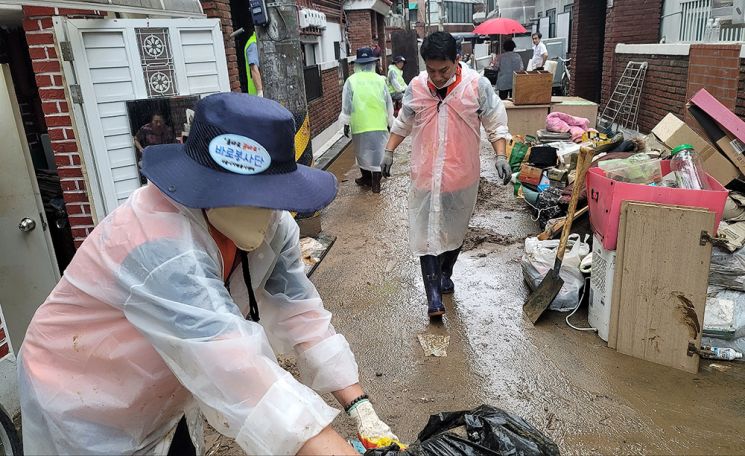
Dongjak-gu Receives ‘Minister of the Interior and Safety Commendation for Disaster Management Public-Private Cooperation’
Dongjak-gu (District Mayor Park Il-ha) was recognized for strengthening public-private cooperation in disaster response and received the ‘Minister of the Interior and Safety Commendation for Disaster Management Public-Private Cooperation’ on the 27th of last month.
In particular, the district was the first among Seoul’s 25 autonomous districts to enact an ordinance on the formation and operation of an integrated volunteer support group, which was highly evaluated for enhancing volunteer response capabilities during disaster situations.
Usually, the district has established a disaster preparedness system that shares local resources and private organizations through the Dongjak-gu Volunteer Center, assuming disaster and calamity situations.
When an unprecedented heavy rain occurred in August last year, about 2,000 individual and group volunteers from the Dongjak-gu Volunteer Center participated in flood recovery. As a result, emergency recovery was carried out swiftly, helping flood victims return to their daily lives.
Going forward, the district plans to actively carry out disaster response preparation activities by strengthening ties with the Dongjak-gu Volunteer Center and volunteer organizations.
District Mayor Park Il-ha said, “Thanks to the warm hearts and actions of volunteers, we were able to quickly recover from the flood damage,” and emphasized, “We will continue to do our best to minimize resident damage from disasters and create a safe community.”
© The Asia Business Daily(www.asiae.co.kr). All rights reserved.
![Clutching a Stolen Dior Bag, Saying "I Hate Being Poor but Real"... The Grotesque Con of a "Human Knockoff" [Slate]](https://cwcontent.asiae.co.kr/asiaresize/183/2026021902243444107_1771435474.jpg)













