[Asia Economy Sejong=Reporter Dongwoo Lee] Last year, South Korea's trade deficit reached $47.2 billion, marking the largest annual deficit on record. Although the annual export volume hit an all-time high, imports surged significantly due to rising global energy prices caused by the Russia-Ukraine war and other factors. Exports have been declining for three consecutive months, and the trade deficit has persisted for nine months straight, making it unlikely that the trade balance will improve in the first half of this year.
According to the "December 2022 and Annual Export-Import Trends" report released by the Ministry of Trade, Industry and Energy on the 1st, last year's annual trade deficit was recorded at $47.2 billion. This is the first time in 14 years since the 2008 US financial crisis (-$13.26 billion) that the trade balance has recorded an annual deficit. The deficit size also surpassed the previous record, nearly 2.3 times larger than the $20.62 billion deficit just before the International Monetary Fund (IMF) foreign exchange crisis in 1996, setting a new historical high.
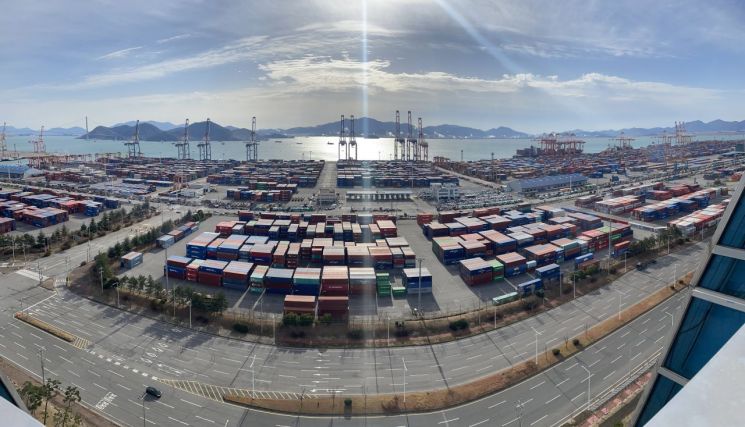
Annual Exports Reach $684 Billion, All-Time High... Global Export Ranking Rises One Spot to 6th
Last year, South Korea's export value reached $683.9 billion, a 6.1% increase from the previous year, achieving the highest export performance ever. The global export ranking rose one position from 7th the previous year to 6th (based on January to September data). Daily average exports also increased by 6.3% year-on-year to $2.51 billion, marking the first time daily exports surpassed $2.5 billion.
Among key export items, semiconductors, automobiles, petroleum products, and secondary batteries recorded their highest export performances ever. Semiconductor exports maintained over $10 billion for 17 consecutive months from May 2021 to September last year, reaching a record high of $129.23 billion last year. Automobile exports reached $54.1 billion last year, showing strong growth since July due to improved supply of vehicle semiconductors and increased demand for eco-friendly vehicles. Petroleum product exports continued their boom with seven consecutive months exceeding $5 billion, reaching a record high of $63.02 billion last year, making it the second largest export item after semiconductors.
Regionally, among the four major key markets, ASEAN, the United States, and the European Union (EU) achieved record-high export performances. ASEAN, the second largest export market, recorded $124.95 billion. Thanks to increased exports of key items such as semiconductors, displays, and petroleum products, it set a new export record for the second consecutive year. Exports to the US surpassed $100 billion due to increased exports of automobiles, secondary batteries, and machinery linked to the Biden administration's expansion of eco-friendly vehicles and active infrastructure investment. Despite economic slowdown, the EU also recorded a record high of $68.13 billion, supported by increased exports of steel and petroleum products. However, exports to China decreased by 4.4% year-on-year to $155.8 billion, affected by China's economic slowdown since April and falling prices of key export items such as semiconductors in the second half of the year.
Energy Imports Near $200 Billion... Major Cause of Trade Deficit
Last year's total imports amounted to $731.2 billion, an 18.9% increase from the previous year. Imports of the three major energy sources?crude oil, gas, and coal?approached $200 billion, acting as a major factor behind the trade deficit despite record-high exports.
Imports of the three major energy sources last year totaled $190.8 billion, up $78.4 billion from $112.4 billion the previous year, accounting for 26.1% of total imports. Specifically, crude oil imports were $105.8 billion, gas $56.8 billion, and coal $28.1 billion, with some items nearly doubling in price. Overall import growth was also influenced by increased imports of aluminum and copper needed for industrial production, raw materials such as semiconductors and steel, and consumer goods like clothing and beef.
As a result, last year's trade deficit reached $47.2 billion. The problem is that the trade deficit has continued for nine consecutive months. Last month, exports and imports decreased by 9.5% and 2.4% year-on-year, recording $54.99 billion and $59.68 billion, respectively. The December trade balance showed a deficit of $4.69 billion. This marks the first time in about 25 years since the continuous deficit from January 1995 to May 1997 that the trade balance has recorded a deficit for more than nine consecutive months.
Semiconductor Exports Decline for 5 Consecutive Months... Difficulties Expected in First Half
Semiconductors, South Korea's key export item, have contracted for five consecutive months as of last month. The decline in exports is also accelerating. Semiconductor exports decreased by 6.8% in August, 4.9% in September, 16.4% in October, 28.6% in November, and 29.1% last month. The main cause is the weakness in fixed prices of DRAM. The fixed price of DRAM fell from $3.71 in Q4 2021 to $3.41 in Q1 2022, $3.37 in Q2, and $2.86 in Q3. It is forecasted to drop further to $2.21 in Q4 last year.
Steel exports also decreased by 20.9% year-on-year in December last year, entering the off-season during winter, with demand weakening in major markets such as the US, ASEAN, and the EU. Petrochemicals declined by 23.8% due to increased self-sufficiency and large-scale facility expansions in China, the largest market, leading to oversupply and price drops, worsening the industry conditions.
Among the nine major regions, exports to the US, EU, the Middle East, and India increased. In particular, exports to the US continued their growth streak for 28 consecutive months. However, the global economic slowdown affecting China, South Korea's largest trading partner, and Vietnam, ASEAN's largest trading partner, remains a factor that will make trade balance improvement difficult this year.
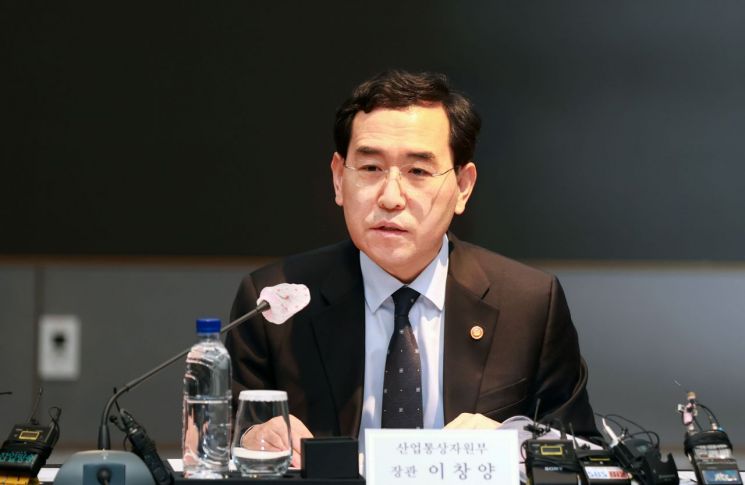
Minister of Trade, Industry and Energy Lee Chang-yang stated, "This year, due to the global economic recession, the economic growth of major countries is expected to weaken, creating more challenging conditions for our exports," and emphasized, "To overcome the complex crisis, revitalizing exports is essential, and the government plans to mobilize all capabilities to fully support achieving export growth."
© The Asia Business Daily(www.asiae.co.kr). All rights reserved.
![Clutching a Stolen Dior Bag, Saying "I Hate Being Poor but Real"... The Grotesque Con of a "Human Knockoff" [Slate]](https://cwcontent.asiae.co.kr/asiaresize/183/2026021902243444107_1771435474.jpg)

















