Increase in Sales of 'Resolution Products' Ahead of New Year
Last Year's Inflation Surge Highest Since Foreign Exchange Crisis
#. Mr. Shim (32), a 6-year office worker, purchased a household ledger to mark the end of the year. After calculating the increased expenses in the second half of 2022, he found that the cost of daily necessities had risen significantly. He said, "I have never organized my spending for an entire year, but small expenses increased by 200,000 to 300,000 KRW per month," adding, "Starting from 2023, I will definitely reduce unnecessary waste."
On the 1st, as the high-interest, high-inflation economic recession is expected to continue into the new year, more consumers are seeking 'resolution products' to save on expenses. While household ledgers that organize spending details are gaining popularity, some are switching from gym memberships to home training. The number of people trying to save money through the popular New Year's resolution of 'quitting smoking' is also increasing.
Annual Inflation Rate Hits Highest Since the Foreign Exchange Crisis

According to Statistics Korea's '2022 Annual Consumer Price Trends,' the consumer price index this year was 107.71 (2020=100), a 5.1% increase compared to the previous year. The annual inflation rate, which had never exceeded 3% since 2011, rose to 2.5% last year and recorded the highest level since the foreign exchange crisis this year.
The living cost index, which mainly consists of daily necessities and closely reflects perceived inflation, rose by 6%, while petroleum prices increased by 22.2%. Dining-out prices rose by 7.7%, marking the largest increase since 1992. Electricity, gas, and water rates increased by 12.6%, the highest since separate statistics began in 2010.
2023 New Year's Resolution Keyword: 'Saving'
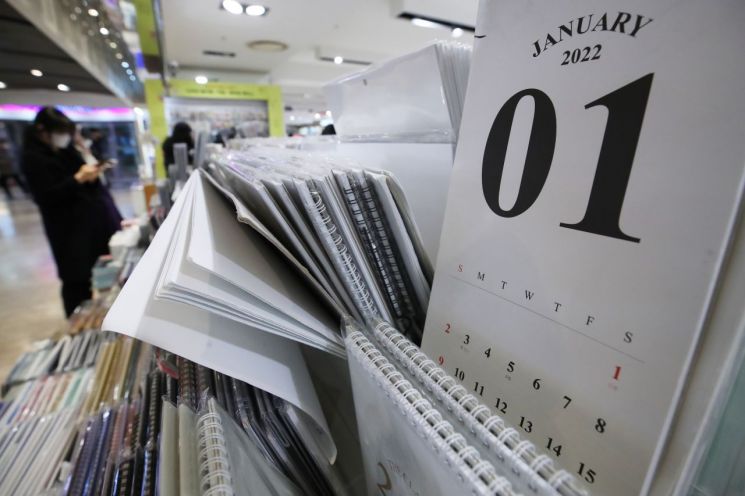 On the 27th, citizens are selecting 2022 calendars and diaries at Kyobo Hottracks Gwanghwamun branch in Jongno-gu, Seoul. Photo by Yonhap News
Due to these circumstances, among the 'resolution products' whose sales surge every New Year, saving-related products are popular. According to Gmarket, an analysis of sales growth rates for New Year's resolution products from December 1 to 27 last year showed that household ledger sales increased by up to 69% compared to the same period the previous year. Household ledgers, usually purchased along with diaries at the end or beginning of the year, saw an unusual surge in sales starting from summer last year.
As gym and personal training (PT) costs became burdensome, more people switched to home training. During the same period, sales of weight training equipment increased by 144% compared to the previous year. Mr. Kim (30), residing in Guri City, said, "At the beginning of this year, my spouse and I registered at a gym, but we quit because both the gym fees and PT costs increased." He added, "We have exercise equipment at home that we use often, and I run along the stream two to three times a week in the evenings."
Those attempting to quit smoking to start the year healthily and save money are also noticeable. Sales of smoking cessation aids on Gmarket increased by 122% compared to the previous year. Mr. Han (in his 40s), living in Eunpyeong-gu, Seoul, said, "I think I spent at least 100,000 KRW a month on cigarettes." He added, "Not only was the money going out, but after getting a health checkup this year, I really felt the need to take care of my health now." He further said, "Even though prices have risen, we still have to eat, but I decided to quit smoking because I can reduce that expense through my own effort."
High Inflation Expected to Continue in the First Half of the Year
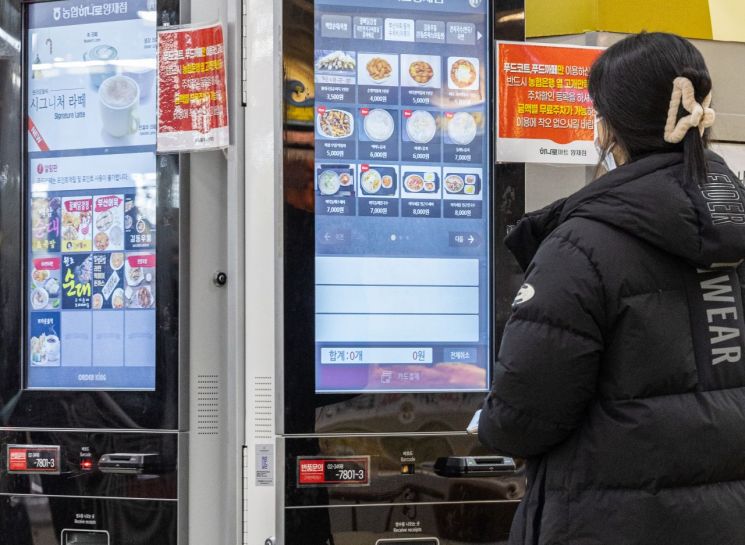 On the morning of the 30th, a citizen is seen placing an order at a kiosk in the food court of Nonghyup Hanaro Mart Yangjae Branch in Seocho-gu, Seoul. Photo by Yonhap News
Meanwhile, the Bank of Korea forecasted that consumer prices will maintain a high increase rate in the 5% range in the first half of next year. On this day, Lee Hwan-seok, Deputy Governor of the Bank of Korea, said at the 'Price Situation Review Meeting,' "The consumer price inflation rate in December aligns with the November forecast. The annual inflation rate is also consistent with the previous forecast." He added, "Consumer prices are expected to continue rising at around 5% in early next year."
He further stated, "There are significant uncertainties regarding future inflation paths, including oil price trends, the easing of quarantine measures in China, and the pattern of COVID-19 resurgence. Meanwhile, increases in public utility fees pose upward risks, and the possibility of an expanded economic slowdown presents downward risks."
© The Asia Business Daily(www.asiae.co.kr). All rights reserved.



















