Cultural Heritage Administration Announces Designation of 3 Cultural Properties
The Oldest Korean Letter 'Nasingeol Hangeul Letter'
Buddhist Statue 'Changnyeong Gwallyongsa Wooden Jizang Bosal Samjon and Sikwang Statues Set'
[Asia Economy Reporter Seomideum] The Cultural Heritage Administration has announced the designation of the oldest known Hangul letter, the ‘Nashin-geol Hangul Letter,’ along with three Joseon Dynasty Buddhist statues and paintings, as national treasures.
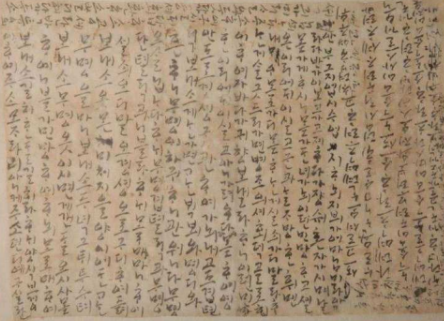
The ‘Nashin-geol Hangul Letter’ consists of two letters written in Hangul by Nashin-geol, a military officer in the early Joseon period, to his wife Shin Changmaeng. The letters contain the old place name of Hamgyeong Province, ‘Yeongando (永安道),’ and based on the fact that Nashin-geol served as a military officer in the 1490s, it is judged to have been written during the Joseon Dynasty between 1470 and 1498. It is noteworthy that Hangul was widely disseminated even to remote border regions and lower-ranking officials far from Hanyang only 45 years after the promulgation of Hunminjeongeum in 1446.
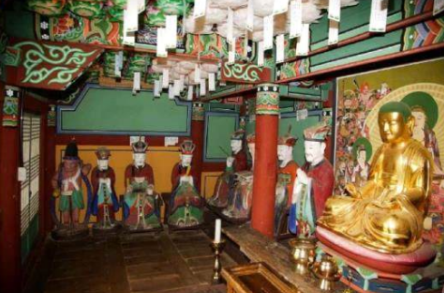
The ‘Changnyeong Gwallyongsa Wooden Jizang Bosal Samjon Statue and Sikwang Statues Set’ consists of 17 Buddhist statues completed in March 1652 by nine sculptor monks including Eung-hye (應惠), and enshrined in the Myeongbujeon Hall of Gwallyongsa Temple. It holds great significance for clearly demonstrating the composition and unique style of the Myeongbujeon statues in the late Joseon period.
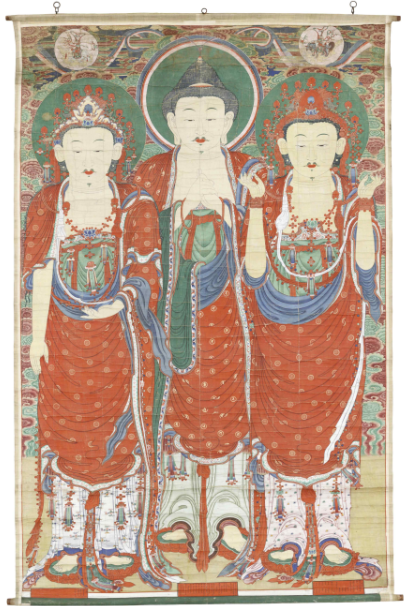
The ‘Seoul Cheongryongsa Birojana Buddha Samshingwaebuldo’ is a large Buddhist painting created in 1806 (the 6th year of King Sunjo’s reign) to pray for the longevity of King Sunjo and Queen Sunwon. It was commissioned by the court lady Choi (?宮崔氏) and produced by five painters including Min Gwan (旻官), a leading Buddhist monk painter of the time. This work is a representative piece by Min Gwan, who was part of a group of painters responsible for Buddhist paintings in the Seoul and Gyeonggi regions from the late 18th to early 19th centuries, and it holds important significance as a royal votive painting commissioned by a court lady.
The Cultural Heritage Administration will hold a 30-day public notice period for the three items, including the ‘Nashin-geol Hangul Letter’ and the ‘Changnyeong Gwallyongsa Wooden Jizang Bosal Samjon Statue and Sikwang Statues Set,’ gather and review opinions from various sectors, and after deliberation by the Cultural Heritage Committee, designate them as national treasures.
© The Asia Business Daily(www.asiae.co.kr). All rights reserved.



















