Raw Material Price Surge and Yen Depreciation Drive Inflation
Wages Stagnate, Pressuring the Working-Class Economy
Possibility of Entering Stagflation

[Asia Economy Reporter Lee Ji-eun] "‘Calorie Mate’ price rises for the first time in 40 years."
Due to next year’s inflationary pressures, it is forecasted that the prices of Calorie Mate, Japan’s national diet snack, along with about 7,000 Japanese food products, will increase. Although rising prices have become a significant burden on the everyday economy, wage increases are not keeping pace with inflation, raising concerns that Japan’s economy could face stagflation.
According to Nihon Keizai on the 28th, 105 Japanese food companies are expected to raise prices on 7,000 food items from early next year through April. Among these, prices for 4,000 items will increase in February. In particular, Otsuka Pharmaceutical has decided to raise the price of ‘Calorie Mate,’ which has been sold at 200 yen (1,896 won) since its launch in 1983, to 220 yen. Major beverage company Suntory will increase store prices of whiskey and wine by up to 30%.
Some companies, unable to withstand the sharp rise in raw material costs, have announced multiple price hikes within a year. Pocky, the original stick-shaped chocolate snack, has announced another price increase just six months after the last one.
◆Sharp price hikes due to raw materials and weak yen... Wage increases remain sluggish
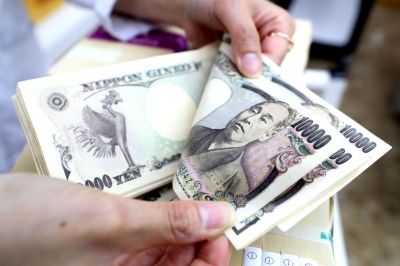 On the 26th, amid trade tensions between the United States and China, the Japanese yen's value rose intraday to 104 yen, its highest level since 2016. At the KEB Hana Bank Counterfeit Response Center in Euljiro, Seoul, an employee is organizing yen currency. Photo by Moon Honam munonam@
This year, with the Russia-Ukraine war causing raw material and food prices to soar, combined with an unprecedented yen depreciation, Japan’s inflation has surged. Japanese food companies import raw materials contracted months ago from the U.S. and process them into products, but the yen’s decline has significantly increased import costs. When companies pass these costs onto consumers, Japan’s consumer price index (CPI) in November rose 3.7%, marking the highest increase in 40 years and 11 months. This far exceeds the Bank of Japan’s (BOJ) inflation target of 2%.
In this situation, wage growth is failing to keep up with soaring prices. According to the labor statistics survey released by Japan’s Ministry of Health, Labour and Welfare, real wages in October fell 2.6% compared to the same period last year, marking a seventh consecutive month of decline. The average total wage was 275,888 yen, up 1.8%. However, with the CPI rising 3.6% in October, the wage increase effect was offset.
Labor, management, and government are all voicing concerns that sluggish wage growth combined with rapid inflation could lead to a domestic economic downturn, and are united in calling for wage increases. Japan’s largest labor union, the Japanese Trade Union Confederation (Rengo), plans to demand a 5% wage increase in next spring’s wage negotiations. This is the first time in 28 years that Rengo has proposed a 5-6% increase. The Japan Business Federation (Keidanren) has also requested member companies to raise wages at a level that does not fall behind inflation. Prime Minister Fumio Kishida allocated 12.2 trillion yen in the comprehensive economic measures announced last October to support corporate wage increases.
However, the prevailing view is that achieving the targeted wage increases will be difficult. According to a survey by Keidanren of 145 major Japanese companies, only 16% responded that they would raise wages by 5%, while the largest group, 34%, planned wage increases in the 3% range.
◆Concerns over stagflation in Japan’s economy... BOJ’s easing policy may cause a vicious cycle
 The Bank of Japan building exterior
Locally, there are concerns that if the gap between wage and price increases continues to widen, Japan’s economy could enter stagflation. Hideo Kumano, chief economist at Dai-ichi Life Research Institute, pointed out, "If wage increases are not felt in everyday life, the economy will worsen while prices continue to rise, increasing the likelihood of falling into stagflation."
In this context, some view the BOJ’s decision to pursue monetary easing as causing only a vicious cycle that leads to economic recession. The Asahi Shimbun noted, "During the 1970s oil shock, when Japan faced stagflation, it implemented tightening policies to control inflation first. This time, prioritizing the economy, it is pushing monetary easing policies, but ultimately this choice may raise prices and cause the economy to contract."
© The Asia Business Daily(www.asiae.co.kr). All rights reserved.
!["The Woman Who Threw Herself into the Water Clutching a Stolen Dior Bag"...A Grotesque Success Story That Shakes the Korean Psyche [Slate]](https://cwcontent.asiae.co.kr/asiaresize/183/2026021902243444107_1771435474.jpg)

















