Secured 366 Billion KRW by Selling Gwangju Factory
Minority Shareholders Call for Dividend and Stock Split to Enhance Shareholder Value
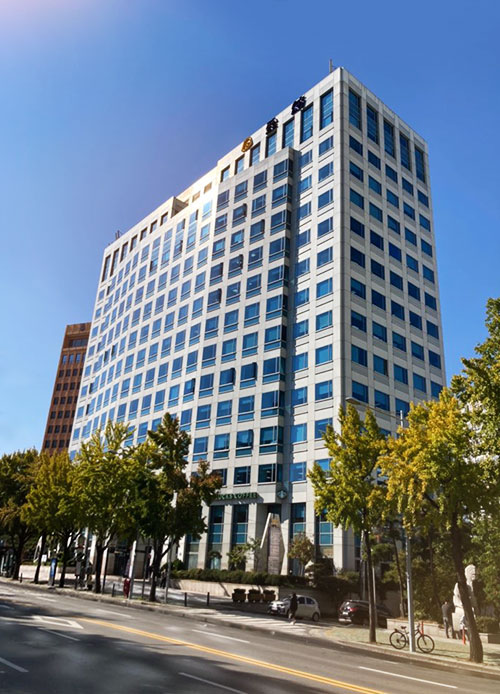
[Asia Economy Reporter Jang Hyowon] It has been confirmed that textile company Jeonbang (formerly Jeonnam Textile) received shareholder proposals from a small shareholders' coalition regarding dividends, stock splits, and treasury stock cancellation. Jeonbang recently secured 366 billion KRW in cash by selling its Gwangju factory site to the developer of ‘Gwangju The Hyundai.’ The coalition argues that this should be used to enhance shareholder value.
According to the financial investment industry on the 29th, the small shareholders' coalition sent a shareholder proposal to Jeonbang on the 20th. The coalition holds 18,228 shares (1.09%), which is more than 1% of Jeonbang’s total issued shares of 1.68 million. For listed companies, shareholders who hold more than 1% of shares continuously for over six months can submit shareholder proposals.
Jeonbang is a textile-specialized company established in 1953 in Gwangju Metropolitan City as Jeonnam Textile. It mainly operates in the yarn business, producing CM yarn and gloves by importing raw cotton, and the fabric business, producing textiles such as denim.
In October, Jeonbang sold its factory and land located in Imdong, Buk-gu, Gwangju Metropolitan City, to Humans Holdings 1st PFV, securing 366 billion KRW in cash. Humans Holdings plans to develop a complex shopping mall ‘The Hyundai,’ a historical and cultural park, a luxury hotel, and a landmark tower on this site.
As of the end of the third quarter this year, Jeonbang’s separate basis total assets amounted to 373.5 billion KRW. The factory sale proceeds are roughly equivalent to the total assets. Jeonbang recorded the book value of this factory at 183.8 billion KRW, and the additional sale profit of about 180 billion KRW is expected to be reflected in this year’s net income.
The small shareholders' coalition argues that since Jeonbang secured a huge amount of cash from the factory sale, efforts should be made to enhance shareholder value. As of the day before, Jeonbang’s market capitalization was about 76.4 billion KRW. The price-to-book ratio (PBR), which does not reflect the cash from the factory sale, is only 0.56 times. If Jeonbang’s net asset value per share is 1,000 KRW, the stock price is formed at 560 KRW.
Accordingly, the small shareholders' coalition sent a shareholder proposal requesting that dividend payments, stock splits, treasury stock cancellation, and the introduction of electronic voting be included as agenda items at Jeonbang’s 75th regular general shareholders’ meeting.
Specifically, they first demanded a dividend of 20,000 KRW per share. Calculated based on Jeonbang’s current circulating shares of 1,139,470, this amounts to about 22.8 billion KRW. The coalition believes this dividend is not excessive compared to the 366 billion KRW proceeds from the sale of the Gwangju Imdong factory.
Secondly, they proposed a stock split to reduce the current face value of 5,000 KRW to 1,000 KRW. The actual number of tradable shares of Jeonbang, excluding treasury stock and major shareholder holdings, is about 840,000 shares. Due to the small number of shares, the average daily trading volume this year has not even reached 10,000 shares. Low trading volume makes it difficult for the stock price to receive proper valuation.
The third demand is the cancellation of 540,000 treasury shares. Canceling treasury shares typically increases the value of existing shares and is considered a representative method to enhance shareholder value. The fourth is the introduction of an electronic voting system, aiming to improve accessibility for minority shareholders to exercise their voting rights and promote coexistence.
The company is unlikely to reject such proposals from the small shareholders' coalition unless there are special reasons. Special reasons include ▲the shareholder proposal content violates laws or the articles of incorporation ▲the proposal is resubmitted within three years after being rejected at a shareholders’ meeting with less than 10% approval ▲the proposal involves matters that the company cannot implement.
Regarding this, a Jeonbang official stated, “We cannot confirm whether a shareholder proposal has been received,” and added, “Stock splits have never been discussed at past shareholders’ meetings, and dividends have been approved annually.”
© The Asia Business Daily(www.asiae.co.kr). All rights reserved.

















