[Seoul District News] Yangcheon-gu to Provide Property Tax Reduction for 1-Home Households for 3 Years Starting Next Year & District Council Ordinance Finally Passed to Fully Implement from Next Year... Seongdong-gu Builds Big Data-Based ‘Children Safety Facility Data’ (9,648 Children School Route Safety Facilities and 10,156 Building Permit Data)... Guro-gu Installs Total 260 ‘Photoluminescent Building Number Plates’ in 11 Sections across 5 Neighborhoods Including Guro4-dong, Gocheok1-dong, Gaebong3-dong, Oryu1-dong, Sugung-dong for Safe Alley Creation... Yongsan
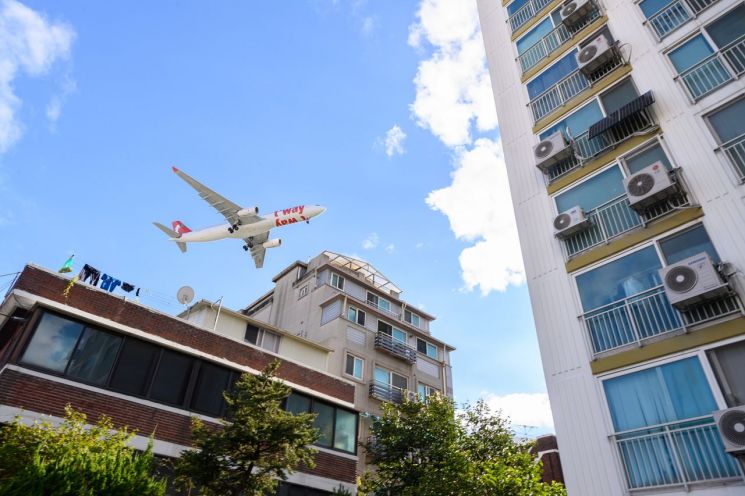
[Asia Economy Reporter Park Jong-il] Yangcheon-gu (Mayor Lee Gi-jae) announced on the 26th that starting next year, the property tax reduction policy for airport noise countermeasure areas will be actively implemented for the first time nationwide at the basic local government level, excluding Jeju Special Self-Governing Province.
Accordingly, residents with one house in the airport noise countermeasure area (within Yangcheon-gu) designated by the Ministry of Land, Infrastructure and Transport will receive a 40% reduction in property tax imposed for three years (2023-2025) starting next year.
The property tax reduction policy has been a key pledge of the 8th elected administration and has been under focused review. This measure was devised after considering practical support policies at the district level for residents suffering from chronic aircraft noise, aiming to partially compensate for the property disadvantages borne by residents, such as the decline in housing appraisal value due to aircraft takeoffs and landings at Gimpo Airport.
To this end, the district began reviewing relevant laws such as the Act on Prevention of Airport Noise and Support for Noise Countermeasure Areas and the Local Tax Special Cases Restriction Act, followed by a feasibility review by the Korea Local Tax Research Institute. After passing the Local Tax Deliberation Committee review, the district council ordinance was approved as originally proposed on December 21.
According to Article 10 of the newly established Seoul Yangcheon-gu Local Tax Reduction Ordinance, a 40% reduction in property tax will be applied until December 31, 2025, for houses located in noise countermeasure areas that are recognized as one household one house under Article 110-2 of the Enforcement Decree of the Local Tax Act as of the tax base date.
In particular, when applying the property tax reduction, only the one with the greater reduction effect between the special reduction and the ordinance reduction will be applied to the same house. Also, the taxpayer for the house is the person who actually owns the property as of June 1 each year, and the tax reduction will be applied from the regular property tax payments in July and September next year.
Mayor Lee Gi-jae said, “Since 65% of households affected by Gimpo Airport noise are Yangcheon-gu residents, the noise issue should not rely solely on the Ministry of Land, Infrastructure and Transport and Seoul City, but the district must take responsibility and lead proactively and preemptively to enable reasonable compensation and demands in the future.” He added, “We plan to establish a comprehensive and systematic support system, including building an airport noise monitoring system to secure objective data.”
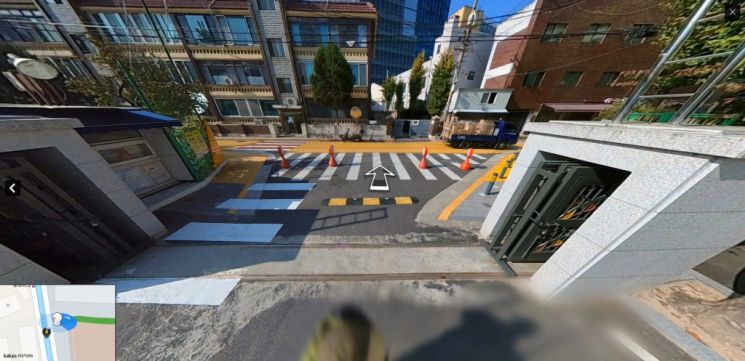
Seongdong-gu (Mayor Jung Won-oh) announced that it has completed building 9,648 data entries of eight types of traffic safety facilities, including unauthorized crossing prevention fences and safety signs within school zones, to create a safe commuting environment for children.
The project to build data on safety facilities along children's commuting routes for safe school commutes is part of the Public Data Enterprise Matching Support Project led by the Ministry of the Interior and Safety. Seongdong-gu was selected in May and secured 670 million KRW in national funds to promote the project.
First, Seongdong-gu undertook inspections of safety facilities such as school zones and built data on the location and condition of these facilities to prevent traffic accidents involving children. Previously, only one type of school zone data for Seongdong-gu was available on the Public Data Portal, making it difficult to utilize for actual commuting route improvement projects.
Through this project, data on a total of eight types of facilities, including unauthorized crossing prevention fences and safety signs outside school zones, were built in a standardized data format.
Additionally, detailed descriptions and locations by school zone, on-site photos, and road view formats of the facilities were constructed to allow convenient checking and management of facility conditions, and the data will be made available to residents. The district plans to use big data analysis based on the constructed data to select actual locations for traffic safety facilities.
Furthermore, the district built 10,156 records (1,576,270 pages) of important documents related to building permits for rapid service. Before 2003, building permit data were managed in document form, causing about a seven-day processing time for civil complaints. However, through this project, 41 standard information items such as land location, land category, building classification, and building area before 2003 can now be quickly checked online by residents. The data built through this project will be available on the Public Data Portal or Seongdong Smart Road View from early January 2023.
Mayor Jung Won-oh of Seongdong-gu said, “Through the public data construction project, we have drastically reduced processing times for building-related civil complaints and promoted advanced traffic policies. Seongdong-gu will continue to build safety data and strive to prevent accidents on children's commuting routes.”
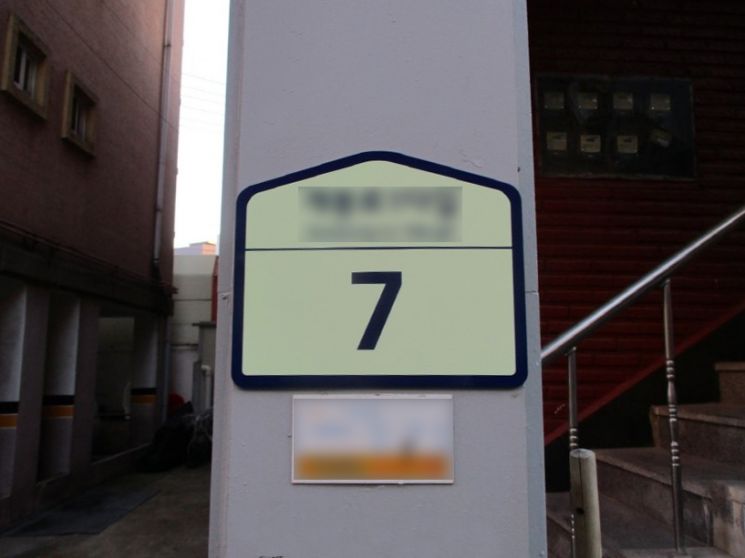
Guro-gu (Mayor Moon Heon-il) completed the installation of ‘photoluminescent building number plates’ in 11 sections across 5 neighborhoods as part of the 2022 Safe Alleyway Creation Project.
Photoluminescent building number plates absorb and store light during the day and emit fluorescent light at night, making it easier to identify locations at night compared to regular building number plates. They also provide accurate location information in emergencies, enabling prompt response.
The district selected installation sites after receiving candidate recommendations from the Guro Police Station and local community centers, conducting on-site surveys, and comprehensively considering crime prevention effects, surrounding illumination conditions, and building entrance directions.
The final selected areas include 11 sections in five neighborhoods: Guro 4-dong, Gocheok 1-dong, Gaebong 3-dong, Oryu 1-dong, and Sugung-dong. A total of 260 photoluminescent building number plates were installed there earlier this month.
Notably, some of the installed locations are adjacent to mountains or lack representative buildings for location identification, making them expected to be useful in emergencies such as disasters and safety accidents.
A Guro-gu official said, “Photoluminescent building number plates will help prevent crime, improve urban aesthetics, and make road name addresses easier and more convenient to use. We will continue to discover various projects for residents’ convenience and safety and strive to achieve tangible results.”
Meanwhile, last year, the district installed 300 photoluminescent building number plates in six neighborhoods: Guro 2-dong, Garibong-dong, Gaebong 2-dong, Oryu 1-dong, Oryu 2-dong, and Hang-dong, and plans to continue the project next year by identifying areas needing improvement.
Personal Mobility (PM), commonly known as electric kickboards, has emerged as a major means of transportation in urban areas. However, issues have been raised regarding illegal parking on roads and devices being left unattended after return.
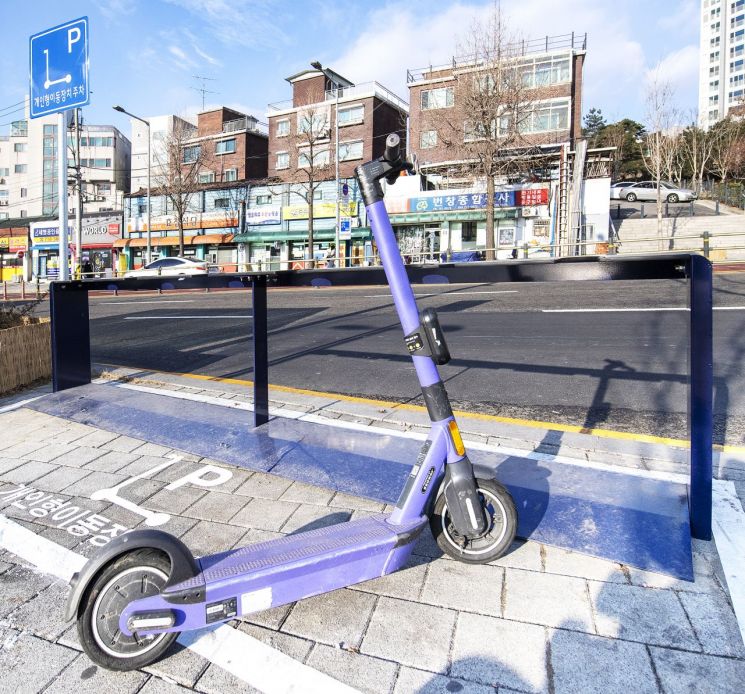
Yongsan-gu (Mayor Park Hee-young) installed five personal mobility parking zones to minimize inconvenience to residents and create a safe walking environment.
The installation locations are: ▲ Exit 10 of Sookdaeipgu Station (Galwol-dong 69-27) ▲ Exit 5 of Hyochang Park Station (Yongmun-dong 5-157) ▲ Exit 2 of Hangangjin Station (Hannam-dong 728-1) ▲ Near Exit 3 of Itaewon Station (Itaewon-dong 127-6) ▲ Near Namyeong Station and Sookdaeipgu Station (Galwol-dong 92).
The installation criteria include areas near bicycle lanes where traffic laws on passage methods can be observed, locations near subway and bus stops for linkage with public transportation, places that do not obstruct pedestrians, and areas securing a minimum effective sidewalk width of 2 meters.
Each location is marked with road surface markings, traffic safety signs, and racks to clearly indicate the parking zones.
A district official stated, “Personal mobility devices are classified as free businesses, not licensed businesses, so operations can proceed with just notification. However, problems such as collision risks due to illegal parking after use have been continuously raised.”
Following the amendment of the Enforcement Decree of the Road Traffic Act, which established the legal basis for installing personal mobility parking zones, the district conducted a demand survey for such zones. As a result, 15 potential parking zone locations near subway station entrances and bus stops were reviewed and opinions were submitted to Seoul City. In May, after consultation with the police station, five final locations were selected.
Going forward, the district will review any inconveniences and usage rates of the parking zones during project implementation to decide on additional installations. It also plans to coordinate with shared PM operators to display the pilot parking zones within applications to increase usage rates.
Meanwhile, personal mobility devices are defined under Article 2, Clause 19-2 of the Road Traffic Act as motorized bicycles with a maximum speed under 25 km/h and a weight under 30 kg.
© The Asia Business Daily(www.asiae.co.kr). All rights reserved.
![Clutching a Stolen Dior Bag, Saying "I Hate Being Poor but Real"... The Grotesque Con of a "Human Knockoff" [Slate]](https://cwcontent.asiae.co.kr/asiaresize/183/2026021902243444107_1771435474.jpg)













