[Asia Economy Reporter Yujin Cho] The U.S. Congress has launched an investigation into allegations that some automakers, including Tesla, used parts from Xinjiang, China, which are banned from import. The industry is closely monitoring whether supply disruptions caused by the ban on Xinjiang-made solar panel components will recur in the automotive sector.
On the 22nd (local time), according to The Wall Street Journal (WSJ) and The Hill, the U.S. Senate Finance Committee sent letters the previous day requesting information on parts and raw material suppliers from major global automakers such as Tesla and General Motors (GM).
Senate Finance Committee Chairman Ron Wyden (Democrat) stated, "Based on allegations raised by Sheffield Hallam University in the UK, we plan to investigate whether parts or raw materials produced in Xinjiang Uyghur region of China, suspected to be products of forced labor, were used in the supplier lists submitted by automakers."
In the letter sent to the companies, he acknowledged, "We understand that cars use products manufactured worldwide and that the supply process is complex," but emphasized, "However, we cannot compromise on the principles of human rights protection and law enforcement."
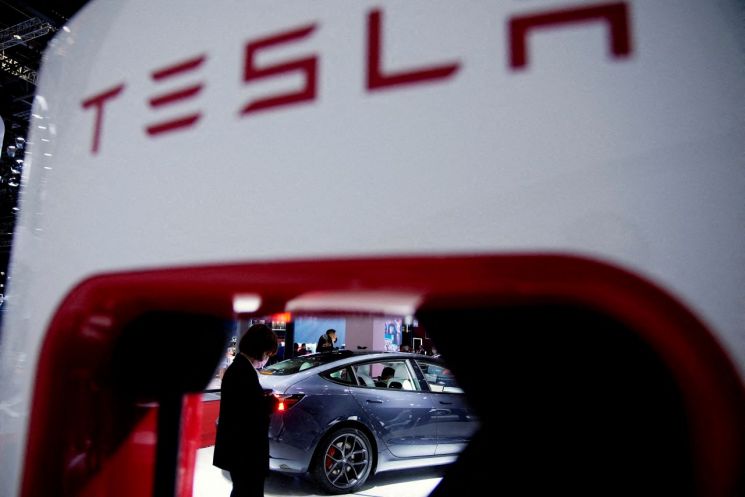
Sheffield Hallam University in the UK claimed earlier this month to have obtained circumstantial evidence that some major automakers use metals, batteries, wires, wheels, and other components produced in Xinjiang. According to the report, the Chinese government is said to encourage production by providing various subsidies to manufacturers in Xinjiang.
In response, eight automakers, including Tesla, GM, Ford, Mercedes-Benz, Honda, Toyota, Volkswagen, and Stellantis, who were requested to submit lists, are now on high alert.
According to the U.S. Uyghur Forced Labor Prevention Act, which took effect in June, not only finished products but also products partially utilizing raw materials, semi-finished goods, or labor from Xinjiang during the production process are subject to import bans.
Since the enactment of this law, imports of Xinjiang-made solar components have been largely banned and seized, causing supply disruptions for major U.S. solar panel manufacturers. The automotive industry expects some direct or indirect impact, as suppliers vary for each part and raw material, and supply chains are spread worldwide. Congress has requested comprehensive information on parts and raw materials imported not only from China but also from third countries such as Mexico and Canada.
In response, GM stated that all its policies prohibit forced labor or abusive business practices and that "there is no possibility of legal violations as the supply process is thoroughly supervised." Volkswagen said it is "conducting an internal investigation into the allegations of policy violations," and Stellantis only mentioned that it is "reviewing the allegations raised by Sheffield Hallam University and the congressional letter."
Other automakers, including Tesla, which has its largest production base in China, have yet to issue official statements.
© The Asia Business Daily(www.asiae.co.kr). All rights reserved.

















