[Seoul District News] Nowon-gu Completes Demolition of Four Cement Storage Silos Emitting Noise and Dust for Over 40 Years on the 23rd ▲ District Unit Plan Decision in Early 2024, Construction Start in 2024, Completion Target in 2028 ▲ Expected to Rebirth as a New Cultural and Economic Hub in the Northeast with Mixed Office, Commercial, and Residential Facilities ... Jungnang-gu Muk 2-dong Rose Blossom Street Resident Rest Area Named 'Kkotbit Maru' & Creating Rest Spaces with Benches and Flowerbeds by January to Improve Street Accessibility and Revitalize Commercial Area ... Yangcheon-gu ‘Yongwangsan Dalbit Geo
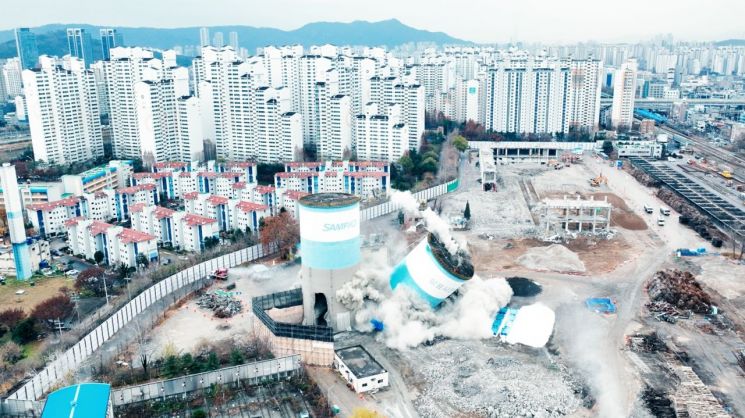
[Asia Economy Reporter Jongil Park] Nowon-gu (Mayor Oh Seung-rok) announced that the cement storage silo inside Gwangwoon University Station, a long-standing wish of Wolgye-dong residents for over 40 years, will be demolished and disappear into history.
The original silos, completely demolished after 13 years since the Gwangwoon University Station logistics site was selected as a pre-negotiation target site in 2009, consist of four silos each 40 meters high and 20 meters in diameter. There have been continuous demands from residents living nearby in Wolgye-dong for relocation due to cement dust and other issues.
The district held a groundbreaking ceremony for the silo demolition last December and has been carrying out demolition in four phases since September. Starting with dismantling the branch warehouse and two silos, a total of three silos have been demolished, and at 4 p.m. on the 23rd, the remaining one silo will be demolished using a blasting method.
Notably, despite the nearby residential area, the blasting method is being used because the conventional dismantling process takes a long time. Crushing and pressing dismantling methods cause significant noise and dust, resulting in considerable inconvenience to residents due to prolonged work.
The Gwangwoon University Station area development project, which led regional economic revitalization in the 1980s, is a complex development project transforming the 156,492㎡ logistics site within Gwangwoon University Station, which had become a nuisance facility, into a new economic hub in the northeastern area combining office, commercial, and residential facilities. The final pre-negotiation was completed in September this year, with the district unit plan expected to be announced in the first half of 2023, construction starting in 2024, and completion targeted for 2028.
The project is divided into commercial office land, mixed-use land, and public land. The commercial office land will feature a landmark building up to 49 stories high, including hotels, offices, and retail facilities.
The mixed-use land will be developed into a premium cultural complex residential area accommodating approximately 3,400 households, street-type shopping arcades along the road, a multipurpose sports facility including an indoor swimming pool, and cultural facilities.
The public land will include cultural and sports centers accessible to all age groups, a library, Wolgye 3-dong community center, convenience facilities for residents, a youth startup support center assisting young entrepreneurs from seven local universities, and public dormitories.
The living infrastructure around the development site will also be dramatically improved. When the GTX-C line opens in 2027, travel time from Gwangwoon University Station to Samsung Station will be reduced from the previous 46 minutes to 9 minutes. New roads and pedestrian overpasses will be constructed, and the surrounding pedestrian environment improved to expand transportation infrastructure capable of accommodating traffic volume after the development project is completed.
Mayor Oh Seung-rok said, “The complete dismantling of the silo, a long-cherished project of Wolgye-dong residents, is a signal for the full-scale promotion of the Gwangwoon University Station area development project,” adding, “We will do our best to ensure the project proceeds smoothly so that Gwangwoon University Station and the Wolgye-dong area can emerge as a new center in northeastern Seoul.”
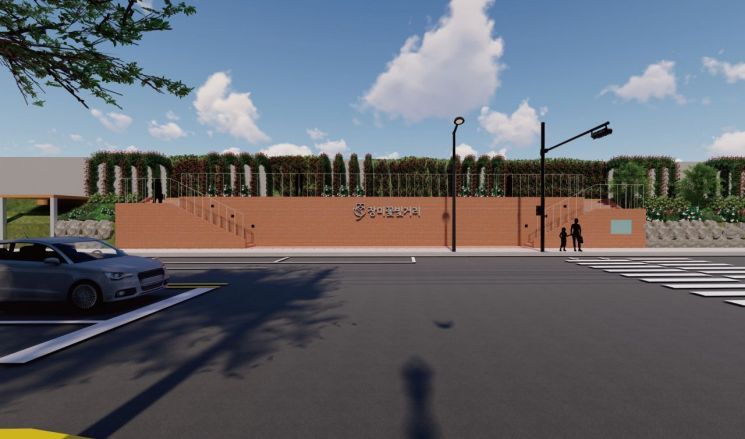
The name of the Rose Flower Light Street D Zone in Jungnang-gu, scheduled for completion in January 2023, has been decided as ‘Kkotbit Maru’.
Jungnang-gu (Mayor Ryu Kyung-gi) held a ‘Rose Flower Light Street D Zone Naming Contest’ from November 11 to 25, receiving a total of 133 name submissions, among which ‘Kkotbit Maru’ was selected as the grand prize winner.
Located in Muk 2-dong, Rose Flower Light Street is a 380-meter section connecting Meokgol Station to the Jungnangcheon embankment and Rose Park, representing the urban regeneration Rose Village. The area began themed street construction in earnest last year and is currently undergoing landscape improvement projects. The D Zone is the section where a resident rest area is being created, with plans to install a rest area and observation space by January next year.
The district selected one grand prize winner and three excellence prize winners through a first round of internal review and resident preference survey, followed by a second round of expert evaluation, considering the characteristics, planning, novelty, and friendliness of the names.
The contest participant who proposed the grand prize-winning name ‘Kkotbit Maru’ explained, “It is a combination of Rose Flower Light Street and Maru (a Korean word for wooden floor or platform), inspired by the idea of a resident space embracing roses such as rose walls, rose flower beds, brick stairs, and benches for rest.”
Other excellence prize winners included ‘Jangmi Antteul’, ‘ROSEPOT’, and ‘Hyanggi Jeonmangdae’ (Fragrance Observatory).
The district plans to complete construction by January next year so that residents enjoying walks along the Jungnangcheon embankment can use Kkotbit Maru as a resting space.
The district hopes that Kkotbit Maru will increase residents’ accessibility to Rose Flower Light Street and revitalize the nearby commercial area.
Mayor Ryu Kyung-gi of Jungnang-gu said, “We thank everyone who participated in the naming contest. Naming a space for residents through their direct participation makes the name Kkotbit Maru and this contest even more meaningful,” adding, “We will strive to successfully complete the Rose Flower Light Street project by next year so that it can become a new landmark in the area.”
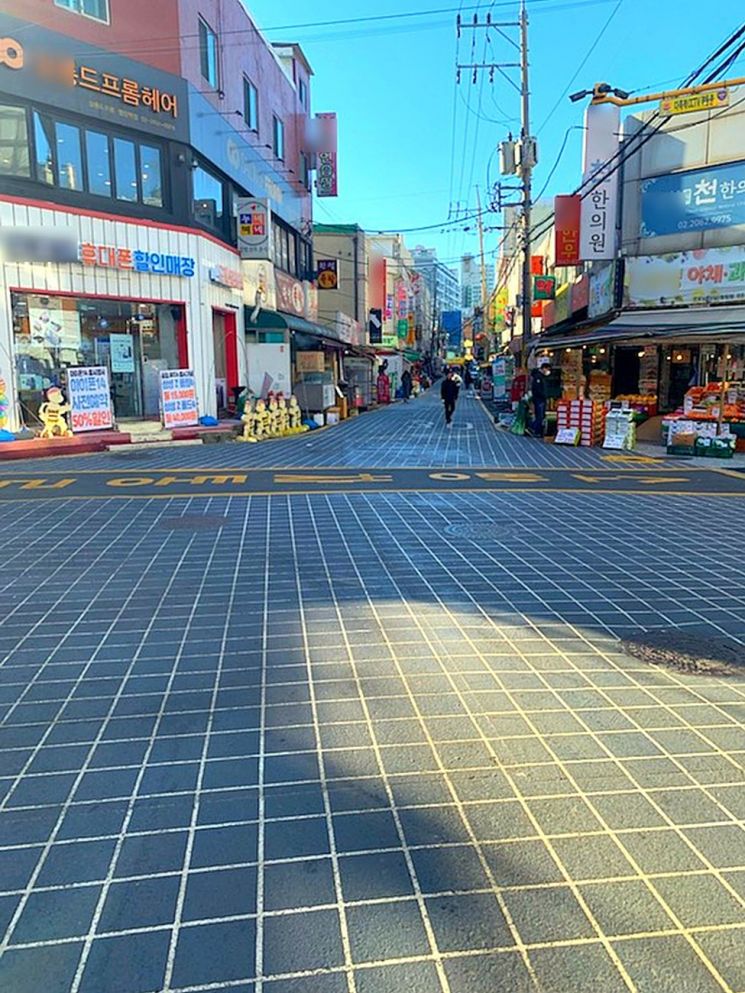
Yangcheon-gu (Mayor Lee Ki-jae) announced on the 21st that the ‘Yongwangsan Moonlight Street,’ a local specialized street creation project initiated in 2020, has been completed in two years and is now open to the public.
As a result, the alleys around Mok 2-dong (Mokdong Jungangbuk-ro, Mokdong Jungangbuk-ro 16-gil) are expected to become safer and more pleasant.
The district prioritized securing safety first. As part of the ‘Children’s School Route Safety Assurance’ project, a sidewalk was newly constructed on the section from Mok 2-dong Market Street to the child protection zone of Yanghwa Elementary School, and new CCTV was installed toward the school’s back gate to strengthen safety on the way to and from school. Additionally, outdated fire safety equipment and emergency bells in the alley residential area were thoroughly refurbished to create a safe passage environment that anyone can trust.
Moreover, the street atmosphere has been visually enhanced, and it is expected to become a representative attraction of Mok 2-dong. The district refurbished 170 stores in the area with distinctive LED signs tailored to building characteristics using various materials, and applied patterned work on the pavement of the road to Yongwangsan and Mok 2-dong Market Street to add aesthetic value. Especially at the entrance stairs, LED handrails, night lighting, and art tiles were installed to significantly enhance design elements and pedestrian safety.
Furthermore, residents’ access to information is expected to improve. The district installed smart bulletin boards at Exit 4 of Yeomchang Station and in front of the Mok 2-dong Community Center, and placed signposts and notice boards throughout the alleys to allow easy access to district administration information and community news at a glance.
A district official stated, “This project is meaningful in that it created a local landmark through communication with residents via resident briefings, merchant public hearings, workshops and forums, and resident-participatory village map production.”
Mayor Lee Ki-jae of Yangcheon-gu said, “Yongwangsan Moonlight Street, created as a unique alley brand of Yangcheon-gu, will serve as a catalyst to improve residents’ quality of life and invigorate the local commercial district,” adding, “We hope that the safely and pleasantly reborn Yongwangsan Moonlight Street will become a beloved landmark for local residents for a long time.”
© The Asia Business Daily(www.asiae.co.kr). All rights reserved.



















