Influenza Suspected Patient Rate
Increased 1.75 Times Compared to Last Week
More Severe Outbreak Among Children and Adolescents
Health Authorities Encourage Vaccination
[Asia Economy Reporter Lee Gwan-joo] As the winter resurgence of COVID-19 shows an increasing trend, influenza patients have also surged sharply this month, marking the full-scale onset of a 'twindemic' (simultaneous epidemic of infectious diseases). Since this could increase the burden on frontline medical sites, health authorities have urged compliance with personal hygiene rules.
According to the Korea Disease Control and Prevention Agency (KDCA) on the 20th, the influenza-like illness (ILI) rate in the 50th week of this year (December 4?10) was 30.3 per 1,000 outpatients, about 1.75 times higher than the previous week (17.3). ILI patients refer to those suspected of having influenza with sudden fever over 38 degrees Celsius accompanied by cough or sore throat, and the rate means the number of influenza patients per 1,000 outpatients.
The health authorities set the influenza epidemic threshold at 4.9 per 1,000 outpatients. This year, the ILI rate has continuously exceeded the epidemic threshold since the 37th week (September 4?10). In particular, influenza incidence among children (7?12 years old) and adolescents (13?18 years old) is very high. In the 50th week, the ILI rate for children was 58.9, and for adolescents, 119.7, far surpassing the overall rate.
The influenza epidemic was somewhat anticipated. During the COVID-19 pandemic, when strong social distancing measures were implemented, the spread of influenza was somewhat suppressed. However, as quarantine measures eased and face-to-face contact increased, influenza cases have naturally risen.
However, the simultaneous increase of influenza patients during the winter resurgence of COVID-19 poses a burden from a quarantine perspective. As of midnight the previous day, new COVID-19 confirmed cases were 26,622, an increase of 955 compared to a week ago. Particularly, the number of critically ill patients was 535, remaining in the 500s for two consecutive days. Influenza and COVID-19 share similar major symptoms such as cough, sore throat, fever, and muscle pain. Recently, kits capable of diagnosing both COVID-19 and influenza simultaneously have also been released.
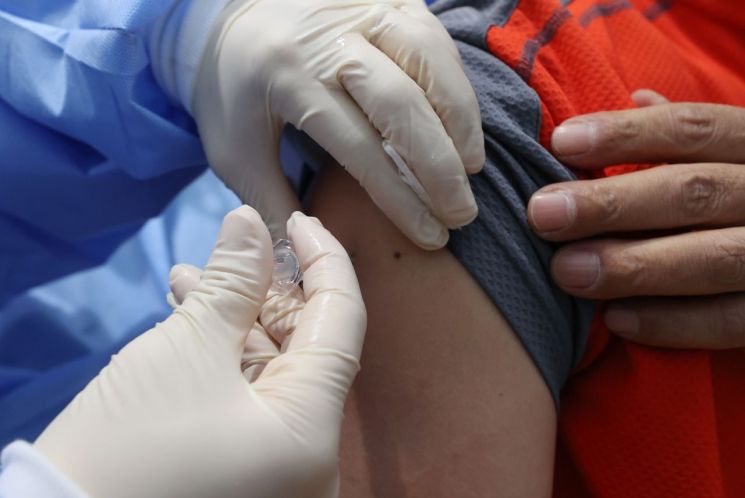
The KDCA is actively encouraging influenza vaccination for prevention. As of midnight on the 17th, the vaccination rate for the national influenza vaccination program targeting the elderly, children, and pregnant women was 76.1%. Compared to last year, the elderly vaccination rate increased by 1.9 percentage points, but the rate for children decreased by 2.9 percentage points.
Additionally, if respiratory symptoms appear, it is recommended to visit a nearby medical institution for appropriate diagnosis and treatment. Especially when infants or students are infected, to block transmission within groups, it is advised not to attend daycare or school until 24 hours after full recovery. Compliance with personal hygiene rules such as regular handwashing before and after coughing and observing cough etiquette was also urged.
Jiyoungmi, Director of the KDCA, said, "Considering that influenza is rapidly spreading recently and usually peaks in January, it is important for the elderly, who are at high risk of complications and death, to complete vaccination within this year." She added, "Since children also have a high incidence of influenza and it spreads quickly through group activities, increasing the risk of additional transmission within families, more children should participate in vaccination."
© The Asia Business Daily(www.asiae.co.kr). All rights reserved.

















