Increase Flights Dozens of Times Compared to No Japan Boycott
Open China
Normalization Expected in March-April Next Year
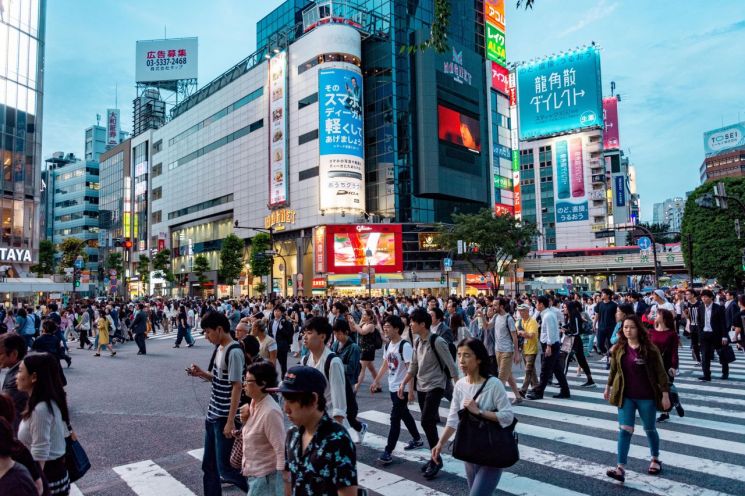
[Asia Economy Reporter Hyunseok Yoo] As the number of travelers to Japan surges, the price of airline tickets to Japan has skyrocketed to 2 to 4 times the usual levels. Thanks to this, airlines that had been struggling with deficits since the COVID-19 pandemic are breathing a sigh of relief. On the other hand, travelers are frowning. When will the price of airline tickets to Japan return to normal levels?
As of the 16th, the lowest round-trip airfare from Gimpo International Airport to Tokyo Haneda Airport is around 440,000 to 500,000 KRW. For flights from Incheon International Airport to Narita Airport, the price is even higher, in the 800,000 KRW range. Prices that used to be in the 200,000 KRW range have jumped 2 to 4 times. Compared to the No Japan period, when one-way tickets were under 10,000 KRW, prices are tens of times more expensive.
Before the No Japan movement (boycott of travel to Japan and Japanese products) in 2019, Japan was the most visited country by South Korean travelers. In 2015, 4 million travelers went from Korea to Japan. This number soared to 5 million in 2016, 7.14 million in 2017, and 7.54 million in 2018. Since Japan allowed visa-free entry in October, pent-up travel demand suppressed by the No Japan movement and COVID-19 has surged. The number of travelers between Korea and Japan was 410,000 in October and 820,000 in November. These numbers rival the peak period.
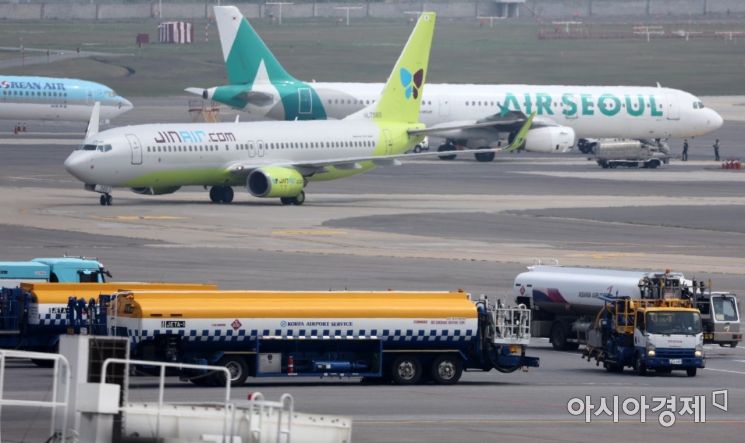 Due to the rise in international oil prices, the fuel surcharge imposed on international flight tickets has once again reached an all-time high. According to the airline industry, Korean Air's international fuel surcharge for July has increased by three levels from June, applying level 22, resulting in charges ranging from 42,900 KRW to as much as 339,300 KRW depending on the distance. The domestic fuel surcharge will also increase from 17,600 KRW to 19,800 KRW starting this month. Consequently, the airfare paid by consumers is expected to rise further. The photo shows the runway and apron at Gimpo Airport on the 17th. Photo by Kim Hyun-min kimhyun81@
One reason for the high price of airline tickets to Japan is the international fuel surcharge. The fuel surcharge is an additional fee airlines add to fares to compensate for losses caused by rising fuel prices. It was introduced in July 2016 and ranges from level 1 to level 33. This month, the fuel surcharge is at level 15. For Korean Air international flights, the fuel surcharge is 48,000 KRW. This means nearly 100,000 KRW is added to the round-trip ticket price. In February, when the surcharge was at its lowest this year (level 6), it was 16,800 KRW. Before the Ukraine crisis caused fuel prices to soar, this was a manageable amount.
Ultimately, the most important factor determining price is supply and demand. When flight supply is high, prices drop. The total number of weekly international flights between Korea and Japan was 845 in January 2020. However, due to the impact of COVID-19, it fell to 156 in September 2022. Of course, since Japan allowed visa-free entry in October, the number of flights has increased. In the third week of November, flights increased to 550 per week, which is 65.1% of the pre-COVID-19 level. By the end of March 2023, flights between Korea and Japan are expected to increase to 764 per week, which is 90.41% of the first week of January 2020 before the pandemic. Industry insiders believe that once the supply exceeds 90%, airline ticket prices may start to decrease.
There is also the China variable. Currently, Japan is practically the only short-distance travel destination within three hours. In 2019, the top three countries most visited by South Koreans were Japan, China, and Vietnam, each with over 4 million visitors. Among these, Japan and China are within three hours of travel, while Vietnam takes about five hours. In other words, travel to China and Japan are substitute products.
The problem is that China has not yet lifted its quarantine measures. Currently, overseas arrivals to China must undergo a ‘5+3’ quarantine (5 days of facility quarantine followed by 3 days of self-quarantine). However, China has begun to ease restrictions. From the 19th, the policy will change to ‘2+3’ quarantine. Air routes to China remain limited. As of the end of 2019, there were 1,164 weekly flights between Korea and China, but currently, there are only 68 per week. An airline industry official said, "We expect China to reopen around March to April next year," adding, "After that, if airlines increase flights, the price of airline tickets to Japan is also expected to decrease." The analysis is that the price of airline tickets to Japan will significantly drop after March to April next year.
© The Asia Business Daily(www.asiae.co.kr). All rights reserved.


















