Woori Bank Requests Branches to Submit 'Overdue Loan Management Plans'
Hana Bank Discusses Overdue Credit Reduction at Headquarters Level
Korea Economic Research Institute "Overdue Rate Expected to Increase by End of Next Year"
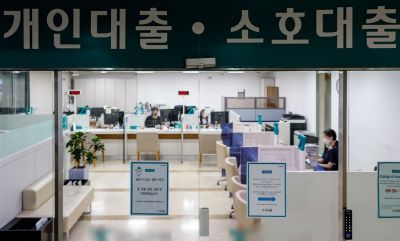
[Asia Economy Reporter Song Seung-seop] Banks have launched a company-wide effort to reduce overdue loans by the end of the year. Although the indicators are sound, this is interpreted as a preemptive measure to eliminate risks and strengthen soundness in consideration of future economic trends.
According to the financial sector on the 14th, Woori Bank sent an official letter titled ‘Request for Submission of Large Overdue Loan Management Plans’ to all branches on the 1st of this month. The purpose is to improve asset soundness by managing overdue loans at year-end. To this end, branches were instructed to prepare and submit a plan for managing large overdue borrowers with loans exceeding 500 million KRW by the 6th. The bank emphasized, “For a successful year-end closing, branches should do their best in post-management to clear overdue loans and prevent new overdue loans from occurring.”
On the 30th of last month, Woori Bank also requested post-management of overdue loans in the savings and deposit collateral loan sector from each branch. The overdue account clearance was conducted by dividing borrowers whose loan maturity had expired and those whose loans had not matured. For customers whose loan maturity had expired, if unpaid interest occurred, the loan was either extended or collected according to the customer’s intention. If the borrower could not be contacted, collection was made using offsetting methods. Offsetting is a process of extinguishing claims and debts, such as using savings or deposits to cover unpaid interest. If the loan maturity had not expired, unpaid interest was collected through sending notices or phone calls.
On the 25th of last month, measures to reduce overdue loans in general were implemented. The key point was to immediately transfer loans overdue for more than three months to the credit management department or apply for write-offs. It was also advised to request early transfer to the credit management department for loans overdue for more than one month.
If interest rates rise, overdue rates will double by the end of next year
Woori Bank’s overdue loan amount is estimated at 667 billion KRW as of the end of November. The overdue ratio remained low at 0.23%. Compared to the end of last year, it slightly increased by 147 billion KRW (0.03 percentage points) from 520 billion KRW (0.19%). A Woori Bank official explained, “Considering the current loan market, it is hard to say it has increased,” adding, “This is a preemptive risk management measure considering future economic outlooks.”
Shinhan Bank recently issued guidelines to frontline branches to manage overdue rates. A Shinhan Bank official said, “We continuously monitor overdue rates for soundness management throughout the year,” and added, “December is the period when all operations are wrapped up, so we particularly focus on managing overdue rates and soundness by actively supporting debt restructuring for customers expected to incur overdue loans.”
Hana Bank has not issued instructions to branches but has started discussions on reducing overdue loans at the head office level. Departments related to credit and risk, which handle overdue rates, hold regular meetings to seek solutions. A Hana Bank official said, “Each department is considering ways to reduce overdue loans,” and added, “This is not just a year-end effort but will be conducted regularly.”
The financial sector is concerned that overdue indicators will worsen next year due to increased interest burdens. Korea’s base interest rate of 3.25% is highly likely to be raised further depending on decisions by major countries including the United States. The Korea Economic Research Institute released a report last month analyzing that interest burdens on households and companies will increase by 33.6 trillion KRW from September this year to the end of next year. It predicted that the overdue rate will rise from 0.27% to 0.555% in the corporate sector and from 0.56% to 1.02% in the household sector by the end of next year.
© The Asia Business Daily(www.asiae.co.kr). All rights reserved.

















