Taxes on Imported Steel and Fertilizers
Pilot Implementation of Additional Charges from October Next Year
Mandatory Carbon Emission Reporting for the First 3 Years
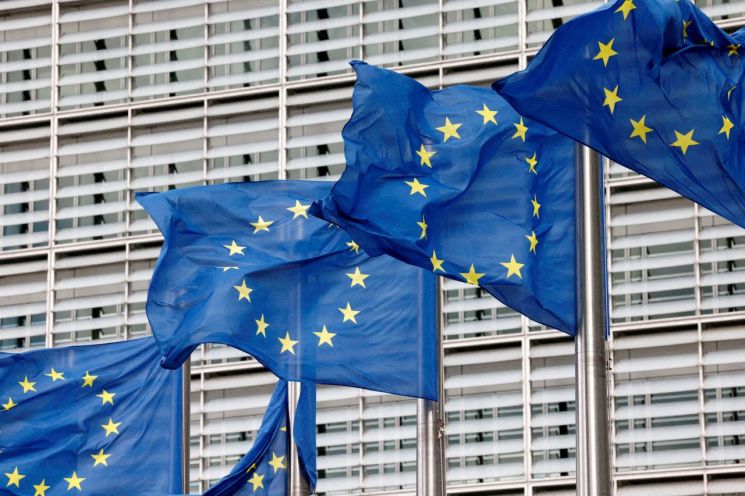
[Asia Economy Reporter Lee Ji-eun] The European Union (EU) has agreed to introduce the Carbon Border Adjustment Mechanism (CBAM), which imposes a carbon border tax on imports such as steel and fertilizers for the first time in history. This agreement is expected to have a significant impact on Korea’s key export sectors to the EU, including the steel industry.
On the 12th (local time), AFP reported that the EU Commission, European Parliament, and Council of Ministers reached a provisional agreement to introduce CBAM after trilateral consultations. As a result, the carbon border tax, which had remained at a conceptual level until now, is expected to be implemented in the EU for the first time ever.
Under this agreement, starting from October next year, the EU will pilot a measure that imposes an additional carbon price linked to the EU Emissions Trading System (ETS) if the carbon content of imported goods exceeds a certain threshold. In particular, companies exporting so-called “carbon-intensive industries” such as steel, fertilizers, aluminum, and electricity, which have high carbon emissions, will be required to report their carbon emissions mandatorily for the first three years after the system’s implementation.
Furthermore, before the full-scale implementation of the system in 2026, the EU Commission plans to decide whether to expand the scope of applicable industries. According to major foreign media, automobiles are also being considered as a target for the carbon border tax. Through this agreement, the EU expects to reduce greenhouse gas emissions by at least 55% compared to the 1990s by 2030.
The EU’s introduction of CBAM is analyzed as a desperate measure to prevent some member states from shifting the production of high carbon-emission products to other countries. Until now, advanced countries within the EU have been criticized for producing goods in developing countries with weaker greenhouse gas regulations and shifting the carbon emission issues to those countries.
Mohamed Chahim, a member of the European Parliament, stated, “CBAM will serve as an incentive for trading partners to reduce carbon emissions,” and said that the mechanism will become an important pillar of climate policy in Europe and worldwide.
However, some concerns have been raised that this agreement could lead to trade disputes, as exporting countries may perceive it as an additional tariff. Currently, free carbon emission allowances are allocated to carbon-intensive industries within the EU, but these allocations will be gradually reduced under the new agreement. For companies outside the EU member states, the increased burden of additional tariffs could lead to criticism that this is protectionism violating international trade norms.
Meanwhile, this EU measure is expected to inevitably impact Korea’s steel industry exports. According to data from the Korea Energy Economics Institute, the scale of CBAM-applicable exports to the EU from 2018 to 2020 was recorded as follows: steel at $2.763 billion (approximately 3.578 trillion KRW), aluminum at $189 million, and fertilizers at $790,000.
© The Asia Business Daily(www.asiae.co.kr). All rights reserved.
![Clutching a Stolen Dior Bag, Saying "I Hate Being Poor but Real"... The Grotesque Con of a "Human Knockoff" [Slate]](https://cwcontent.asiae.co.kr/asiaresize/183/2026021902243444107_1771435474.jpg)
















