Record High Number of Hanwoo Cattle Raised... Hanwoo Prices Decline
Hanwoo Price Decline Expected to Continue
National Hanwoo Association "Urgent Measures Needed"
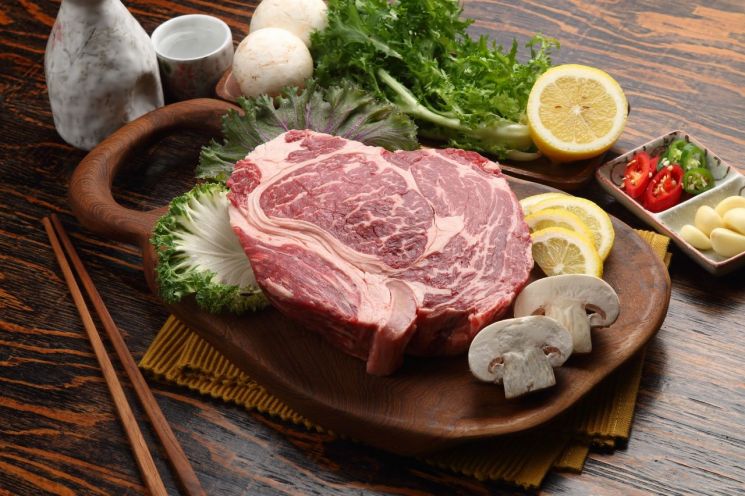
[Asia Economy Reporter Heo Midam] While the "table price" continues its soaring trend, the price of Hanwoo beef is showing a decline on its own. This is because the supply has significantly increased compared to previous years, with the number of Hanwoo cattle raised reaching an all-time high. However, due to high inflation, consumer sentiment has weakened, resulting in a decrease in consumers seeking Hanwoo beef.
Recently, Hanwoo prices have been steadily falling. According to the Livestock Products Quality Evaluation Service, as of the 13th, the wholesale price of Hanwoo carcass (grade 1) per 1kg was 15,732 KRW, a 16.1% decrease compared to the same day last year (18,753 KRW). The Korea Rural Economic Institute also reported that the average wholesale price of Hanwoo beef in October was 18,898 KRW per 1kg, down 11% from the same month last year.
The reason for the decline in Hanwoo prices is oversupply. Last year, as the wholesale price of Hanwoo entered the 20,000 KRW range and Hanwoo consumption increased due to COVID-19 relief funds, farmers competed to increase the number of cattle raised. As a result, this year the number of Hanwoo cattle raised reached 3,557,000, a 5.6% increase from last year (3,368,000), setting a new record. The upward trend in the number of cattle raised is expected to continue at least until 2023, and accordingly, the decline in Hanwoo wholesale prices is also expected to persist.
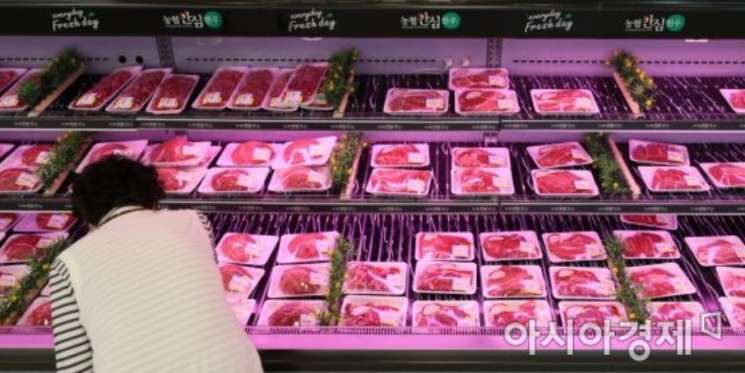 A customer is checking the prices at the meat section of a large supermarket in Seoul. Photo by Asia Economy DB.
However, despite this price decline, consumers are not opening their wallets easily. According to a report titled "Recent Causes and Prospects of Hanwoo Price Decline" published by the Korea Rural Economic Institute on the 2nd, the amount of Hanwoo purchased per household from January to September decreased by 6.1% to 12kg compared to last year. Due to the impact of high inflation, more people are refraining from dining out and seeking cheaper ingredients, which appears to have affected Hanwoo, classified as a premium ingredient.
Consumers are turning their attention to relatively cheaper imported beef, pork, and chicken. In particular, as the distribution industry is offering discounts on imported beef for the year-end season, consumer demand is expected to increase further.
Given this situation, livestock farmers' worries are deepening. Not only have Hanwoo prices plummeted, but on top of that, feed costs have also surged. Due to the ongoing war between Russia and Ukraine, international grain prices have risen significantly. According to the Ministry of Agriculture, Food and Rural Affairs, as of October, the price of compound feed for beef cattle (cattle raised for meat) was 613 KRW per kg, a 26.9% increase compared to the same period last year (483 KRW).
The National Hanwoo Association is appealing for measures to stabilize Hanwoo prices. In a statement released on the 29th of last month, the association said, "We hope the government and the National Assembly will prepare special measures to stabilize Hanwoo prices," and urged, "Please prepare measures to secure at least the production cost to maintain the stability of the Hanwoo industry and self-sufficiency rate."
© The Asia Business Daily(www.asiae.co.kr). All rights reserved.


















