Limited Coverage for Musculoskeletal Ultrasound and MRI
Strengthened Eligibility Criteria for Foreigners and Overseas Koreans
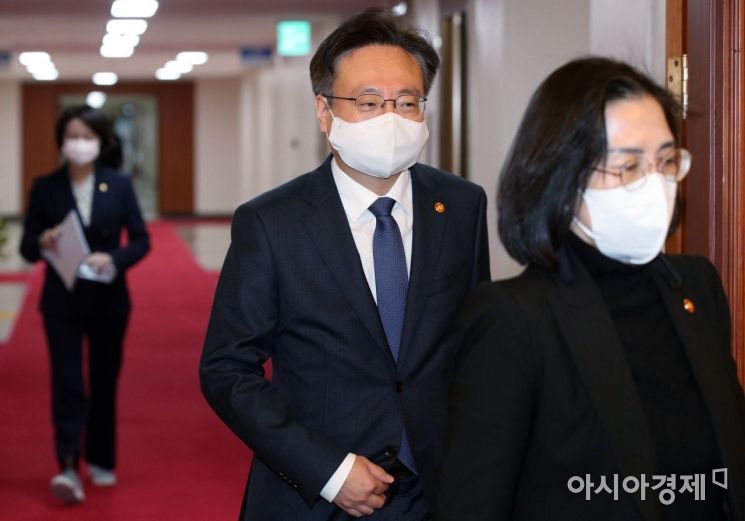
[Asia Economy Reporter Kim Young-won] The government has decided to reexamine the expanded coverage criteria for medical services such as magnetic resonance imaging (MRI) and ultrasound based on medical necessity. Measures to prevent 'medical shopping,' which abuses health insurance benefits upon entering the country from abroad, were also introduced. On the 8th, the Ministry of Health and Welfare held a public hearing at the President Hotel in Jung-gu, Seoul, to announce these measures under the 'Health Insurance Sustainability Enhancement and Essential Medical Support Plan.'
The Ministry of Health and Welfare evaluated that while the extensive health insurance coverage expansion policy has had the positive effect of improving medical accessibility, it has also caused excessive medical treatment, posing a threat to the financial soundness of health insurance. Under the so-called 'Moon Jae-in Care,' which significantly expanded the scope of health insurance coverage, 1.8155 trillion KRW was invested in ultrasound, which was previously non-covered, and 994.2 billion KRW in MRI over five years.
Im In-taek, Director of Health and Medical Policy at the Ministry of Health and Welfare, said, "Expenditures have surged so far, and the health insurance growth rate has been 2.7% over the past five years, increasing the burden of insurance premiums. The government aims to continuously secure the sustainability of health insurance and, based on this, faithfully invest in and improve systems for essential medical fields directly related to the lives of the people."
From Uniform to Restricted Coverage
The government plans to reexamine coverage criteria for items where excessive medical use has appeared due to uniform coverage policies. For high-cost items such as brain and cerebrovascular MRI and ultrasound, coverage will be restructured to recognize benefits only when medical necessity is confirmed. For example, in the case of upper abdominal ultrasound, where there is currently no coverage standard for preoperative ultrasound, discussions are underway to apply coverage only when ultrasound is performed for medical necessity, such as surgical risk assessment.
Musculoskeletal ultrasound and MRI, which were scheduled for coverage, will undergo restricted coverage based on analysis of medical necessity and usage volume. To clarify and improve coverage criteria such as medical necessity, expert opinions will be gathered and a committee will be formed.
Alternatives to medical abuse were also proposed. The government judged that unnecessary medical abuse occurs due to insufficient management of excessive medical use under the current insurance system. According to the Ministry of Health and Welfare, about 2,500 people used outpatient services more than 365 times a year as of last year. There was even a case of visiting an average of 5.6 medical institutions per day and using outpatient services 2,050 times annually.
To prevent medical abuse, the government is considering raising the health insurance copayment rate up to 90% for those who exceed 365 outpatient visits in one year. The average copayment rate for general patients is about 20%. To ensure that severely ill patients who genuinely need medical services are not adversely affected by these measures, exception criteria will also be established.
Preventing 'Medical Shopping'
The government will also block so-called 'medical shopping' by strengthening eligibility requirements for foreigners and overseas Koreans entering the country for medical purposes. Currently, foreign regional subscribers can enroll in health insurance after six months of residence, but dependents have no residency requirement and can receive high-cost treatment immediately upon entry. Overseas Koreans who do not report overseas migration can also use benefits immediately after entering the country, even if they are long-term foreign residents with permanent residency abroad.
The government plans to impose a mandatory six-month residency period for foreign dependents to prevent medical shopping and free-riding. However, spouses and minor children are exempt, and this will apply only to foreign parents-in-law, university student children, and others.
Additionally, for overseas long-term permanent residents who have not reported overseas migration, the government will apply health insurance only after six months of residence following entry into Korea. However, non-permanent residents such as overseas students and expatriates will be able to use health insurance immediately upon entry by verifying visas, as is currently the case.
Furthermore, the government will promote strengthening standards and management of the special calculation system, mandatory verification of patient eligibility at care institutions, and enhanced management of drug costs.
Director Im explained, "This measure is not a rollback of coverage but aims to clearly present medically necessary criteria and ensure that coverage is provided according to those principles." He added, "Health insurance finances are limited and cannot be used infinitely. The government's responsibility is to set and manage standards so that the insurance premiums paid by the people are used rationally."
Minister of Health and Welfare Cho Kyu-hong stated in his keynote speech, "We will enhance the financial soundness and transparency of health insurance and properly invest the savings from expenditure reforms in essential medical services that are truly necessary."
© The Asia Business Daily(www.asiae.co.kr). All rights reserved.

















